

'Mars Will Be Part of America': Elon Musk's Sinking Ship Warning and His Vow That He Will 'Die in US'
As DOGE reached its official sunset date, the debate over whether Musk's 'slash-and-burn' approach to governance has succeeded or caused unnecessary chaos continues to intensify.
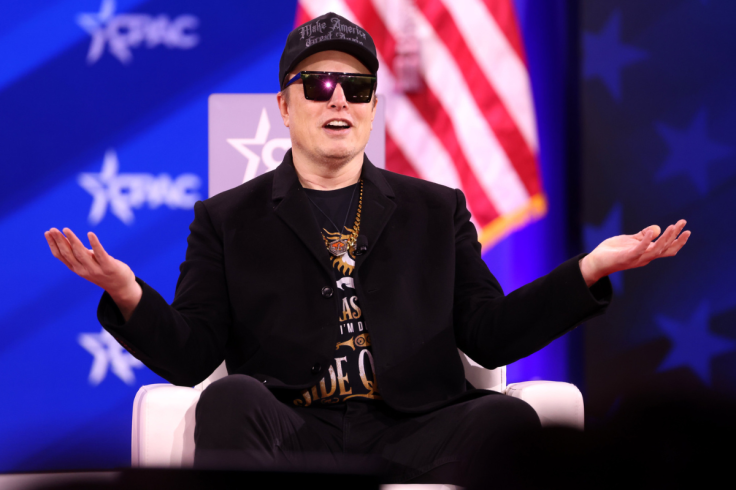
As the Department of Government Efficiency (DOGE) initiative officially ceased operations, closing its doors on 4 July 2026, the warning Elon Musk issued in 2025, that the 'ship of America will sink' unless federal deficits were slashed by a trillion dollars, now faces a stark accounting.
With the national debt having climbed to $39.2 trillion as of May 2026, the legacy of the cost-cutting project is being met with significant scepticism from fiscal analysts and government auditors.
Musk had warned that if the 'ship of America' sinks, everyone on board will go down with it, even billionaires who dream of rockets and Mars. The SpaceX chief previously compared the United States to a single vessel carrying workers, entrepreneurs, investors and the ultra‑rich alike, and said no one would get a lifeboat if the economy failed.
The Tesla boss went further, vowing that he would 'die in America' and insisting that any future Martian outpost led by his companies would still be 'part of America.'
Musk's comments tied his long‑term Mars vision directly to his fears about US debt, waste and what he calls a looming bankruptcy.
Elon Musk Ties His Fate To The 'Ship Of America'
Elon Musk stripped the economics down to a metaphor that even people who do not follow bond markets can understand.
'If the ship of America sinks, we all sink with it,' he told the audience. 'I will die in America. I'm not going anywhere. I might go to Mars, but that will be part of America.'
He framed this as a message aimed squarely at the private sector. 'You know, this is something that I try to tell people in the sort of commercial sector,' he said. 'Your company's not going to make it if the ship of America sinks. So we all got to... work together here to make sure it does not.'
The point, in Musk's telling, is that diversification has limits. Investors can spread their portfolios and companies can trade globally, but if the world's largest economy hits real trouble, the shock will reach everyone, from tech giants to small suppliers.
Musk claims that interest payments on the national debt have now overtaken the entire US military budget, creating an unsustainable trajectory. He asserts that a country functions no differently than a household: if it overspends without purpose, it will inevitably face insolvency.
Mars Is The Punchline, The US Economy Is The Plot
It can be recalled that Musk has been talking about Mars for more than two decades, often in language that sounds straight out of science fiction. Yet when you look at his recent comments in full, the red planet is not actually the main concern.
Earlier this year, he said that SpaceX's immediate priority is building a self‑sustaining city on the Moon before establishing a permanent settlement on Mars.
"I will die in America. I am not going anywhere. I might go to Mars but it will be part of America”
— MAGA Voice (@MAGAVoice) July 4, 2026
We love you Elon Musk ❤️ pic.twitter.com/HbEOAFlZHm
The logic is straightforward engineering rather than romantic space travel. A lunar base offers shorter journey times, faster testing cycles and the chance to iron out problems closer to home.
Musk kept dragging the conversation back to federal finances. He argued that 'government waste and fraud' are so high that they are contributing to a $2 trillion annual deficit, which he described as '$2,000 billion of waste and fraud.'
He claimed that interest payments on the national debt have now overtaken the entire US military budget and warned that this is 'growing out of control.'
'The country is going bankrupt,' he said. 'A country is no different from a person. If a country overspends and doesn't spend wisely, just like a person, a country will go bankrupt.'
Elon Musk, DOGE And The Battle Over 'Waste And Fraud'
That economic anxiety feeds directly into Musk's political role around the Department of Government Efficiency.
Trump created DOGE by executive order in January 2025, promising a 'smaller Government, with more efficiency and less bureaucracy' as a kind of gift on America's 250th birthday, with a built‑in sunset date of 4 July 2026.
Musk was named as one of its co‑leaders, alongside businessman Vivek Ramaswamy, and later served as a senior adviser to the White House.
Musk has said openly that he is 'very worried about the country going bankrupt due to the corruption and waste.'
His pitch to wealthy Americans is brutally transactional. 'This may be a message to, you know, people out there who are wealthy, have a lot of means, or control companies,' he said. 'Just remember, we're all on the ship of America here. Your company is not going to exist if the ship of America sinks, and we should do everything we possibly can to ensure that America is strong for far into the future, or we're all sunk.'
Officially, DOGE claims it has saved $215 billion, or just over $1,300 per taxpayer, through cuts that included scrapping duplicative software licences, cancelling diversity, equity and inclusion grants and ending leases on underused office space.
In the context of a federal budget now sitting at around $7 trillion a year, critics argue that it is a rounding error rather than a revolution.
Elizabeth Linos, a professor of public policy and management at Harvard Kennedy School, said the promised $2 trillion savings never materialised and that DOGE instead triggered a 'near‑immediate loss of expertise and life‑saving programmes.'
In her view, 'effectively, DOGE told the American people that they can't trust government to protect their data, to use their data and technology for good', which she warns will have a long‑term impact on trust and recruitment.
Federal worker unions have also pushed back. National Treasury Employees Union president Doreen Greenwald said DOGE weakened agencies and drove out staff, arguing that it 'never proved its claims of savings or widespread waste, fraud, or abuse' and 'only caused chaos, disrupted lives, and made government work worse for the people it serves.'
Musk, for his part, has acknowledged some regrets. Speaking on a podcast last December, he described DOGE as 'a little bit successful' but said he would not repeat the experiment, suggesting that if he had stayed focused on his companies 'they wouldn't have been burning the cars', a reference to violent protests that targeted Tesla vehicles and facilities.
Meanwhile, DOGE itself looks to be drifting towards the exit. The department's social media presence has gone mostly quiet, its webpage of cost savings has not been updated since January, and its acting administrator, Amy Gleason, has moved to a new role at the Centres for Medicare and Medicaid Services.
A number of high‑profile DOGE figures have shifted across to another temporary initiative, the National Design Studio, which is charged with modernising government websites.
Officially, Trump's order says the US DOGE Service will terminate on 4 July 2026, though some senior officials insist that the 'principles of DOGE remain alive and well' even if the formal structure fades.
Critics like academic Don Kettl argue that no future president will try a similar 'slash‑and‑burn' reshaping of government, suggesting that both Republicans and Democrats will look for more incremental ways to streamline the state.
Elon Musk's sinking-ship warning has become shorthand for his broader argument about the US economy and government spending. He has repeatedly claimed that federal 'waste and fraud' are fuelling an annual deficit of around $2 trillion and has backed an aggressive cost‑cutting drive through the Department of Government Efficiency, or DOGE, set up by Donald Trump.
At the same time, he continues to promote SpaceX's long‑term plan to build a permanent human presence beyond Earth, with a self‑sustaining Moon city first and then a settlement on Mars.
The tension he keeps returning to is simple enough: You cannot build a multiplanetary future if the home base runs out of money.
© Copyright IBTimes 2026. All rights reserved.