

Elon Musk's $1.1 Trillion Fortune Hinges on One Extraordinary Goal: Colonising Mars
Regulatory filings show landmark IPO pushes Musk's net worth with Tesla past $1.1T — over 10 times Bill Gates' worth

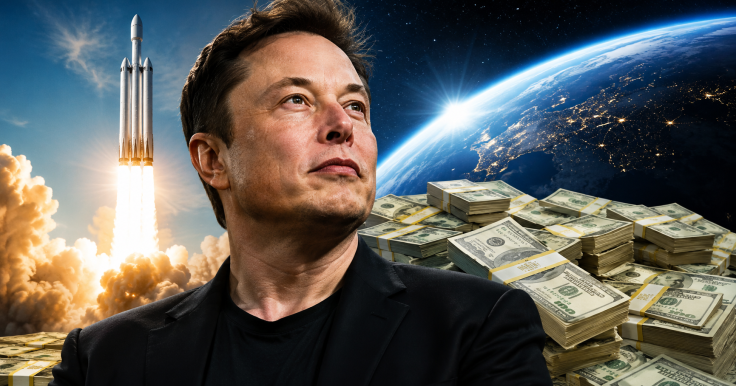
A single stock market debut has done what once seemed unimaginable: create the world's first trillionaire.
Elon Musk's fortune surged beyond $1.1 trillion (£820 billion) after SpaceX launched what is expected to be the biggest IPO in history, cementing his position as the richest person on the planet by an extraordinary margin.
The milestone has sparked fresh questions about the limits of modern wealth as Musk's vast empire continues to expand across space technology, artificial intelligence and electric vehicles.
A Historic Stock Market Debut
History has just minted its very first trillionaire—on paper, at least.
Elon Musk's SpaceX, the rocket, satellite internet, and artificial intelligence venture currently burning through capital with minuscule revenue compared to long-standing tech titans, confirmed on Thursday that its initial public offering will launch at $135 (£100.67) a share. This move paves the way for a historic stock market debut, solidifying it as the biggest IPO on record at roughly $75 billion (£55.93 billion).
Even before this historic debut, both Bloomberg and Forbes ranked Musk as the globe's wealthiest individual. He is also on track to unlock a staggering trillion-dollar compensation plan at Tesla if the automaker meets specific performance targets. However, it is this SpaceX stock launch that officially pushes him into trillionaire territory, though the final math largely depends on how you calculate his fortune.
Inside the Massive SpaceX Holdings
Filings from SpaceX reveal that Musk owns approximately half of the business. This massive stake includes future performance stock linked to ambitious benchmarks, such as building a colony on Mars and launching orbiting data centres into space. At Thursday's debut price, those specific SpaceX shares alone put his holdings at roughly $867 billion (£646.53 billion).
The initial public offering for SpaceX could make Elon Musk the world’s first trillionaire. Just how wealthy is the tech founder? His fortune now stands at roughly $970 billion, mostly in stock, according to a WSJ analysis.
— The Wall Street Journal (@WSJ) June 11, 2026
Read more: 🔗 https://t.co/sNN0yHZy8r pic.twitter.com/5kqdK49fZ2
When you factor in his massive stake in Tesla, the combined value of Musk's holdings across both companies pushes past $1.1 trillion (£820 billion). This staggering valuation comes from calculations by The Washington Post, based entirely on regulatory filings submitted by SpaceX and Tesla.
The Mars Terms and Conditions
Like almost everything surrounding Musk, his position as a trillionaire requires a bit of context. SpaceX has awarded him enormous blocks of equity that only vest if he propels the firm's valuation to staggering heights, and if the company actually achieves his ultimate dream of building a populated colony on Mars. Strip away those conditional shares, and Musk falls just short of the trillionaire mark—at least for the time being.
Eclipsing the World's Richest Billionaires
To put that into perspective, SpaceX's data on Musk's equity reveals that his total stakes in the rocket company and Tesla are now worth upwards of ten times the entire fortune of Microsoft co-founder Bill Gates, according to tracking by the Bloomberg Billionaires Index.
🚨 BREAKING: 🇺🇸 Elon Musk is one week from becoming the world's FIRST TRILLIONAIRE.
— Crypto Rover (@cryptorover) June 5, 2026
He owns ~42% of SpaceX. At the $135 IPO price, a ~$1.77 TRILLION valuation, that stake alone is worth roughly $740 BILLION.
Add his Tesla and xAI holdings on top, and he blows past… pic.twitter.com/jwE7Rx579S
Musk's fortune has expanded so massively that his net worth now rivals the combined wealth of the planet's next four richest individuals. This elite group includes Google co-founders Larry Page and Sergey Brin; Jeff Bezos, the Amazon founder and executive chairman who also owns The Post; and Larry Ellison, the mastermind behind business software giant Oracle.
Heavy AI Losses and Public Trading
Leading up to its market debut, SpaceX reported heavy financial losses, including a $13 billion (£9.70 billion) deficit since early 2023 that stems largely from aggressive investments in artificial intelligence.
Unlike most corporate leaders, Musk avoids a conventional salary. Instead, his compensation relies on massive equity arrangements tied to highly ambitious milestones—such as rolling out 1 million (£0.75 million) humanoid robots at Tesla—which yield payouts that vastly exceed typical executive earnings.
The general public will get its first opportunity to freely trade SpaceX shares when the stock hits the open market on Friday. Should the share price climb to $140 (£104.42) during the session, Musk will secure his status as a paper trillionaire—even if you completely discount the equity tied to his ambitious Mars missions and orbital data centres.
© Copyright IBTimes 2026. All rights reserved.