

Elon Musk's SpaceX Accused of Being 'Universe's Biggest Ponzi Scheme' Over Retirement Fund Risks
SpaceX's entry into the Nasdaq-100 raises concerns over passive investing and retirement fund exposure.
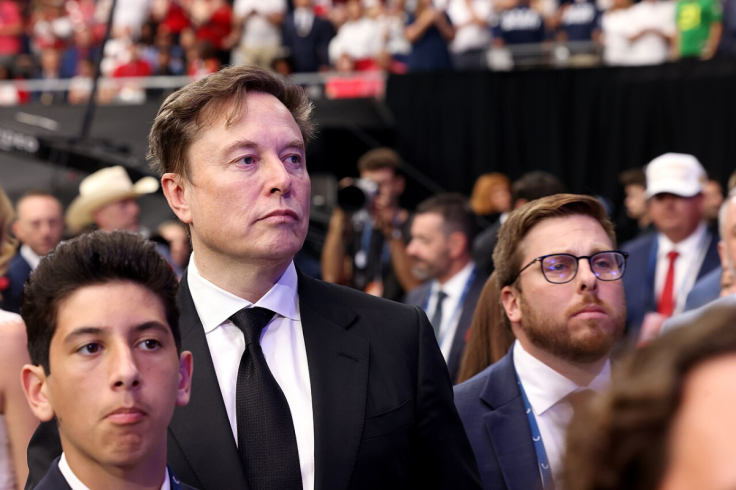
Elon Musk's SpaceX has been accused of acting like the 'universe's biggest Ponzi scheme' after Nasdaq-100 inclusion pushed its shares into millions of retirement-linked funds, even as the stock slipped from its early highs this week.
The charge, centres on the risk that ordinary investors were pulled into SpaceX exposure without knowingly choosing it, a point that has set off a sharp debate over index rules and passive investing.
SpaceX And The Nasdaq-100
The news came after Nasdaq said on 26 June that SpaceX would be added to the Nasdaq-100 before trading opens on 7 July, under the exchange's newer fast-entry framework for newly listed large-cap companies. It was reported that the revised rules, introduced in May, were designed to speed up the inclusion of very large new listings that meet the index's market-cap thresholds.
Index funds tracking the Nasdaq-100 must buy whatever the benchmark adds, whether their investors have ever heard of the company or not.
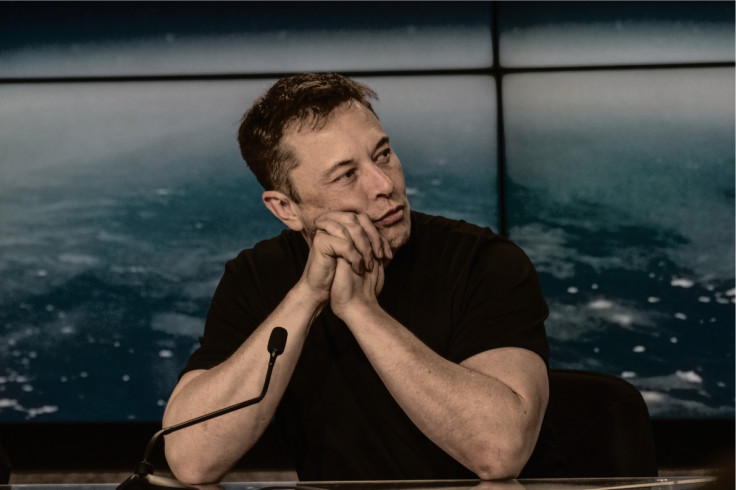
In this case, the argument is that Americans saving through retirement plans, pensions and university endowments are being automatically dragged into SpaceX ownership through funds that mirror the index. It is not subtle, and it is not especially charming either.
SpaceX went public on 12 June at $135 (£100) a share, in what described as a record-breaking $75 billion (£55.9 billion) IPO. The article supplied for rewriting says the stock then slipped 6.8% to $149.47 (£111.40) on its first day of trading on the Nasdaq-100, still above the IPO price but below an earlier peak above $200 (£1499.06) and under the $150 (£111.80) level where trading began on 12 June.
That weaker showing disappointed investors who had expected index inclusion to provide a cleaner lift.
The Retirement Fund Problem
The core concern is not just whether SpaceX has a volatile share price. It is the idea that passive funds are now required to buy a company whose valuation, governance and financing needs may still be in flux.
The article supplied for rewriting claims this has effectively forced Americans into a wager they did not knowingly place, and that is the bit that will make plenty of retirement savers spit out their tea.
It was reported on 18 June that SpaceX's bankers were preparing a bond sale of at least $20 billion (£14.9 billion), later lifted to $25 billion (£18.63 billion), to refinance a bridge loan and support the company's expansion into artificial intelligence.

It was reported that the debt deal drew huge demand, but also raised questions about capital spending, refinancing pressure and investor concentration risk. This combination, new equity exposure on one side and fresh debt on the other, has made the capital structure look rather busy, and a touch mad.
Insiders, including Musk and reportedly some senior Trump officials, can sell sooner than usual because of how the IPO was structured. No source independently confirms that claim, so it should be treated with caution. Still, the broader point stands that insiders may be able to monetise early while index funds and ordinary savers are left holding the bag for longer.
What Happens Next For SpaceX
Nasdaq confirmed the SpaceX addition on 26 June, the move would trigger a wave of passive buying when the stock enters the benchmark on 7 July.
The company is expected to land in the index with a relatively modest weighting, but even a small weight in a major benchmark can translate into significant flows because the funds involved are enormous. This is how passive money works, quietly and mechanically, until suddenly it does not.

There is also the market backdrop to consider. The Nasdaq composite fell 1.2%, the S&P 500 dropped 0.4% and the Dow slipped 0.2% on the day SpaceX's performance disappointed.
Broader weakness may have softened the blow, but investors had already been nervous for weeks after reports of SpaceX's financing plans and the heavy use of debt to support the company's ambitions.
At root, the story is less about one awkward trading day than about how modern index investing now shapes corporate power.
If a huge company can be pushed into retirement funds through a rule change, then rewarded with automatic demand, the line between market structure and market manipulation starts to blur, at least politically. That is the uncomfortable stuff hanging over SpaceX now, and it is not going away any time soon.
© Copyright IBTimes 2026. All rights reserved.