Spanish Army Demanded in Ceuta as Border Collapses Under Massive Migrant Surge From Morocco
Spanish enclave overwhelmed by migrant influx amid legal and political tensions
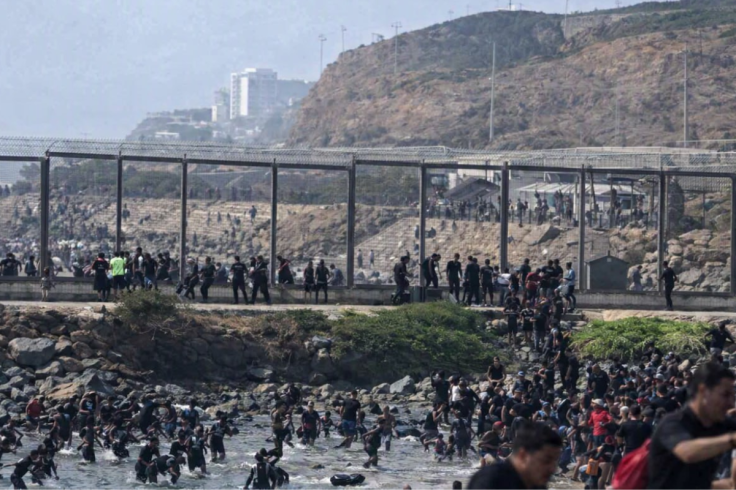
More than 1,500 migrants have crossed into the Spanish enclave of Ceuta from Morocco in the past ten days, with the region's president declaring an 'absolute humanitarian and social emergency' and demanding that Madrid deploy the army to take control of the border.
Juan Jesús Vivas, president of the autonomous city, said between 1,500 and 2,000 people had entered Ceuta in the ten days to Thursday, with hundreds more estimated to have arrived on Thursday alone. He is calling on the central government to assume a single chain of command over the Guardia Civil and other security forces.
Officials have pointed to a Spanish Supreme Court ruling handed down on 8 July as a key factor behind the sudden spike.
Spanish Court Ruling Triggered Surge
Officials have pointed to a Spanish Supreme Court ruling handed down on 8 July as a key factor behind the sudden spike. Under the ruling, only migrants who cross by scaling the border fence can still be turned back to Morocco immediately. Anyone who swims into Ceuta must instead go through the standard deportation process, which can take months and allows them to apply for asylum.
A Guardia Civil spokesperson said that 'it has been a slow trickle since the Supreme Court's ruling, but today has been an explosion'. Spain's Interior Ministry said it was working with Morocco on the surge and blamed people-smuggling networks for exploiting the ruling to encourage undocumented migration.
The ruling has effectively created a legal distinction between different modes of entry, with those arriving by sea now enjoying a longer window to lodge asylum claims. This has been seized upon by smuggling networks, which have been advertising the change to potential migrants.
El Gobierno de España está volcado en dar una respuesta inmediata a la situación en Ceuta.
— Pedro Sánchez (@sanchezcastejon) July 30, 2026
Estamos movilizando todos los recursos necesarios, trabajando con las autoridades marroquíes e internacionales, y preparando las medidas necesarias para recuperar la normalidad lo antes…
Madrid Resists Full Emergency Declaration
Despite Vivas's demand, Spain's Interior Ministry has rejected calls to declare a formal national emergency, saying the legal status does not cover migration crises, though it has promised additional resources for the region.
A national emergency is not a specific status under Spanish law, so Vivas's request functions as a political demand for Madrid to take direct charge of the border response rather than leaving Ceuta's regional government to coordinate separately with national police. Interior Minister Fernando Grande-Marlaska is expected to travel to Ceuta on Friday to assess the situation firsthand.
Vivas said the emergency shelter for unaccompanied migrant minors was operating at 2,400 per cent over its ordinary capacity, with more people now sleeping outside the city's temporary adult reception centre, which was built to hold 512 people, than inside it.
The scale of the humanitarian need has overwhelmed local resources, with Vivas warning that the situation is no longer sustainable without direct intervention from Madrid. His request for army deployment reflects the severity of the crisis as local authorities struggle to process and accommodate the influx.
Border Crossings Overwhelm Ceuta
Footage from Tarajal beach showed crowds walking around the breakwaters and onto local roads after crossing mainly by swimming on inflatable devices, while Spain's state news agency EFE reported others scaled fences to cross by land.
Some of the migrants, most of them young men though families with women and children were also present, shouted 'Viva España'.
🚨BREAKING: An emergency has now been declared in the Spanish city of Ceuta after tens of thousands of illegal migrants break in from Morocco
— Inevitable West (@Inevitablewest) July 30, 2026
Pedro Sánchez is REFUSING to deploy the military to defend the borders. 🇪🇸 pic.twitter.com/OvtzvEZxBs
The scenes have drawn comparisons to the border crisis of May 2021, when around 10,000 people entered Ceuta within days after Morocco eased its own border controls.
Migrant rights activist Zakaria Zarroqui said the scale of the crossings echoed that earlier crisis, telling reporters that the situation remained out of control and that people were still gathering in the Moroccan city of Fnideq to attempt the crossing.
Migrant support organisations have put the death toll along Ceuta's coast at more than 30 so far this year, a figure that does not yet account for the latest wave of arrivals, according to the Olive Press.
Broader Implications for EU Borders
Ceuta and Melilla remain the European Union's only land borders with Africa, meaning any breakdown in control there has consequences well beyond Spain.
A repeat of the 2021 crisis, when Morocco was widely seen as using migration as diplomatic leverage, would test EU external border policy at a sensitive moment.
The European Commission has yet to comment, but Frontex is understood to be monitoring developments closely. For now, Ceuta's authorities are left to manage a crisis local leaders say has already surpassed their capacity, while Madrid insists existing frameworks are sufficient.
© Copyright IBTimes 2026. All rights reserved.
- Recommended For You