FBI Reportedly Launches Criminal Manhunt to Unmask Whistleblower Who Exposed Kash Patel's 'Excessive' Drinking
The FBI's criminal inquiry into a journalist for reporting on Kash Patel's alleged misconduct raises legal and ethical concerns.

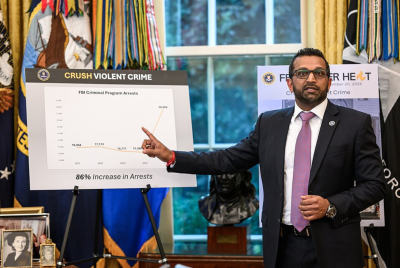
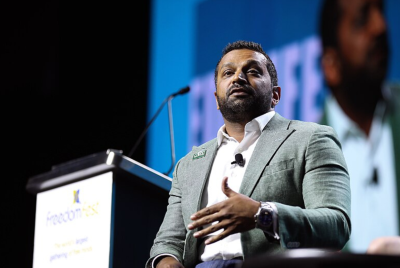
The FBI has reportedly opened a criminal leak investigation targeting the journalist who published a bombshell account of Director Kash Patel's alleged excessive drinking, in a move legal experts say has no precedent in modern American law enforcement.
The investigation centres on Sarah Fitzpatrick, a staff writer at The Atlantic, whose 17 April 2026 article cited more than two dozen anonymous sources to describe a pattern of alcohol-fuelled absences inside the FBI so severe that colleagues feared a national security crisis.
Patel immediately filed a £188 million ($250 million) defamation lawsuit against the magazine and Fitzpatrick personally. Now, sources familiar with the matter tell MS NOW that the bureau has gone further, launching a criminal inquiry that some of its own agents privately describe as deeply improper.
The Atlantic's Article Reported About Patel
Fitzpatrick's piece, headlined 'The FBI Director Is MIA,' drew on current and former FBI officials, Department of Justice staff, members of Congress, political operatives, hospitality workers and lobbyists. The picture they painted was not merely unflattering: it described a director whose drinking had begun to corrode the operational capacity of the country's primary domestic law enforcement agency.

Six sources told Fitzpatrick that briefings and meetings with Patel had been rescheduled for later in the day specifically because of his alcohol-fuelled nights. She reported that members of his security detail had struggled to wake him on multiple occasions after nights of heavy drinking. At least once, a request was made for 'breaching equipment' normally used by SWAT teams to force entry, because Patel was unreachable behind locked doors, according to information supplied to Justice Department and White House officials.
Fitzpatrick named two specific venues. She reported that Patel was known to drink to the point of obvious intoxication at Ned's, a private members' club in Washington DC, in the presence of White House and administration staff. She also reported that he drank heavily at the Poodle Room, a members-only social club at the top of the Fontainebleau Las Vegas hotel, where he spent portions of his weekends. After the story published, The Atlantic updated it to include a photograph of custom-labelled bottles of bourbon bearing Patel's name, which he reportedly gives out as gifts.
Patel gave his pre-publication response to The Atlantic in writing: 'Print it, all false, I'll see you in court. Bring your checkbook.' His office later added, 'I have never been intoxicated on the job.' Fitzpatrick, writing on Radio Atlantic after the lawsuit was filed, said she had since been 'inundated' by additional sources going 'up to the highest levels of the government' who confirmed her reporting. 'This was an open secret in Washington,' she said.
The Criminal Inquiry Into Fitzpatrick: Unprecedented and Potentially Unlawful
On 6 May 2026, MS NOW reporter Carol Leonnig reported that the FBI had opened a criminal 'insider threat' investigation focused on identifying who leaked information to Fitzpatrick. Two sources with direct knowledge of the investigation said the inquiry was being handled by agents in Huntsville, Alabama, the location of an FBI insider threats unit.
What makes this investigation legally and historically extraordinary, sources told MS NOW, is that no classified information appears to have been disclosed. Fitzpatrick's article contained no state secrets. The standard legal framework governing leak investigations under the Espionage Act applies to disclosures of classified material. Journalists who receive and report such leaks have, even in those cases, historically been treated only as potential witnesses, not as investigative targets.
Sources inside the investigation described a climate of coercion among the agents assigned to it. 'They know they are not supposed to do this,' one told MS NOW. 'But if they don't go forward, they could lose their jobs. You're damned if you do and damned if you don't.' The investigation, if it proceeds, could grant agents the power to examine Fitzpatrick's phone records, run her name through FBI databases and scrutinise her social media contacts, without the standard threshold of classified information being breached.

FBI spokesman Ben Williamson denied the inquiry in full. 'This is completely false. No such investigation like this exists. The reporter you mention is not being investigated at all,' he said. 'Every time there's a publication of false claims by anonymous sources that gets called out, the media plays the victim by investigations that do not exist.' The Atlantic's editor-in-chief, Jeffrey Goldberg, responded: 'If confirmed to be true, an FBI criminal leak investigation targeting our reporter would represent an outrageous attack on the free press and the First Amendment itself. We will defend The Atlantic and its staff vigorously; we will not be intimidated by illegitimate investigations or other acts of politically motivated retaliation.'
A Documented Pattern of Targeting Reporters Who Embarrass Patel
This is the second journalist connected to Patel-related coverage to face reported FBI scrutiny in two months, making it a visible pattern rather than an isolated incident. In April 2026, The New York Times reported that FBI agents had queried databases on its reporter Elizabeth Williamson after she published a February 2026 investigation into Patel's use of government personnel to provide his girlfriend, Alexis Wilkins, with a full-time SWAT security detail.
The Times reported that Wilkins, a 27-year-old aspiring country singer whom Patel has been dating for three years, received around-the-clock protection from personnel pulled from FBI field offices across the country. Agents, according to the reporting, were tasked with driving her to hair appointments and music engagements. After Williamson's story published, the FBI interviewed Wilkins and subsequently ran Williamson's name through federal law enforcement databases, exploring whether she had broken federal stalking laws through her reporting.
A third case adds further context. In January 2026, FBI agents conducted a court-authorised search of the home of Washington Post reporter Hannah Natanson, seizing two computers, a recorder, a phone and a portable hard drive. Natanson was not personally under investigation; the probe targeted a systems administrator charged with unlawfully sharing classified material. Press freedom advocates, however, noted the escalating frequency of journalists' homes and records becoming entangled in FBI inquiries under Patel's directorship.
Clayton Weimers, North America director for Reporters Without Borders, said after the Williamson disclosure: 'In the same week that Kash Patel filed a flimsy lawsuit against The Atlantic for a story he didn't like, we also learned that his FBI desperately combed through its databases to find dirt on a New York Times journalist whose reporting embarrassed him.' Democrats on the House Judiciary Committee also publicly challenged Patel over which databases he used to search for information about journalists who covered him.
Patel's defamation attorney, Jason Greaves of the Binnall Law Group, was paid more than £3.4 million ($4.5 million) in legal fees by Trump political action committees between 2022 and 2024. The firm also represented Trump following the January 2021 Capitol insurrection. White House Press Secretary Karoline Leavitt defended Patel as 'a critical player on the Administration's law and order team,' while acting Attorney General Todd Blanche told The Atlantic that Patel 'has accomplished more in 14 months than the previous administration did in four years.'
An FBI that investigates the journalists reporting on its own director is, by definition, an FBI that has stopped investigating itself.
© Copyright IBTimes 2026. All rights reserved.
- Recommended For You