

Former Prosecutor Praises ABC for Choosing To 'Fight Back' Against Alleged Trump 'Extortion'
ABC's court challenge puts government pressure on broadcasters under scrutiny, as Barbara McQuade argues that standing up matters
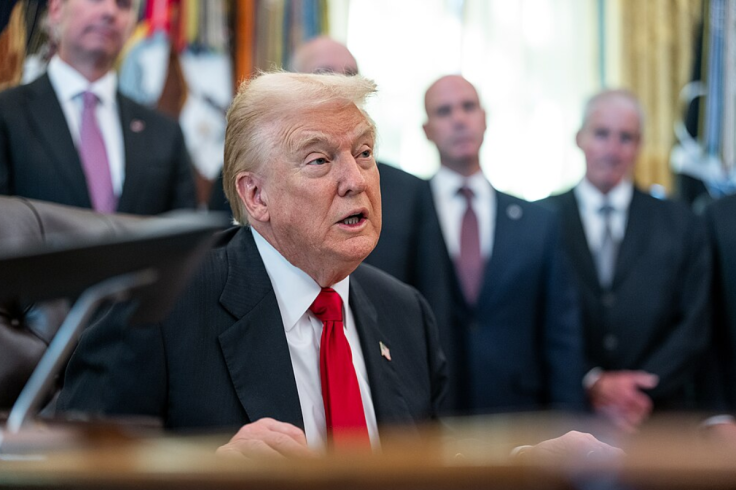
Former federal prosecutor Barbara McQuade praised ABC for challenging the administration of US President Donald Trump following a federal court ruling in Washington, DC, on 25 November 2026.
The decision blocked further action in an accelerated Federal Communications Commission (FCC) licence-renewal process involving eight ABC-owned television stations.
US District Judge Loren L. AliKhan granted a preliminary injunction in the lawsuit brought by ABC, its parent company, The Walt Disney Company, and eight television stations. She also denied the FCC's motion to dismiss the lawsuit.
McQuade described the administration's pressure as an attempt to 'extort' ABC, arguing that the broadcaster was right to resist. Her remarks represented her assessment of the government's conduct, not a judicial finding of criminal extortion.
Donald Trump's Public Pressure on ABC Faces Judicial Scrutiny
The FCC's Media Bureau issued an order on 28 April 2026 directing eight ABC-owned television stations to submit early licence-renewal applications by 28 May. None of the affected stations was scheduled for renewal before 2028. The agency cited an investigation into possible violations, including unlawful discrimination.
The order followed renewed tensions between Trump and ABC late-night host Jimmy Kimmel. On 27 April, Trump publicly called for Kimmel's dismissal following a joke about first lady Melania Trump.
ABC and Disney argued that the accelerated renewal process constituted retaliation for constitutionally protected speech. AliKhan examined the timing of the order, Trump's public statements and FCC Chairman Brendan Carr's involvement.
The judge identified 11 occasions over two years when Trump publicly called for ABC's broadcast licences to be revoked or taken away. She wrote that Carr had 'taken President Trump's rhetoric as his marching orders'.
The court also considered ABC's account of changes to its editorial decisions amid concerns about regulatory consequences. These included adjustments to political guest bookings on The View and the handling of presidential coverage.
ABC also made a political candidate's interview on Jimmy Kimmel Live! available on YouTube rather than broadcasting it on television.
AliKhan found that ABC was likely to succeed on its First Amendment retaliation claim. However, the preliminary injunction does not constitute a final judgment that the FCC violated the US Constitution.
An FCC spokesperson disputed the decision, describing the portion granting ABC's request as 'wrong on the facts and wrong on the law'. The agency said it expected to prevail, while ABC welcomed the ruling as an important First Amendment victory.
Former Prosecutor Praises ABC for Challenging Donald Trump's Administration
Speaking about the legal dispute, McQuade expressed confidence in ABC's case and emphasised the importance of challenging perceived government pressure.
'It's great to see ABC fighting back,' she said.
McQuade connected the dispute to wider concerns about pressure on organisations over diversity, equity and inclusion (DEI) programmes. She said some organisations had voluntarily abandoned such initiatives because they feared becoming targets.
She also referenced historian Timothy Snyder's concept of 'obeying in advance', associating voluntary compliance with patterns observed in authoritarian regimes.
McQuade characterised the dispute as 'singling out ABC for mistreatment and retaliation'. She predicted that the administration would appeal and said the case could eventually reach the US Supreme Court. Her prediction does not establish that an appeal has been filed.
For now, the injunction prevents further action in the accelerated licence-renewal proceedings while the litigation continues. AliKhan declined ABC's request for broader protection against potential future regulatory threats.
The ruling also leaves separate FCC investigations involving Disney's employment practices and The View unaffected, meaning the broadcaster remains subject to regulatory oversight.
© Copyright IBTimes 2026. All rights reserved.