

'We Can No Longer Afford This': Germany's Sick Leave Crackdown Sparks Backlash Over Day One Doctor's Note Rule
Chancellor Merz introduces sweeping changes to boost Germany's economy, sparking debate over sick leave, taxes, and pensions.
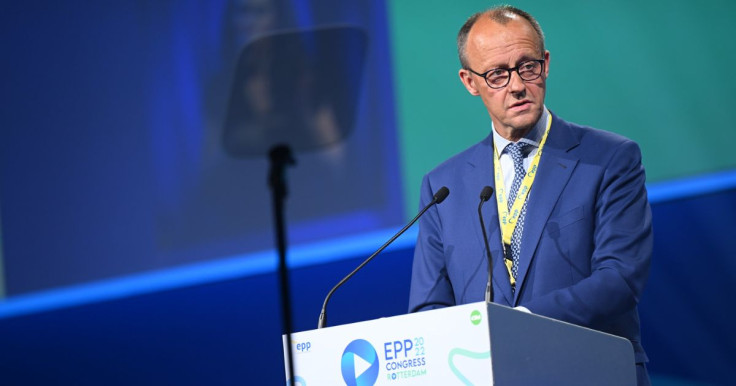
German Chancellor Friedrich Merz has launched a sweeping overhaul of the nation's economic landscape, targeting stagnant growth with aggressive structural reforms. The package, unveiled on Thursday, includes contentious new German sick leave rules that force employees to provide medical certificates from the very first day of illness. These changes are central to the broader Friedrich Merz economic policy 2026, which aims to boost national competitiveness through tax relief and pension restructuring.
The coalition government faces an urgent need to revitalise Europe's largest economy. Germany's growth forecast for 2026 has been halved to 0.5 per cent, as the country struggles with high energy costs and increased competition from Chinese markets.
Chancellor Merz stated that the government must address these structural weaknesses immediately. 'We want to get Germany back on track,' Merz told reporters. 'We know this is a tough decision. But we can no longer afford this competitive disadvantage caused by prolonged absences from work.'
Chancellor Merz Unveils Germany's Economic Reform Package
The German economy has struggled to regain momentum following the global pandemic. The nation's export-driven economic model faces mounting pressure from rising Chinese competition and higher energy prices, initially driven by the war in Ukraine and subsequently exacerbated by the conflict in Iran. The government recently halved its 2026 growth forecast to 0.5 per cent and reduced its 2027 prediction from 1.3 per cent to 0.9 per cent, whilst also raising inflation projections as soaring energy costs take their toll.
The proposed measures are designed to ease the regulatory burden on businesses by cutting red tape and granting employers greater flexibility to hire workers on short-term contracts. Economists have largely welcomed the proposals, noting that the government is delivering concrete changes after months of internal disagreements between the conservatives led by Merz and their junior coalition partner, the left-leaning Social Democrats.
New Germany Sick Leave Rules Spark Backlash
A central element of the reform package involves changes to employee absence regulations. The government intends to scrap the right for citizens to obtain a sick note by telephone. Instead, the new rules will require workers to submit a medical certificate from the very first day of illness.
Earlier this year, the Chancellor drew criticism when he stated that habits such as four-day working weeks and overly long sick leave were actively harming the country's economic competitiveness. Germans currently work some of the shortest hours in the European Union.
The proposal to require immediate medical certification has provoked backlash from healthcare professionals. Markus Blumenthal-Beier, head of the German Association of General Practitioners, told the RND media group that the proposed changes to sick notes are 'absolutely catastrophic' and warned that the requirement would clog the health system.
Meanwhile, Christiane Benner, chair of Germany's largest union, IG Metall, welcomed the financial support for employees but criticised the push for more fixed-term employment contracts, describing the move as an 'attack on workers' rights.'
Germany Tax And Pension Reforms Spark Debate
Alongside the workplace changes, the government outlined €10 billion in annual tax relief intended for lower-income earners. This financial strategy includes plans to build more affordable housing and launch an action plan against benefit fraud.
To fund the tax relief, the top tax rate will increase from 45 per cent to 47 per cent for the highest earners, defined as those with an annual income of €280,000 or more. Furthermore, the government aims to reduce staffing in federal ministries by eight per cent through digitisation.
Addressing long-term demographic challenges, the package incorporates structural changes to the retirement system. A commission appointed by Merz last month suggested adopting a Swedish-style pension fund and gradually increasing the retirement age to stabilise the system as the population ages. The government expects parliament to pass the pension reform by the end of the year.
The pension modifications have sparked significant criticism. Labour unions strongly oppose raising the retirement age for individuals in physically demanding jobs. Conversely, employers argue that introducing mandatory pension contributions will only make hiring more expensive.
The urgency surrounding the reforms coincides with a fracturing domestic political landscape. The conservative government currently trails the far-right Alternative for Germany party in opinion polls. The AfD could potentially win a state election for the first time in the eastern state of Saxony-Anhalt this September.
Additionally, Finance Minister Lars Klingbeil stated the government is taking a tougher course against China to protect companies from unfair competition. While the reform document did not mention China by name, it focused heavily on strengthening the European Union's anti-dumping and anti-subsidy measures. Berlin now views China as a global geopolitical rival and a major challenge to historically dominant domestic industries such as car manufacturing.
Financial Analysts Welcome German Economic Policy Shifts
Financial analysts have responded positively to the overarching strategy. Carsten Brzeski, global head of macro at ING, described the initiatives as a substantial package designed to strengthen the nation as a business location and put public finances on a sustainable footing. 'The reform train has no brakes,' Brzeski said. 'One is tempted to shout, "Finally!" It took a year, but the "summer of reform" has arrived.'
Employers' Association President Rainer Dulger similarly welcomed the package as a 'long-overdue change of course.' Marion Muehlberger from Deutsche Bank Research called the plans one of the most significant reform packages in decades. 'The government has demonstrated its ability to agree on key structural reforms and implement them by the end of the year,' Muehlberger said, adding that the move is likely to boost sentiment and accelerate economic growth in the second half of the year.
Yet, others highlighted potential flaws. Clemens Fuest, president of the Ifo Institute, told Reuters that the greatest weakness of the reform package is the absence of measures to consolidate government spending. 'Tax relief is not feasible in the medium term unless the growth of government spending is curbed,' he warned.
© Copyright IBTimes 2026. All rights reserved.