Google's AI Makeover, Return of Smart Glasses Could Signal the End of Traditional Browsing as We Know It
Price and launch date are unknown as of now.

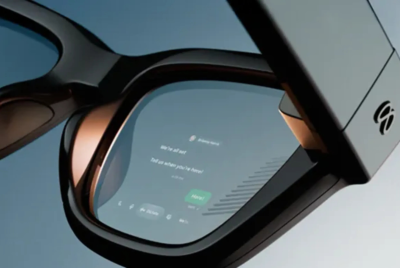
At Google's annual product conference it announced that it was bringing back smart glasses for the first time since they were pulled from shelves in 2015.
Reactions to the new glasses from people have been overall positive.
Glasses Integrated With AI
Partnering with Samsung and glasses makers Warby Parker and Gentle Monster, Google executives unveiled what they call 'intelligent eyewear,' a line of sunglasses and eyeglasses set to go on sale in the fall.
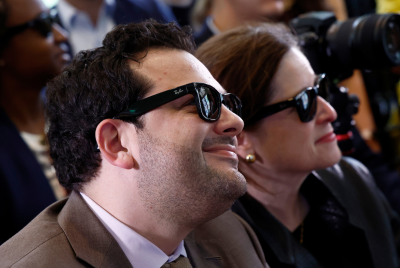
The glasses will react to voice commands to Gemini and take photos or videos with cameras in the frame of the glasses. Other tech giant Meta partnered with eyewear giant EssilorLuxottica to sell similar smart glasses integrated with AI starting in 2021 called the Ray-Ban Meta.
At Google's annual developer conference on Tuesday, Product Manager Nishtha Bhatia performed a demo with the glasses, 'using the audio sunglasses to launch Gemini, connect to DoorDash and order a coffee. She also had Gemini read a summary of unread text messages and add an event to her calendar,' according to The Guardian.
'These are the first two designs of a bigger collection coming this fall,' said Shahram Izadi, head of Android XR products and platform, in the keynote at the conference. The glasses are supposed to give information 'spoken into your ear privately, rather than shown in a display,' he said.
The goal of Google Gemini, said Josh Woodward, who oversees the flagship AI's development, is 'a universal assistant that's personal, proactive, persistent.' Google announced that 900 million people use the Gemini app monthly, still less than ChatGPT's 900 million weekly users, according to The Guardian.
The addition of agents to Google's flagship search product, used by billions of people every day, shows the expansion of Gemini from a product used largely in business settings to one that is becoming more mainstream.
What was Google Glass?
In 2014, Google started selling Google Glass, another version of smart glasses, for $1,500.
However, it was pulled from shelves less than a year later over privacy concerns and how expensive it was.
However, a decade later, Meta sees its augmented-reality glasses as a major area of growth for its future, and Google is even currently 'working on a second model of smart glasses with an in-lens display, nicknamed Project Aura,' according to The Guardian.
Reactions to Google' Announcement
Investor Christine Tsai of 500 Global, an early stage venture capital firm, said Google getting back into the smart glasses game is positive.
'It's good for consumers. And it's good for early stage start ups, where we tend to invest, because they're a platform where people can build more capabilities,' said Tsai who attended Tuesday's conference.
'Smart glasses are gaining traction as "that next modality" to follow the success of the smartphone,' she added.
'Developer Anil Shah, who is building an events management app called tixfix.ai, said smart glasses hold the promise of integrating many services that Google already provides, like Google Maps and Google Voice,' according to the BBC.
'It's a great addition to their product line-up,' he said.
© Copyright IBTimes 2026. All rights reserved.
- Recommended For You