

Melissa Casias Is Dead: Missing Nuclear Worker's Phones Were 'Wiped Clean' Before She Was Found Dead
A vanished scientist, a wiped digital trail and a forest crime scene that will not stay buried.

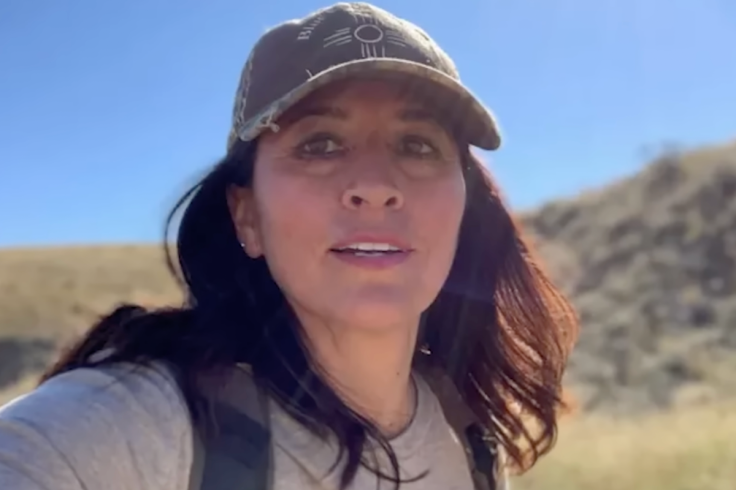
Melissa Casias, a 53‑year‑old nuclear lab administrative assistant from Ranchos de Taos, New Mexico, was found dead in a remote stretch of Carson National Forest on 28 May, almost a year after she vanished on 26 June 2025, and her family's lawyer now says her phones were 'wiped clean' and crucial evidence missed, sharply challenging early suggestions she died by suicide.
Casias worked at the Los Alamos National Laboratory, the long‑running US government nuclear research facility, before she disappeared after walking out of her home without her purse, keys or wallet. According to her family, both of her phones were later discovered in the house reset to factory settings, with all call logs and messages erased, and a drop of blood was reportedly found inside the property.
Those details, combined with the remote location of her remains and the presence of a handgun, led local speculation towards suicide, but relatives never bought that theory and quietly hired a former federal prosecutor to dig in.
That decision has now produced uncomfortable questions for New Mexico State Police, who declared the scene clear after recovering skeletal remains and a handgun near the McGaffey Ridge area in late May.
In late June, almost a month after officers wrapped up, Casias's family and volunteers from the group 4Corners K‑9 Search and Rescue went back to that same patch of forest. What they say they found there has turned the tone of the case from tragic to downright troubling.
Missing Nuclear Worker Search Uncovers Overlooked Evidence
The family's lawyer, David Adams of Parnall and Adams Law, said that volunteers uncovered bones, torn and bloody clothing, orange peels and strands of hair still at the site. None of it, he said, had been collected when state police first processed the area and removed Casias's remains for examination.
'The family really wasn't expecting to find any additional information, other than to just kind of finally have an idea of where her last resting grounds were, so they could kind of go pay their own respects, and it certainly turned out to be something much, much more,' Adams said.
They also located shredded paper that relatives believe may contain Casias's handwriting, along with what appears to be a tobacco pouch. Her family say she did not use tobacco at all, raising obvious questions about who brought it there and when. Adams went further, saying the discovery has tainted confidence in the law enforcement handling of the case, especially if investigators later conclude there was foul play.
'There becomes a question of a chain of custody,' Adams argued, suggesting even the grim possibility that an officer could have spat tobacco at the crime scene. 'I mean, certainly possible. I mean, that would be an example of just poor training. If somebody actually did do that, I mean, it defeats every best practice regarding the crime scene and protecting the integrity of a crime scene.'
New Mexico State Police have not issued a detailed rebuttal. A spokesman said the matter was being brought back to investigators for further response. Nearly two months on, the Office of the Medical Investigator has still not confirmed whether Casias's death is being treated as suicide or murder, and no official cause of death has been released.
Phones 'Wiped Clean' And A Gun With No Bullet
From the start, the case never fit neatly into a standard missing‑person template. Surveillance footage captured Casias near State Road 518 at around 2.20pm on the afternoon she disappeared, walking alone about three miles from her Ranchos de Taos home. She had left behind the everyday essentials most people carry automatically. Her phones, found inside the house, had been reset, erasing digital traces that might have helped investigators reconstruct her movements and contacts.
Adams says his firm was retained after 'multiple red flags' were raised by legal observers and people who knew Casias well. 'There [were] enough phone calls coming in, where people were providing information that they thought was relevant based upon how they knew Melissa, and observations that they have made regarding it, and a lot of it has come to be information that I would undoubtedly dive deep into investigating,' he said.
When Casias's skeletal remains were eventually found in the forest, a handgun lay beside them. Yet, according to Adams, no bullet casing has been recovered and initial CT scans of her skull did not show signs of a gunshot wound or any bullet fragments.
An anonymous law enforcement source said investigators should have established the weapon's ownership within a week, assuming the serial number was intact, and noted that local departments routinely send guns in potential criminal cases to Washington DC for rapid forensic analysis. If that process has started here, nothing public has emerged from it.
Adams also noted the sheer difficulty of reaching the spot where Casias's body was found. The area, he said, is so rugged that someone travelling on foot would need multiple stops for rest and water. It is, in other words, not the kind of place many people simply wander into and never come back from.
The lawyer, looking at strands of hair found at the site that he believes could be horse hair, has even floated a stark possibility. 'In my mind, when you see that, you kind of go, okay, well, I could see that you would need a horse to get her up there if you were moving a body, for instance, because how you would otherwise do that,' he said.
That theory remains unproven, and the origin of the hair has not yet been determined, but it is the sort of detail that, once voiced, is hard to unhear.
A Pattern Of Missing Scientists And A Silent FBI
Casias's death is not occurring in isolation. She is one of four people with deep ties to US nuclear weapons facilities in New Mexico who have vanished under almost eerily similar circumstances over the past year.
Anthony Chavez, 79, a former Los Alamos National Laboratory employee who retired in 2017, left his home on foot on 4 May 2023 and disappeared. On 28 August that year, 48‑year‑old Steven Garcia was last seen leaving his Albuquerque home on foot carrying only a handgun, a bottle of water and no identification or phone.
A revealed that Garcia worked as a government contractor for the Kansas City National Security Campus, which runs a major site in Albuquerque tied to US national defence.
Then, in February this year, retired Air Force General William Neil McCasland, previously in charge of the Air Force Research Lab that collaborates closely with nuclear facilities, vanished from his New Mexico home. His disappearance pushed the cluster of missing scientists firmly into national view.
Those cases, along with a series of unexplained deaths among NASA scientists working on advanced rocket and propulsion research, have fuelled what some in the US are bluntly calling a 'missing scientists' crisis. Public pressure escalated to the point that President Donald Trump ordered the FBI to investigate potential links between the cases.
On Wednesday, the bureau said, 'The FBI continues to look for connections into the missing and deceased scientists. We are working with the Department of Energy, Department of War, and with our state and local law enforcement partners to find answers.'
Adams flatly disputes that claim, saying there has been no FBI contact with his office and no visible federal presence in the Casias investigation. He specialises in representing families in missing person and homicide cases, particularly those involving women, and has previously taken legal action against police agencies over alleged investigative failings.
Asked whether the handling of this case might ultimately trigger litigation on behalf of the Casias family, he did not commit either way, noting only that all evidence recovered by the family and volunteers has been turned over to authorities.
© Copyright IBTimes 2026. All rights reserved.