Breakthrough Research Identifies Pig Semen Ingredient as Key to Eye Drops That Halt Spread of Cancer
A novel approach using semen-derived exosomes could transform retinoblastoma treatment.
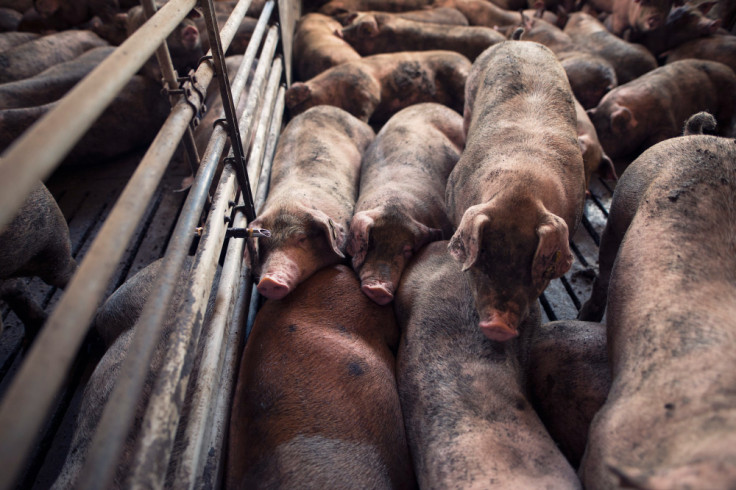
Scientists in China have developed eye drops derived from pig semen that stopped tumour growth in the retinas of mice, in a finding that could one day spare children with a potentially lethal eye cancer from the invasive injections and chemotherapy that currently define their treatment.
The study, published on 27 March 2026 in the peer-reviewed journal Science Advances, was led by Yu Zhang and colleagues at Shenyang Pharmaceutical University in north-east China, targeting retinoblastoma, the most common intraocular cancer in children.
The research focuses on a biological property specific to semen-derived exosomes: their capacity, honed through evolution, to penetrate formidable biological barriers. That same ability, the researchers concluded, makes them effective couriers for drug delivery across the highly fortified barriers of the human eye.
Why Pig Semen is Used and How Exosomes Work
Exosomes are nanoscale particles produced by almost every cell in the body. They carry proteins and other biological cargo between cells, and researchers have explored them as potential drug delivery vehicles for years. The challenge has been achieving specificity, ensuring they cross biological barriers selectively, reach the target tissue and spare nearby healthy cells.
The team at Shenyang Pharmaceutical University chose semen-derived exosomes because of a property that evolution has refined over millions of years. Sperm must penetrate the female reproductive tract, and semen exosomes facilitate that passage by temporarily opening tight junctions, the tightly sealed connections between cells lining biological membranes.
Scientists in China have discovered the secret ingredient to treating a rare eye cancer: Pig semen.
— Pubity (@pubity) March 28, 2026
The pig semen secret formula allowed eyedrops to stop the spread of retinoblastoma in mice, and they hope to start human trials soon. pic.twitter.com/FxKhTc8mCt
The researchers found that those same exosomes can open and close equivalent tight junctions on the surface of the human cornea, effectively creating a reversible gateway through which drug cargo can pass into the eye.
Pig semen was chosen specifically because porcine exosomes are accessible, well-characterised and share relevant surface proteins with human biology. Key proteins identified in the Science Advances paper include clusterin, prostaglandin D synthase and acrosomal vesicle protein 1, all of which contribute to the exosomes' capacity to traverse biological barriers.
The lead researcher, Yu Zhang, is now also investigating exosomes derived from bull semen, according to FierceBiotech, to see whether the approach can be broadened beyond a single animal source.
The Nanozyme System
The exosomes did not work alone. The researchers engineered them to carry a 'nanozyme system' called CMG, composed of carbon dots, manganese dioxide and glucose oxidase. Once the exosomes delivered this payload inside retinoblastoma cells, the nanozyme system triggered an escalating cascade of oxidative stress that overwhelmed the cancer cells' defences and forced them into self-destruction through a process that disrupts the balance between autophagy and programmed cell death.
To improve selectivity further, the team attached folic acid molecules to the outside of the engineered exosomes. Retinoblastoma cells carry significantly higher concentrations of folic acid receptors on their surface than healthy retinal cells do, giving the exosomes a molecular address to seek out.

The resulting construct, designated FA-SEVs@CMG in the Science Advances paper, reached the posterior segment of the eye via two separate routes simultaneously, travelling through both the cornea and the conjunctiva, the membrane covering the white of the eye.
In mice with retinal tumours, the drops kept tumours small across a 30-day observation window. Animals in the control group, given the nanozyme components without exosome packaging, showed tumour spread into other parts of the eye, demonstrating that penetration of the retinal barrier was not incidental to the result but essential to it.
The mice treated with the full exosome-drug construct also retained eyesight comparable to tumour-free controls, a finding the researchers described as significant given that current treatments routinely damage the very tissue they are trying to preserve.
The Disease Targeted and Its Treatment Burden
Retinoblastoma is the most prevalent intraocular malignancy in children and accounts for approximately 3% of all childhood cancers, according to the American Cancer Society. Around 300 to 350 cases are diagnosed in the United States each year, and two-thirds of diagnoses occur before a child reaches two years of age.
Globally, a 2025 Scientific Reports study found that incidence rose from 4,674 cases in 1990 to 6,275 in 2021, with the burden falling disproportionately on low- and middle-income countries where diagnosis is often delayed and specialist care is scarce.
According to the National Cancer Institute, approximately 18.4 children per million under the age of four are diagnosed with retinoblastoma annually in the United States. More than nine in ten cases in high-income settings are curable, but survival rates remain far lower in countries where treatment access is limited.
Any approach that simplifies administration and reduces the need for specialist intervention could therefore have significant implications beyond well-resourced healthcare systems.
If the approach survives the rigorous translation from mouse models to human patients, it may one day replace one of the most dreaded procedures in paediatric oncology with something as simple as a dropper bottle.
© Copyright IBTimes 2025. All rights reserved.
- Recommended For You