'I Just Throw It Away': Trump Dumps Iran's Nuclear Proposal at the First Sentence
US-Iran tensions escalate as Trump dismisses Iran's nuclear proposal, demanding zero enrichment

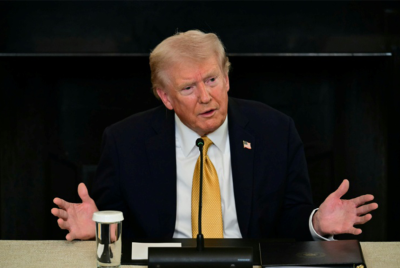
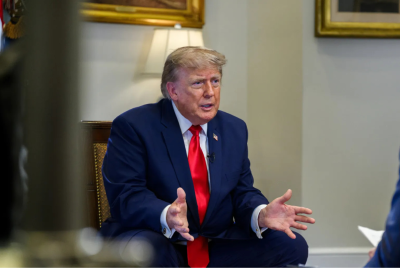
Donald Trump revealed on 15 May 2026 that he discarded Iran's latest written nuclear proposal almost immediately after receiving it, saying he stopped reading the moment it failed his opening condition. Speaking to reporters at the White House, Trump was direct about his approach to Tehran's diplomatic overtures — one that leaves virtually no room for ambiguity.
'I looked at it, and if I don't like the first sentence, I just throw it away,' Trump said, adding: 'if they have any nuclear of any form, I don't read the rest of their letter.'
Zero Tolerance on Nuclear
The remarks come amid a fragile ceasefire between the United States and Iran that Trump himself has described as being on 'massive life support.' The US and Israel launched large-scale strikes on Iran on 28 February 2026, and a conditional two-week truce was brokered through Pakistani mediation on 8 April 2026. That ceasefire has since been extended without a set deadline, with a shadow drone war continuing across the region.
Trump's position has been consistent: Iran must commit to zero nuclear enrichment. When asked by a reporter whether a 20-year moratorium on enrichment would be sufficient, Trump said it could be — but only under strict conditions. 'No, 20 years is enough. But the level of guarantee from them is not enough... It's got to be a real 20 years, not a fake,' he said. On what Washington ultimately wants from Tehran, Trump was equally blunt: 'We have to get everything.'
A well-informed Iranian source has told me that Tehran has officially received the American response to Iran’s proposal, and Washington has rejected Iran’s conditions in their entirety.
— Ali Hashem علي هاشم (@Alihashem) May 15, 2026
Iranian negotiating team included five conditions that must be met before entering into talks…
What Iran Has Offered
Iran's written response to the latest US proposal stopped short of what Washington demanded. Iran holds roughly 400 kilograms of uranium enriched to 60 per cent — just below the 90 per cent threshold required for weapons-grade material. The US position is that Iran must either transfer those stockpiles abroad or halt enrichment for at least 20 years.
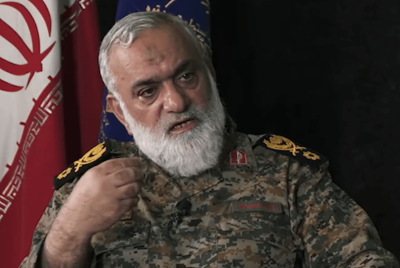
Iran has indicated it is open to diluting some of its highly enriched uranium and transferring the rest to a third country, but has firmly rejected dismantling its nuclear facilities. Tehran has also demanded that Washington lift its naval blockade of Iranian ports as a precondition for reopening the Strait of Hormuz, a demand Trump has so far refused to meet without a nuclear agreement in place first.
Trump's special envoy Steve Witkoff previously told Fox News that Iranian negotiators had acknowledged holding around 460 kilograms of uranium enriched to 60 per cent — enough, Witkoff said, to produce approximately 11 nuclear warheads within one to two weeks if upgraded to weapons grade.
🚨 NOW: President Trump reveals he reads the FIRST SENTENCE of Iran’s proposal, then THROWS IT OUT if he doesn’t like it
— Eric Daugherty (@EricLDaugh) May 15, 2026
“Well, I've looked at it, and if I don't like the first sentence, I just throw it away.” 🔥
Q: What was the first sentence?
TRUMP: “An unacceptable… pic.twitter.com/Ahvi3i9zEU
The Broader Deadlock
Analysts have pointed to a fundamental clash of priorities driving the breakdown. Chatham House's Sanam Vakil described it as 'a clash of perception,' with Trump seeking immediate nuclear concessions while Tehran wants to address the war's end and sanctions relief before turning to the nuclear file.
Mohammad Ayatollahi Tabaar, a nonresident scholar at the Carnegie Endowment for International Peace, has suggested that deep mutual distrust may require a shift away from comprehensive deal-making toward a more minimalist approach, one focused on what each side will not do rather than formal commitments. Without such a shift, Tabaar has argued, the gap between Washington's all-or-nothing posture and Tehran's sequencing demands may prove unbridgeable.
The stakes extend well beyond the negotiating table. With the Strait of Hormuz still effectively closed to normal shipping and global energy markets under strain, the failure to reach even a preliminary understanding carries significant economic consequences. Trump's admission that he will not read past the first line of any Iranian proposal that contains nuclear language signals that the window for a diplomatic resolution may be narrowing faster than either side publicly acknowledges.
© Copyright IBTimes 2026. All rights reserved.
- Recommended For You