

Iran Signs Secret €500 Million Deal for Russian Missiles to Rebuild Defences Destroyed by Israel — Leaked Documents Reveal
The missiles that might save Iran are still years away, and the clock is ticking
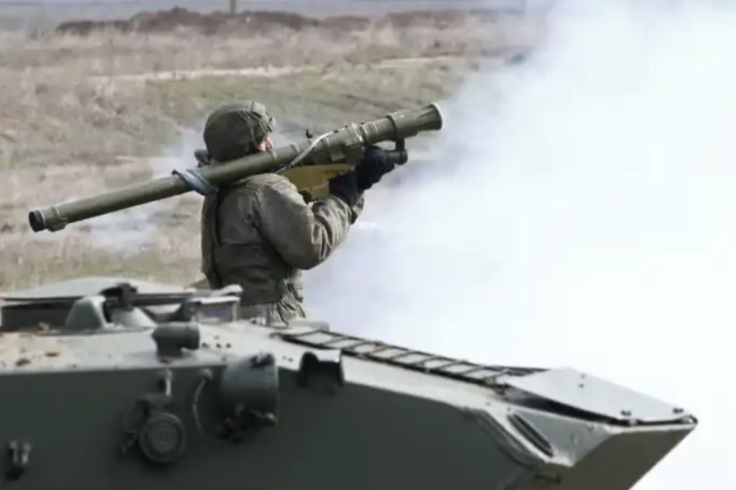
Iran's air defences lie in ruins.
So Tehran turned to Moscow for help — and may have made a dangerous bet.
Leaked Russian documents obtained by the Financial Times reveal that Iran signed a secret €500 million or $589 million (£436 million) arms contract with Russia in December to acquire thousands of advanced shoulder-fired missiles. The goal: rebuild the air defence network that Israel destroyed during last year's 12-day war.
But here's the problem. The weapons won't arrive until 2027 at the earliest. And the US military is already at Iran's doorstep.
The Contract Details

The deal, negotiated between Russian state arms exporter Rosoboronexport and Iran's Ministry of Defence, commits Moscow to deliver 500 man-portable Verba launch units and 2,500 9M336 missiles in three batches running through 2029, according to documents seen by the Financial Times.
Each missile costs roughly $200,000 (£148,000). The launchers run about $47,000 (£35,000) apiece. The contract also includes 500 'Mowgli-2' night-vision sights for tracking aircraft in darkness.
The Verba is one of Russia's most modern portable air defence systems. It uses infrared guidance to target cruise missiles, low-flying aircraft, and drones. Small mobile teams can operate it without relying on fixed radar installations — the kind of installations that Israeli strikes wiped out last June.
Tehran formally requested the systems in July 2025, weeks after US and Israeli forces struck Iran's three main nuclear sites during what the Pentagon called Operation Midnight Hammer.
Why the Timing Matters
The contract was signed in December. That same month, Trump began threatening military action against Iran over its nuclear programme and crackdown on protesters.
Two aircraft carrier strike groups now sit in the region: the USS Abraham Lincoln in the Persian Gulf and the USS Gerald R. Ford steaming toward the Arabian Sea. Fighter jets, refuelling tankers, and submarines have followed. According to CNN, the current US air force presence in the Middle East is the largest since the 2003 invasion of Iraq.
Trump told reporters last week that Iran has '10 to 15 days at most' to reach a nuclear deal. The White House has been briefed that strikes could begin as early as this weekend.
If that happens before 2027, Iran gets the worst of both worlds. It bears the political cost of deepening its alliance with Russia while gaining none of the defensive benefit. The missiles meant to protect Iranian airspace will still be sitting in Russian warehouses.
Are Weapons Already Arriving?
The official delivery schedule says 2027. But evidence points to Russian military equipment reaching Iran ahead of time.
Flight-tracking data from Flightradar24 shows at least five Russian Il-76 cargo aircraft flying to Tehran in recent weeks. Defence analysts have confirmed that Iran received up to six Mi-28 attack helicopters from Russia in January. The aircraft were spotted at Mehrabad Airport in Tehran and later seen conducting test flights over the capital.
The cargo flights follow a pattern. Il-76 and Il-96 transport planes have been using routes over the Caspian Sea, away from NATO radar coverage, to move equipment into Iran since December 2025.
One person familiar with the Verba transaction told the Financial Times that some deliveries could start earlier than the official schedule suggests.
What Iran Is Getting and What It's Missing
The Verba system fills a specific gap. It targets exactly what the US would send in a strike: cruise missiles launched from warships, low-flying attack helicopters, and drones. Unlike Russia's larger S-300 and S-400 systems, Verba units don't require extensive training or integration. Small teams can deploy them quickly.
But portable missiles won't stop stealth bombers. They won't intercept ballistic missiles. And they can't protect nuclear facilities buried under mountains of concrete.
Iran has spent recent months hardening its nuclear sites. Satellite imagery from the Institute for Science and International Security shows fresh concrete at tunnel entrances near Natanz, with construction crews covering the Taleghan 2 facility at Parchin with soil to create what analysts describe as an 'unrecognisable bunker'.
The Bigger Picture
This deal isn't just about missiles. It's about the Russia-Iran military axis growing tighter at a moment when both nations face Western isolation.
For Moscow, the agreement provides a reliable customer willing to buy Russian arms despite international sanctions. For Tehran, it's an attempt to rebuild what was lost—even if the help arrives too late.
Iran's air defences lie in ruins. The missiles that might have saved them are still years away.
And the clock is ticking.
© Copyright IBTimes 2026. All rights reserved.