

'An Iranian Cyber Attack': Whistleblower Raises Russia Link as US Tech Outages Spark Questions
Whistleblower Everett Stern has questioned whether US technology outages could be linked to an Iranian cyber attack supported by Russia
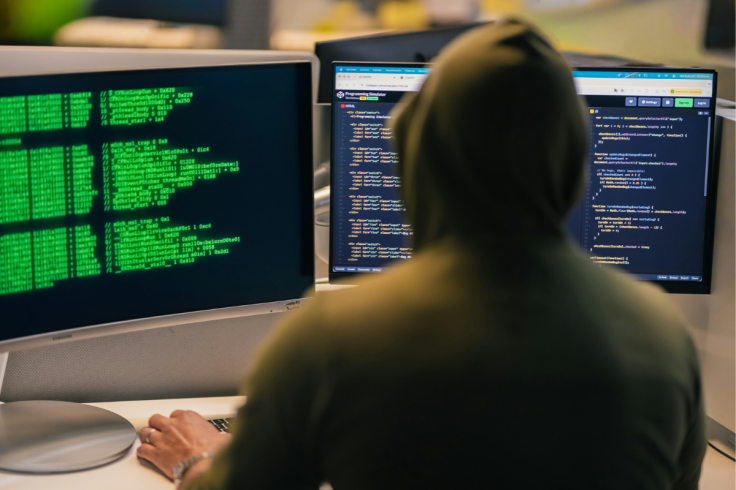
A whistleblower has urged US authorities to investigate whether Iran, possibly with Russian support, was behind a series of technology outages affecting aviation, banking and communications. The call comes despite government assurances that the disruptions do not appear to be coordinated.
In an open letter published on X on Tuesday, 17 November, Everett Stern challenged Homeland Security Secretary Markwayne Mullin's assessment of the incidents and called for greater transparency about their causes.
The outages have affected services across several sectors. However, Stern has not presented technical evidence linking the incidents or identifying an overseas attacker. His letter raises a possibility for investigators to examine, rather than establishing who was responsible.
Iranian Cyberattack Claim Challenges Official Assessment
Mullin told CNBC on Tuesday that he was 98% certain the disruptions were not caused by a cyberattack. He suggested that ageing computer infrastructure was struggling to accommodate newer systems.
Stern disputed the confidence of that assessment, arguing that even a small possibility of malicious interference warranted serious attention from national security officials.
'You have said you are 98 percent certain this is not a cyber attack. On national security, 2 percent is not a rounding error,' he wrote.
Dear Secretary Mullin @SecMullinDHS,
— Everett Stern (@EverettStern1) November 17, 2026
This morning the classified network of the National Security Agency was reported down.
That makes five in five days. Microsoft. The FAA. United Airlines. Major American banks. Now the NSA.
You have said you are 98 percent certain this is…
Everett Stern said investigators should examine whether the outages across critical sectors shared a common cause.
'One outage is a bad day. Five in five days across aviation, banking, communications, and intelligence is a pattern,' he wrote.
He said he believed Iran was responsible, possibly with Russian support: 'I believe this is an Iranian cyber attack, or a combined operation with Russia supporting Iran.'
Stern's letter did not provide technical evidence linking the outages or identifying Iran or Russia as responsible. The cause of each incident has not been established.
What Investigators Know About the Outages
Stern referred to reports that a classified National Security Agency network had gone offline. The Wall Street Journal reported that a person familiar with the incident attributed the interruption to software patching and said there was no evidence of a cyberattack.
Stern also cited cyber incidents involving American water systems during the summer. Federal authorities confirmed incidents affecting utilities in at least seven states in July, while investigators examined possible links to Iranian hackers. Subsequent reporting identified incidents in additional states.
'I am asking for transparency. Tell the American people what you know, what you do not know, and what you are doing to find out,' Stern wrote.
Stern was previously identified as an HSBC whistleblower. In December 2012, HSBC agreed to penalties exceeding $1.9 billion (€1.73 billion and £1.44 billion) over anti-money laundering and sanctions compliance failures.
Stern is also associated with Tactical Rabbit, a private intelligence business. The company's published biography identifies him as chief executive and intelligence director.
The reports cited in Stern's letter do not establish a connection between the earlier incidents and the more recent outages. Homeland Security Secretary Markwayne Mullin said he was 98% certain the disruptions were not caused by a cyberattack.
No technical evidence cited in Stern's letter identifies a common cause or links the outages to Iran or Russia.
© Copyright IBTimes 2026. All rights reserved.