

Iranian Singer Flogged 74 Times in Qom After Performing Without a Hijab at a YouTube Concert With No Audience
Hengaw reported that nine people were sentenced in June but named five in November, while The National said five of the nine were flogged on 23 November

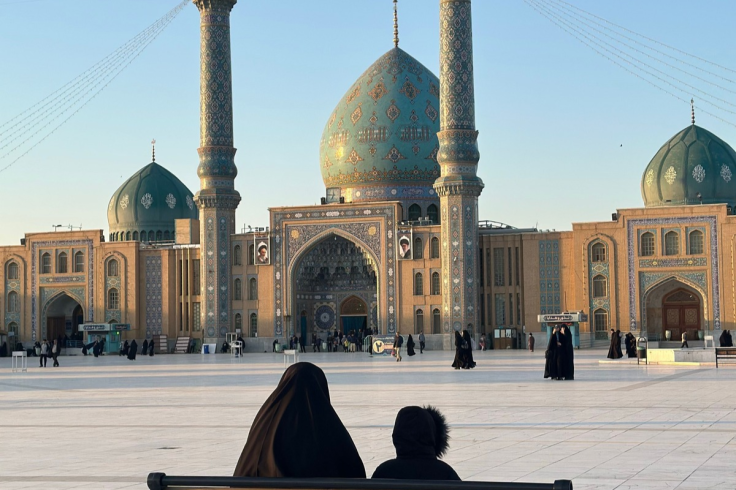
Iranian singer Parastoo Ahmadi and four members of her production team each received 74 lashes in Qom on 23 November 2026, the Iranian news website Emtedad reported, citing lawyer Mostafa Nili. Nili said the sentences had been carried out.
The Hengaw Organization for Human Rights identified the five as Ahmadi and production team members Soheil Faghih Nasiri, Amin Taheri, Amirali Pirnia and Mohsen Lashkari.
Hengaw said the punishments were enforced at the sentence enforcement unit of the Qom Public and Revolutionary Prosecutor's Office after Branch 16 of the Qom Provincial Court of Appeal upheld the ruling and referred the case for enforcement. The National reported that the appeals were rejected in September.
Reports Differ on the Number Sentenced
The published accounts differ over how many people were originally sentenced. In a report dated 18 June 2026, Hengaw said Ahmadi and eight others involved in the production had each received 74 lashes, a two-year ban on artistic activities and a two-year ban on leaving Iran.
In a follow-up report on 28 June, Hengaw named four musicians among the nine defendants: Ehsan Beiraqdar, Soheil Faqih Nasiri, Mohammadamin Taheri and Amirali Pirnia. The remaining four were described as members of the production team.
Hengaw's report on 23 November named five people sentenced by Branch 122 of Qom Criminal Court II: Ahmadi, Soheil Faghih Nasiri, Amin Taheri, Amirali Pirnia and Mohsen Lashkari. The surname of Soheil Nasiri was spelled differently in the June and November reports.
The accounts also use different given names for Taheri, and do not establish whether Amin Taheri and Mohammadamin Taheri are the same person.
The National reported that nine people had been sentenced and that five were flogged on 23 November. It said the status of the other four remained unclear. Hengaw's November report did not explain how its five-person list related to the original nine defendants.
Performance Was Published on YouTube in December 2024
The case followed a performance recorded at Deir Gachin Caravanserai near Qom and published on Ahmadi's YouTube channel on 11 December 2024, IranWire reported. The video showed her singing alongside male musicians without wearing a hijab. No audience was present.
Ahmadi described the recording in the video description as an 'imaginary concert'. The National reported that the video had attracted about 3.2 million views.
Although the video showed Ahmadi performing without a hijab alongside male musicians, the reported charge concerned the production and publication of online content. The available reporting does not establish that the flogging sentence was imposed solely because she appeared without a head covering.
Court Cited Online Content in Its Ruling
Hengaw reported that Branch 122 convicted the five defendants on a charge it translated as 'offending public decency by producing and publishing obscene and immoral content online'. The English wording is Hengaw's translation; the published account does not reproduce the original court judgment.
Hengaw said the penalties included 74 lashes, a two-year ban on artistic and musical activities and a two-year ban on leaving Iran. Reuters reported that Iranian authorities had not immediately responded to a request for comment. It also noted that Emtedad did not specify whether Nili represented all five defendants.
Iran Maintains Restrictions on Women's Public Performances
Iran requires women to cover their hair in public under its compulsory hijab rules. Authorities also restrict women's solo singing before mixed-gender audiences. Women may, in principle, sing in choirs or perform solo before female-only audiences, but organising even those performances can involve significant logistical and financial barriers, The National reported.
Enforcement of compulsory hijab requirements became a focus of nationwide protests in 2022 after Mahsa Amini, a 22-year-old Kurdish Iranian woman, died in custody following her arrest over an alleged dress-code violation.
Since then, more women have appeared in public without headscarves. Reuters has reported that authorities have taken a more selective approach to enforcing the rules.
© Copyright IBTimes 2026. All rights reserved.