Shamell Naquan Joyner Jury Evidence: DC Jurors Find Hidden Drugs And Yuan Missed By Police
Unexpected discovery of Chinese yuan and powdery substance raises legal questions
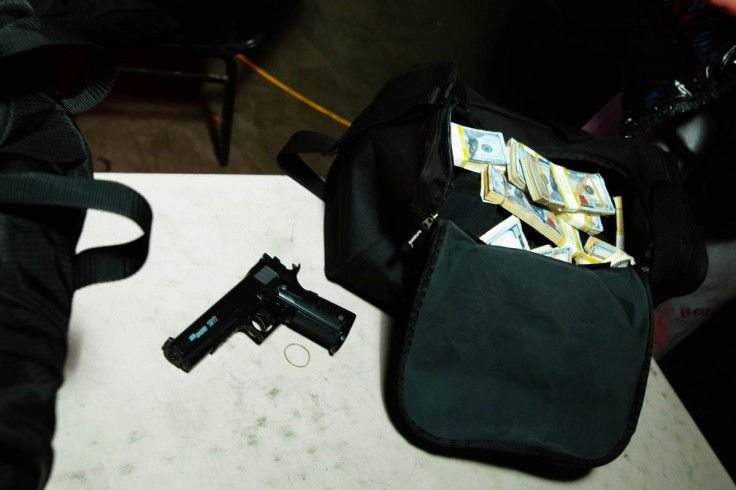
Jurors in the federal trial of Shamell Naquan Joyner made an extraordinary discovery while deliberating: a Chinese yuan banknote and a powdery white substance were hidden inside clothing that had already been presented as evidence.
A DC trial was nearing its end. Then, a juror reached into the pocket of a piece of evidence and made a discovery that left the judge flabbergasted. https://t.co/qXSJl73e8p
— CNN (@CNN) August 10, 2026
The items had apparently escaped investigators, prosecutors and Joyner's defence lawyers, creating an unexpected legal battle in the Washington, DC, courtroom. The jury ultimately convicted Joyner on 13 of 28 counts linked to a series of armed robberies and carjackings, while remaining deadlocked on the other 15.
US District Judge Rudolph Contreras described the failure to uncover the material as astonishing. The discovery also prompted Joyner's lawyers to seek a mistrial, but the judge rejected the request.
Evidence Missed Before Deliberations
The discovery came during the jury's second day of deliberations following the month-long trial.
According to the court record, the jury foreperson told the court that a juror reached into the breast pocket of a two-toned jacket and pulled out what appeared to be a receipt. The jurors then noticed a white substance inside the folded paper.
They also examined a Pittsburgh Steelers sweatshirt connected to the case and found a crumpled Chinese yuan note.
Neither item had been identified during the trial. Contreras later wrote that he shared Joyner's 'amazement' at law enforcement's failure to uncover the yuan, note and powdery substance in the physical evidence.
The discovery created a difficult question for the court: could jurors simply disregard evidence they had unexpectedly found themselves?
Why the Yuan Mattered
The yuan was not entirely new to the prosecution's case.
A witness had testified that a robber took his wallet during one of the alleged offences. The wallet contained a Chinese yuan note that the witness had received while studying abroad.
The Steelers sweatshirt in which jurors found another yuan had been recovered from the stolen Toyota RAV4 and was already part of the evidence.
Contreras therefore considered the newly discovered currency largely cumulative. It potentially reinforced a connection the prosecution had already presented rather than introducing an entirely new allegation against Joyner.
The powdery substance raised a more complicated issue.
Why the Powder Raised Questions
A cooperating witness had testified that Joyner paid him in 'boot' — a term referring to drugs — to help carry out one of the alleged robberies.
Before the jury's discovery, however, there had been no physical substance presented during the trial that appeared to support that testimony.
The newly found powder therefore had potential significance, although it had not been formally introduced, tested or presented to the jury as evidence during the proceedings.
Shamell Joyner was found guilty on 13 of his 28 charges.
— Southern FFA Family (@FFAFamily) August 10, 2026
Sentencing to be announced.
The jury discovered additional evidence that had not previously been documented.
This evidence could not be used against him.
How many times has evidence been overlooked in federal cases? pic.twitter.com/3OITZABNSy
That distinction became central to Joyner's mistrial request.
Contreras questioned jurors individually about what they had seen and whether they could remain impartial. According to the court record, each juror said they could set the discovery aside.
The judge also withdrew an earlier instruction concerning whether evidence relating to one count could be used when considering another. He ultimately told jurors they could not use the newly discovered material to establish allegations in a separate count.
Judge Denies Mistrial Request
Joyner's lawyers argued that the unexpected discoveries could prejudice the jury and sought a mistrial.
Contreras rejected the request, concluding that the yuan was cumulative of evidence already presented and that the discovery of the powder did not require a new trial.
The jury subsequently returned a partial verdict, convicting Joyner on 13 charges connected to five armed robberies and a carjacking. It remained deadlocked on 15 other counts.
The Case Against Joyner
The original federal case involved allegations of 10 armed robberies and two armed carjackings committed across Washington, DC, Maryland and Virginia in April and May 2023.
Prosecutors accused Joyner of robbing businesses including a Falcon Fuel gas station and several 7-Eleven stores. They also alleged that he stole vehicles during the crime spree, including a Toyota RAV4.
Joyner was arrested in May 2023 while sitting in the stolen RAV4. The US Attorney's Office said he was also found with a firearm and other evidence investigators believed connected him to the alleged offences.
The official chase and arrest video the suspect Shamell Naquan Joyner.
— Jay Roberts (@j32jam) August 10, 2026
Suspect was accused of committing an armed robbery.
This video was presented as an evidence in the trial. pic.twitter.com/1YBtN3bLkd
The investigation involved the FBI's Washington Field Office, the Metropolitan Police Department, the Bureau of Alcohol, Tobacco, Firearms and Explosives and several other local law enforcement agencies.
The verdict leaves an unusual question at the centre of the case: how did physical evidence remain hidden inside the pockets of clothing until jurors, rather than investigators, discovered it?
After a month-long federal trial involving multiple alleged robberies, carjackings and witnesses, the most extraordinary courtroom twist came from evidence that apparently nobody knew was there.
© Copyright IBTimes 2026. All rights reserved.
- Recommended For You