Is Karoline Leavitt Next? White House Press Secretary 'at Risk' After Pam Bondi Fired
A president's joke, a vanished photograph and a restless base leave Karoline Leavitt fighting not just for control of the narrative but for her job behind the lectern.

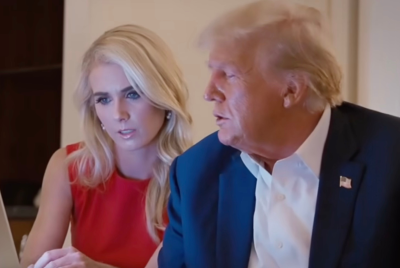
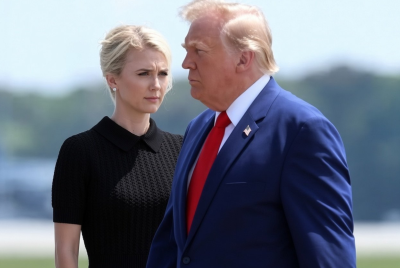
Karoline Leavitt is 'at risk' of becoming the next senior figure dismissed by Donald Trump from the White House, a public relations expert has warned, after the president publicly told his 28-year-old press secretary she was doing a 'terrible job' during a recent exchange with reporters.
The warning over Leavitt's future comes amid a sharp reshuffle around the president. Trump, 79, has just removed Pam Bondi from her post as Attorney General and pushed out Kristi Noem last month. Those high-profile departures, coupled with the president's habit of turning personnel decisions into public theatre, have prompted questions over who might be next in line. Into that febrile environment stepped publicist Dylan Thomas Cotter, who believes Leavitt's position is now far from secure.
Public Rebuke Puts Karoline Leavitt on the Spot
Leavitt's troubles began when Trump complained about his media coverage, claiming between 93 and 97% of it was negative. Rather than blaming the press and moving on, he turned the spotlight on his own spokeswoman.
'A person that gets 97% of bad... maybe Karoline's doing a poor job, I don't know,' he told reporters, before looking directly at her and adding, 'You're doing a terrible job.'
Trump then half-jokingly polled the room, asking journalists, 'Should we keep her?' He swiftly answered his own question with, 'I think we'll keep her.' The White House later insisted the remarks were made in jest. On camera, though, the power dynamic was clear enough. The president had publicly questioned the competence of the woman paid to defend him.
Cotter told the Irish Star he reads moments like that as more than off-the-cuff bluster. 'I view public admonishments by employers disseminated throughout the global media as an indication that anyone critiqued in this manner would be at risk of being relieved of their professional duties,' he said. 'It's a very damaging look for all involved.'
Stripped of the PR jargon, the point is blunt. When a boss humiliates an employee on live television, the job is no longer safe. In a Trump White House, where loyalty is prized but constantly tested, the stakes are even higher.

Cotter went further, using the episode to cast doubt on the operation around Leavitt and on how the administration communicates more broadly. 'Considering the organizational lack of cohesive messaging released directly to the public relating to an employee's job performance, I do not see unified communications, stakeholder management or crisis communications as strong suits that have been fully comprehended here which are essential functions of the role,' he argued.
That is a diplomatic way of saying the message from the top is confused and the communications team does not appear to be in control of the narrative. Coming from a media strategist, it is a scathing assessment.

Negative Coverage, Falling Ratings and Leavitt's Vulnerability
Part of the tension lies in Trump's own frustration. He insists his coverage is overwhelmingly hostile and has watched his approval ratings 'continue to plummet,' as Cotter put it, despite the megaphone of the presidency. Someone, inevitably, has to carry that blame.
Leavitt is the most obvious lightning rod. Her role is to 'shape public perception, manage reputation, strengthen media relations, and disseminate factual information to the public,' Cotter said. On that score, he added, 'I'm not impressed.'
There is a harshness to that verdict, but it reflects a wider problem for any spokesperson tasked with making the unpalatable sound acceptable. If the president's own words generate controversy, there are limits to what even the sharpest press secretary can repair. When those attempts fall flat, however, it is rarely the president who loses his job.
Cotter believes the damage to Leavitt's standing goes beyond one awkward press spray. In his view, repeated controversies and combative briefings have chipped away at trust.
'In terms of a political future, if we look at the court of public opinion, public trust has declined following numerous US press conferences,' he said. In PR terms, he called that 'a massive loss that is beyond quantifiable and yet highly negative in qualitative metrics.'

Photo Controversy Deepens Scrutiny
Trump's jibe about negative coverage is not the only reason Leavitt has found herself under the microscope. She recently became the centre of a separate mini-scandal, this time over an image she apparently wanted to disappear.
The photograph, described as 'unflattering,' was taken during a pre-Thanksgiving event at the White House. Shot from a low angle, it showed Leavitt holding her young son, Nicholas 'Niko' Robert Riccio, on her hip. On the surface, it was a routine press snap of a working mother in a political role. Yet, according to the Irish Star, the image was later removed from online libraries at the request of the White House.
In a world where politicians and their aides live or die by how they look on camera, that might sound like a small, almost understandable piece of image control. For Cotter and other media professionals, it was a strategic misstep.
One PR expert told the outlet that by trying to 'control the narrative,' Leavitt had turned a fleetingly awkward photograph into a talking point. The better move, they suggested, would have been to 'ignore it' and 'laugh it off.'

The White House has not publicly explained its handling of the photograph, and without an official account, nothing about the internal decision-making is confirmed, so everything should be treated with caution. Still, taken together with the president's barbed jokes and the recent firing of Pam Bondi, it contributes to a picture of a press secretary under pressure, watching the mood at the top with understandable anxiety.
© Copyright IBTimes 2026. All rights reserved.
- Recommended For You