Melania Threatened Donald Trump? Michael Wolff Believes FLOTUS' Unprompted Press Conference Was a 'Threat' to POTUS
Michael Wolff suggests Melania Trump's press conference was a calculated move to distance from Epstein, warning Donald Trump

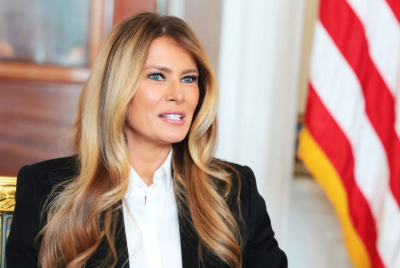
The First Lady's sudden press conference, in which she forcefully denied any links to disgraced financier Jeffrey Epstein, has sparked political and media scrutiny. While her remarks appeared to focus on clearing her own name, Wolff suggests they carried a deeper, more strategic message aimed at the President himself.
Wolff interpreted Melania's statement not merely as a defence but as a calculated move to distance herself from potential fallout tied to her husband's past associations.
A Calculated Distancing From Epstein Controversy
Speaking on the 'Inside Trump's Head' podcast hosted by Joanna Coles, Wolff argued that Melania's remarks were less about public clarification and more about internal signalling.
'You're not going to pin this Epstein stuff on me. This Epstein stuff is your problem,' Wolff said, describing what he believes was the underlying message directed at Donald Trump. He went further, suggesting the statement implicitly invited scrutiny of the president, adding: 'To me, [it] read, "Congress should investigate you."'
First lady Melania Trump has delivered a statement at White House denying ties to Jeffrey Epstein and knowledge of his crimes, and is calling for a congressional hearing for survivors. https://t.co/DQ7H7skUyR
— PBS News (@NewsHour) April 9, 2026
The timing of the press conference raised further questions. On 9 April, Melania abruptly gathered reporters at the White House to read a prepared statement denying any involvement with Epstein or his network. She stressed that she had 'never had a relationship with Epstein or his accomplice' and firmly rejected claims linking her to his criminal activities.
Her remarks were unequivocal. 'The lies linking me with the disgraceful Jeffrey Epstein need to end today,' she declared, insisting she had no knowledge of Epstein's abuse and had never travelled on his plane or visited his private island.
Why Now? Questions Over Timing and Motive
The sudden nature of the statement has fuelled speculation about its intent. Wolff believes the answer lies in the political vulnerability surrounding Trump's past. 'She opened up the one area that I think Donald Trump is exquisitely vulnerable on,' he explained, pointing to the 1990s and early 2000s, an era marked by Trump's past interactions with Epstein, which Trump has denied were improper.
This period has long been scrutinised due to those interactions, although Trump has denied wrongdoing and distanced himself from the financier in later years. Nonetheless, Melania's remarks, by drawing renewed attention to that timeframe, may have inadvertently — or deliberately — reignited scrutiny.
Wolff's interpretation suggests a strategic calculation: by publicly asserting her independence from the scandal, Melania effectively shifted any lingering suspicion back onto her husband. 'That's your problem,' Wolff summarised. 'You better protect me in this.'
Past Associations and Renewed Scrutiny
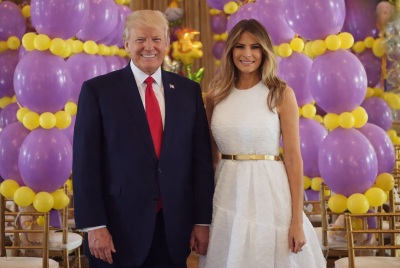
Melania Trump has consistently denied that Epstein played any role in her relationship with Donald Trump. She reiterated that she met her husband 'by chance' at a New York party in 1998, rejecting claims that Epstein introduced them.
However, historical details have complicated the narrative. Reports have highlighted her past correspondence with Ghislaine Maxwell, a close associate of Epstein. In a 2002 email, Melania wrote warmly to Maxwell, referencing a magazine story about Epstein and expressing interest in visiting Palm Beach.
In her recent statement, Melania dismissed the exchange as 'casual correspondence', insisting it was a 'trivial note' with no deeper significance. She also criticised what she described as 'false smears' driven by political motives.
While such interactions are not evidence of wrongdoing, they have contributed to ongoing public curiosity about the extent of her proximity to Epstein's social circle.
6. Melania Trump: Melania and Ghislaine Maxwell exchanged friendly emails discussing meeting in New York City. pic.twitter.com/Q5WovCpDzf
— Oversight Dems (@OversightDems) February 10, 2026
A Call for Accountability — Or a Political Signal?
Notably, Melania concluded her statement with a call for congressional hearings into Epstein's crimes, urging that victims be given a platform to share their experiences publicly. 'Each and every woman should have her day to tell her story,' she said.
On one hand, the appeal aligns with broader demands for transparency and justice in the Epstein case. On the other, Wolff suggests it may also serve as a pointed reminder of the risks facing those connected — directly or indirectly — to Epstein.
The White House did not immediately respond to requests for comment on Wolff's claims, leaving his interpretation unchallenged for now.
Optics, Strategy, and Political Fallout
Whether Melania Trump's press conference was a personal defence, a political manoeuvre, or—as Wolff contends—a subtle warning, it has undeniably reshaped the conversation around the Epstein scandal.
By stepping forward unprompted, she not only sought to protect her own reputation but also shifted the spotlight onto unresolved questions surrounding her husband's past. In the high-stakes world of political optics, such moves rarely occur without calculation.
As scrutiny over Epstein's network continues, Melania's intervention may prove to be more than a simple denial—it could mark a pivotal moment in how the narrative unfolds around Donald Trump and those in his orbit.
© Copyright IBTimes 2026. All rights reserved.
- Recommended For You