

'Didn't Have the Ability to Read': Kate Middleton Opens Up About Severe 'Chemo Brain' Battle
A future queen quietly admits she could not read, and suddenly chemo brain has a very public face.

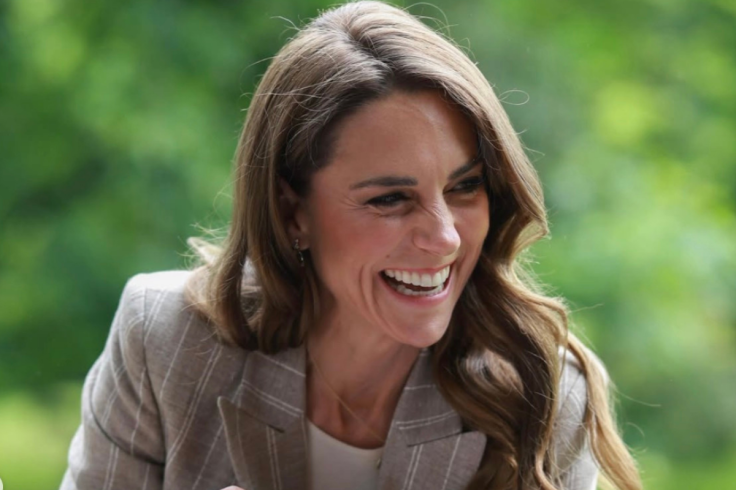
Kate Middleton has spoken candidly about the 'chemo brain' she experienced during her cancer treatment in 2024, telling patients at a Manchester hospital in June 2026 that she 'didn't really have the ability to read' and instead turned to simple colouring to get her through the worst days.
For context, the Princess of Wales' remarks surfaced in a newly shared clip from her visit to The Christie in Manchester, one of Europe's largest specialist cancer centres, where she spent time with patients in an art therapy room. The royal, who revealed in early 2025 that she was in remission after undergoing treatment at The Royal Marsden, has gradually returned to public duties while also choosing to speak more openly about what cancer actually did to her mind and daily life.
The viral video shows Kate chatting with patients and staff around a table scattered with paints, pens and sketchbooks. At one point she focused on a man who had been coming to The Christie for three years and told her painting had become a lifeline, even though he had never picked up a brush before his diagnosis. That detail seemed to land with her. She responded by describing her own struggles to read or concentrate when she was in active treatment.
According to reports from the visit, Kate told the group: 'I don't know about you, but I didn't really have the ability to read or focus on anything. And actually colouring was my way of exploring interesting things and being able to do something that didn't require an end product or an end finished piece.'
She went on: 'But actually just a way of playing and losing yourself, exactly, and lots of thoughts came up in that process.' In a few sentences, the Princess quietly put a very royal stamp on something many cancer patients already know all too well.
Kate Middleton and the Reality of 'Chemo Brain'
The news came after medical staff at The Royal Marsden, where Kate underwent treatment, highlighted just how common cancer‑related cognitive impairment, often called chemo brain, really is. In guidance published by the hospital, clinicians describe CRCI as a frequent side effect that can derail concentration, memory and the basic ability to perform everyday tasks. It is linked both to the cancer itself and to the drugs and therapies used to fight it.
Royal Marsden specialists advise patients to rest more than they think they need, to write down important information and to read it out loud to help it stick. That dry, clinical language, about lists and rest and workarounds, is the official side of chemo brain. Kate Middleton's description, that she 'didn't really have the ability to read or focus on anything,' puts human skin on the same problem.

Her admission also punctures the enduring myth that public figures simply glide through illness with immaculate poise. Not being able to read, even temporarily, is a jarring loss for anyone, let alone a future queen whose job relies on constant briefings, speeches and the unrelenting paperwork of royal life. She did not frame it as a grand tragedy, just an inconvenient, slightly humiliating reality that forced her to look for something gentler.
In that search, she landed on colouring, the kind of low‑stakes, no‑finish‑line activity frequently used in art therapy rooms across the NHS. The Christie's own art room, where she was filmed, is stocked with exactly that sort of stuff for a reason. Patients often arrive too exhausted or foggy to follow a narrative or commit to a full painting. Filling in shapes on a page is about as much as their brain can handle, and that is entirely the point.
How Kate Middleton's Chemo Brain Confession Landed Online
In case you missed it on social media, the short clip of Kate speaking about chemo brain and colouring has been bouncing around X and Instagram, where royal watchers and cancer survivors tend to overlap more than you might expect.
One user wrote: 'The Princess is blessed,' a simple line of support that sat alongside more personal responses. Another X user added: 'My sister got much pleasure in coloring in her last few months.' It was a small, quiet acknowledgement that what Kate described is not some rarefied royal quirk, but pretty standard coping strategy for people in chemo chairs everywhere.
Not all the reaction was sympathetic. One X comment read: 'Coloring just fits. Stay between the lies Kate. Don't paint or do anything messy. That's good girl.' The jibe played into long‑running criticism of the royal family's caution and image control, twisting an anecdote about finding solace in crayons into a dig at her perceived unwillingness to break the mould. Social media, as ever, served up both comfort and snark in the same breath.
Kate's wider remarks during recent visits suggest she is consciously trying to speak to the tougher, more disorienting side of illness. Last month, during a trip to the Oak Road Treatment Centre to meet patients undergoing chemotherapy, she told them: 'You need to support yourself alongside all the things you can't control. Your body changes so much, not just physically, emotionally, but the deeper side of ourselves. It puts so much in perspective, and you hold onto what's important.'
That is not radical language, yet coming from a woman whose every appearance is choreographed down to the hemline, there is something slightly raw about it. She is still precise, still careful, but there is a clear effort to at least acknowledge the mess underneath. In royal terms, that is relatively wild.
Her gradual return to public life after announcing her remission in early 2025 has been greeted with relief from supporters and close scrutiny from critics. Each engagement now carries a double role, both the usual ribbon‑cutting and a quieter, ongoing disclosure about what she has been through. Talking publicly about chemo brain and the fact she could not read surely was not in any original palace script, yet here we are.
For patients sitting in that art room at The Christie, though, the significance was probably more practical than symbolic. A princess telling them she could not read either, that she needed colours and shapes instead of chapters and plots, makes their own fog feel a little less like personal failure. It says, in effect, this is what the treatment does, not who you are.
Still, a future queen talking honestly about losing her place on the page because of chemo brain may turn out to be one of the most useful things she does in a hospital, whether the cameras were meant to catch it or not.
© Copyright IBTimes 2026. All rights reserved.