

RFK Jr. Calls Childhood Cancer Exposé a 'Hit Piece,' Gets Told His 'Missing' Facts Were There All Along
The Times says Kennedy's objections were already addressed in its report on a discontinued brain tumour research network
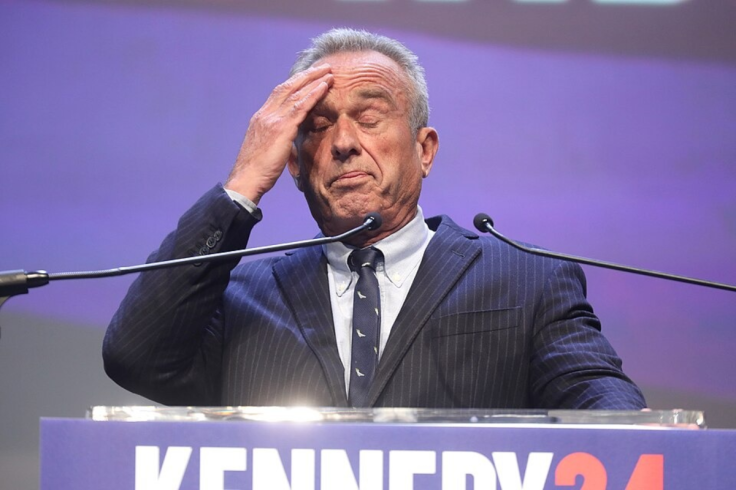
Health Secretary Robert F. Kennedy Jr. has attacked a New York Times report on cuts to childhood brain cancer research as a 'deceptive hit piece', only for the paper to reply that the facts he said were missing were already included in the story.
The Times also accused Kennedy of sidestepping the article's central point: that the administration's decision to discontinue a longstanding research network disrupted access to clinical trials for children with brain cancer.
Kennedy Demands a Correction
The row centres on a Times article published on 15 November about five-year-old Ryleigh Schecter, who has diffuse intrinsic pontine glioma (DIPG), an aggressive brain tumour, Mediaite reported.
The story examined the Trump administration's decision to end funding for the Pediatric Brain Tumor Consortium, which ran clinical trials for children with brain cancer.
Kennedy hit back on X, calling the piece a 'deceptive hit piece' that 'omits key facts' about the administration's funding for paediatric cancer research. He demanded that the Times correct its story, arguing that the end of a grant is not the end of a research commitment.
He said the consortium's closure was the Biden administration's responsibility, that the article left out figures he called a 'critical part of the story', and that the administration continues to invest in paediatric brain cancer research.
'Your Points Are Already Included'
The Times' communications team responded publicly. 'Mr. Secretary, your points are already included in the piece,' it wrote.
The paper added that Kennedy had failed to address the article's main point. That point, according to the Times, was the administration's decision to dismantle a longstanding research effort and the resulting loss of options for children such as Ryleigh.
A Network More Than 25 Years Old
The consortium was founded in 1999 and grew into a network of academic centres and children's hospitals running early-phase trials of new treatments for paediatric brain cancer, STAT reported. The federal government was halting about $4 million (£3.05 million) a year in funding.
STAT reported that a National Cancer Institute notice said the group could not apply for another five-year award to continue beyond March 2026. The administration announced the decision in August 2025, PBS NewsHour reported, arguing that folding the work into a larger network under the Children's Oncology Group would be a more efficient use of resources. That means the research is meant to continue, but no longer through the standalone consortium.
Doctors and families pushed back. The network paused enrolment in its ongoing trials as the funding wound down, according to PBS. Brain tumours are the leading cause of cancer-related deaths among children, PBS reported. Dr Paul Graham Fisher of Stanford told the programme that the consortium's 16 centres saw somewhere between a third and half of all children with the disease.
'This is hope for us. That's the only way we get to save a chance to save our kids,' Misha Mehta, a parent, told PBS. 'And if you're taking away hope, what are you going to do?'
Fisher warned that the transition would not be one-for-one and that it was unclear how the consortium's existing trials would be handled. He said the change would be very hard on families.
© Copyright IBTimes 2026. All rights reserved.