

Natalie Harp Fuels Donald Trump's Delusions With 'Insane' Podcast Claim, Michael Wolff and Insiders Say
The biographer said Harp echoed Trump's claim of better-than-expected Republican results, though it remains unverified
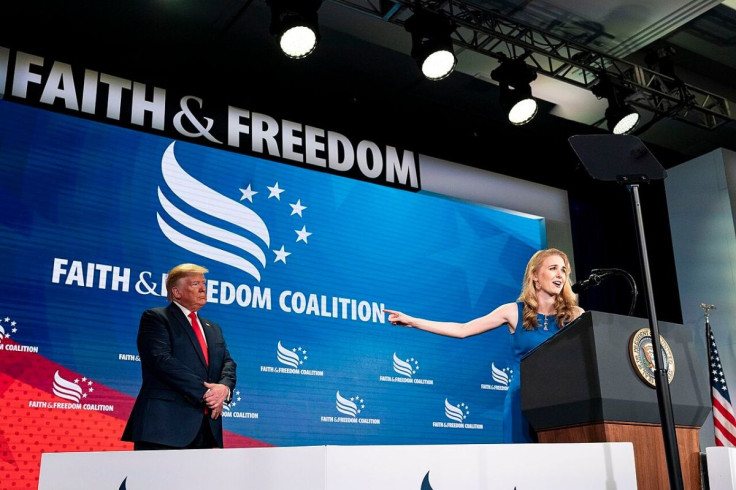
Natalie Harp repeated Donald Trump's upbeat assessment of the Republican midterm results as people around the president recognised the scale of the party's setback, biographer Michael Wolff has claimed.
Speaking on the 20 November 2026 episode of The Daily Beast's Inside Trump's Head podcast, Wolff described an election-night exchange at the White House, presenting it as an example of Harp reinforcing Trump's view. His account is a recollection, not a recording of what was said.
The conversation concerned Trump's response as midterm results came in. Wolff said the president repeatedly insisted the outcome was not as bad as expected, pointing to claims that Republicans had performed better than forecasts suggested.
He said others in the room were focused on the broader results and understood the party had suffered a setback. The podcast provides no figures or detailed breakdown of the results.
Natalie Harp Donald Trump Exchange Draws Wolff's Attention
Wolff told host Joanna Coles that Trump kept returning to the argument that the results were better than anticipated. He said people in the room were looking at the wider outcome and understood the extent of the Republican setback. Yet, in Wolff's telling, Harp picked up the president's wording and repeated it.
'She says, "So much better than they said we would do,"' Wolff recalled. He added that she repeated the point again, saying, 'So much better.' The biographer described her as 'a sort of weird little echo'. That phrase is Wolff's characterisation of the exchange, rather than an independently verified description of Harp's conduct.
Wolff was not presenting Harp's words as an independent assessment of the election. He was describing how she appeared to mirror Trump's interpretation while, in his account, the political picture looked less favourable to his party. The podcast does not include a response from Harp or another account of the conversation.
The episode, titled I Know Insane Way Natalie Fuels Trump's Delusions, was published on 20 November 2026. Its discussion placed the exchange within a broader conversation about Trump's reaction to the midterm results and the atmosphere among people close to him. The title's wording is the podcast's, not a finding established by the account.
What Michael Wolff Said About Natalie Harp Donald Trump
Wolff also claimed that concern grew among people around the president in the days after the results. He said members of Trump's circle recognised that he had been affected by the setback and was struggling to process it. According to Wolff, people were even 'throwing around words like PTSD'.
That remark should be treated carefully. Wolff was recounting what he said others had discussed; he was not reporting a medical assessment or diagnosis. The podcast transcript provides no evidence that Trump has post-traumatic stress disorder, and the phrase should not be taken as a clinical conclusion.
Wolff's account raises a question about the information reaching the president, but it does not establish how Harp behaves in every private meeting.
If aides repeat a leader's own interpretation rather than challenge it, reassurance and an accurate appraisal can diverge. In this instance, however, the claim about Harp rests on Wolff's description of one exchange.
Harp has attracted attention because of her close working relationship with Trump. Earlier reporting has described her as a prominent aide with unusually close access to the president.
But the specific claim in this episode is narrower: Wolff says she echoed Trump's comments as election results came in. The account does not provide further detail about what she said or how others responded.
The White House's response to Wolff's account was not included in the podcast transcript available for review. Nor does the transcript provide an independent account from Harp or other people said to have been present. The exchange therefore remains Wolff's recollection, rather than a fully corroborated record of what happened in the room.
© Copyright IBTimes 2026. All rights reserved.