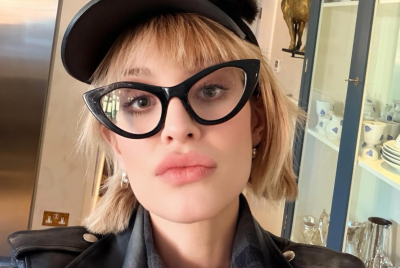
Is Kylie Minogue Dying? Sad Reason Songstress Hid Second Cancer Diagnosis From Fans
Kylie Monigue shares her private struggle with cancer and the importance of early detection.

Kylie Minogue has revealed in a new Netflix documentary that she was diagnosed with cancer for a second time in early 2021 while in London, but chose not to tell fans at the time, explaining that she was 'a shell of a person' and could not face going public with the news. The singer, now 57, says she is well today and credits early detection and treatment for helping her through the private ordeal.
Just finished binge watching the #KylieMinogue documentary on Netflix.
— j o h n j a m e s d u f f y (@JohnJamesDuffy) May 22, 2026
It was very raw & revealing, especially regarding her second cancer diagnosis in 2021. pic.twitter.com/tyrvMS5Sbi
Minogue's first cancer diagnosis in 2005 was anything but private. She was in Melbourne, days away from launching the Australian leg of her Showgirl tour, when doctors confirmed she had breast cancer.
The news forced her to cancel dates and release a public statement to devastated fans, in which she said she hoped 'all will work out fine and I'll be back with you all again soon.' What followed was a lumpectomy and gruelling chemotherapy, documented in broad outline by the world's media and followed closely by supporters.
Kylie Minogue revealed she privately battled cancer for a second time following a past breast cancer diagnosis, detailing the health journey in her new Netflix documentary ‘Kylie.’ https://t.co/TPiQvaCoP0 pic.twitter.com/WF8kJhZJZC
— E! News (@enews) May 20, 2026
The treatment worked and, outwardly at least, the story seemed to have a hopeful ending. By 2006, Kylie was talking about a renewed sense of perspective. In an interview with Sky One in Britain, she said the experience had changed her appreciation of ordinary moments. 'I just want to do everything, I really do,' she said then. 'I honestly don't want to sound soppy or too clichéd, but that's the way it is. It's nice to take a walk and it's nice to see friends. I just can't help but see things differently.'
Why Minogue Hid Her Second Cancer Battle
The new three‑part series, simply titled Kylie, rewrites that tidy narrative. In it, Minogue discloses that she faced cancer again in early 2021, nearly two decades after her first diagnosis. This time there was no press release, no hurriedly convened statement outside a hospital, no global outpouring of support.
'I was able to keep that to myself ... Not like the first time,' she tells viewers. She does not spell out the precise type of cancer or the exact treatment regimen, and there is no accompanying medical detail from doctors, so the public picture of that second battle remains deliberately limited. What she does say is stark enough. 'Thankfully, I got through it. Again. And all is well. Hey, who knows what's around the corner, but pop music nurtures me ... my passion for music is greater than ever.'
That upbeat line sits alongside some much bleaker admissions about her state of mind at the time. Kylie says she struggled to find any moment that felt right to share the news, even after her 2023 single 'Padam Padam' gave her the kind of late‑career chart resurgence most artists only dream of.
ICYMI: Kylie Minogue reveals secret second cancer diagnosis
— Music-News.com (@MusicNewsWeb) May 20, 2026
Read the full article here: https://t.co/0hlmlEmoMR
More on https://t.co/cGbkkwo6Jk pic.twitter.com/3gPZ3P4U7o
'I don't feel obliged to tell the world, and actually I just couldn't at the time because I was just a shell of a person,' she explains. 'I didn't want to leave the house again at one point.' The success of 'Padam Padam,' with its viral hooks and renewed festival bookings, did not erase the sense that cancer remained a shadow over her life. '"Padam Padam" opened so many doors for me but on the inside I knew that cancer wasn't just a blip in my life,' she says. 'And I really just wanted to say what happened so I can let go of it.'
She describes sitting through interview after interview, feeling the weight of an untold story. 'Every opportunity I thought, "now's the time,'' but I kept it to myself.' That tension between public performance and private fear is one of the threads running through the documentary, and it explains why she has chosen to speak now rather than in the middle of treatment.
A Message About Early Detection and Quiet Grief
By finally addressing the second diagnosis, Minogue says she is not only closing a chapter for herself but also hoping to nudge others towards taking their own health seriously. In promotional material for Kylie, she says plainly, 'There will be someone out there who will benefit from a gentle reminder to do their check ups.' She adds, 'Early detection was very helpful and I am so grateful to be able to say that I am well today.'
Those are careful words. They stop short of claiming victory over the disease in any permanent sense, and they acknowledge how arbitrary good fortune can feel in oncology. Yet they also underline why she believes speaking out, even belatedly, has value beyond satisfying curiosity about a celebrity's medical history.
A pop star has revealed how she kept her second breast cancer diagnosis private while embarking on a huge career comeback. https://t.co/BSH5bcOQIM
— The Daily Beast (@thedailybeast) May 20, 2026
The documentary steps into other, equally personal territory. Kylie talks about trying to have children after her first cancer fight, during her relationship with French actor Olivier Martinez. Treatment had already raised serious questions about her fertility, but she says she felt compelled to try.
'It was always with such a thread of hope but I couldn't not try,' she explains. 'I did try IVF a number of times. If it had happened it would have been just shy of a miracle. But it didn't work out that way.' There is no melodrama in the way she relates this; if anything, the understatement makes it more affecting. It is a glimpse of loss that ran parallel to the more visible drama of her illness and comeback tours.
Taken together, these revelations sketch a far messier reality than the familiar narrative of the plucky pop star who beat cancer and danced on. Kylie Minogue did survive, twice, and she did return to the charts. But in choosing to hide a second diagnosis until she felt robust enough to talk, and in acknowledging the private grief of failed IVF attempts, she is also pushing back, gently, against the idea that every battle has to be fought in public to count.
Nothing in the series suggests Kylie Minogue is currently dying, and she is explicit that she is well today. The story she is telling is not about imminent tragedy, but about the quieter, longer struggle to live a full life with the knowledge that serious illness has already struck twice and might, one day, return.
© Copyright IBTimes 2026. All rights reserved.
- Recommended For You