

'Let Them Eat Cake': Trump's Mar-A-Lago Feast Sparks Fury as an Estimated 2 Million Children Lose Food Aid
Mar-a-Lago feast draws fierce criticism as an estimated two million American children lose federal food assistance
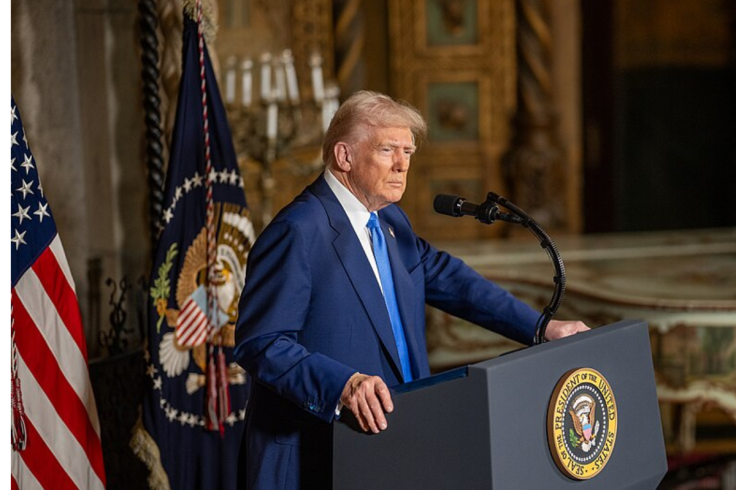
President Donald Trump has faced a backlash over his lavish Thanksgiving celebrations at Mar-a-Lago in Florida as millions of Americans struggle with rising grocery costs and reductions in federal food assistance.
Footage of the gathering circulated on social media, prompting criticism on Saturday, 28 November, amid reports that an estimated 2 million American children were no longer receiving benefits under the Supplemental Nutrition Assistance Program (SNAP).
The celebrations drew attention to the contrast between the president's private club and households facing financial pressures following changes to federal food assistance introduced under his domestic policy legislation.
Trump's Mar-a-Lago Feast Draws Comparisons With Royal Excess
Trump spent Thanksgiving on Thursday, 26 November, at his exclusive private club in Palm Beach, where guests were treated to an elaborate selection of seafood, carved meats and desserts.
According to The Daily Beast, footage shared on social media showed oyster bars, stone crab claws and ice sculptures alongside trays of macarons and other confectionery.
Photographs published on Mar-a-Lago's official Instagram account also showed an elaborate dining table decorated with gold-coloured cutlery, ornamental plates bearing the club's crest and towering candelabras.
Separate footage showed Trump arriving to applause from guests before taking his seat in the ballroom.
Independent journalist Aaron Parnas highlighted the contrast between the Thanksgiving celebrations and the reported decline in SNAP participation, prompting further criticism from social media users.
Some drew comparisons with Marie Antoinette, the French queen popularly associated with the phrase 'Let them eat cake', although there is no reliable historical evidence that she actually uttered those words.
The expression has become a symbol of perceived indifference towards people experiencing poverty and hunger.
Mar-a-Lago's exclusivity has also attracted attention. CNN reported in July 2026 that the club's membership initiation fee had increased to $1 million (€913,000 and £762,000) shortly before Trump's re-election in 2024.
Trump's Mar-a-Lago Feast Overshadowed by Food Aid Concerns
Behind the criticism surrounding the Thanksgiving celebrations lies growing concern about the availability of federal food assistance.
The Center on Budget and Policy Priorities estimates that nationwide SNAP participation fell by 5.7 million people between July 2025 and August 2026, representing a decline of nearly 14%.
Separate research by the organisation estimated that approximately 2 million children were among those no longer receiving assistance.
Changes introduced under Trump's domestic policy legislation included expanded work requirements for certain recipients and measures shifting greater financial responsibility towards states.
Republicans have defended the reforms as part of efforts to reduce federal expenditure and tackle fraud within the assistance programme.
However, the overall decline in participation should not necessarily be attributed entirely to individual provisions of the legislation.
For households that have lost benefits, the reduction in assistance leaves fewer resources available for grocery purchases at a time when food affordability remains a concern.
Feeding America President Linda Nageotte told NPR that food banks were serving approximately 25% more people than before the COVID-19 pandemic.
Trump has previously welcomed the reduction in food assistance enrolment, highlighting falling participation figures during a rally in May.
The White House did not immediately respond to a request for comment from The Daily Beast regarding the Thanksgiving controversy.
The reports did not establish the cost of the dinner.
Nevertheless, the images from Mar-a-Lago have provided critics with a prominent opportunity to challenge the administration's welfare policies as families across the US continue to face financial pressures.
© Copyright IBTimes 2026. All rights reserved.