

US Troops Ask Why Iran War Has No Live Coverage When Iraq Had Round-the-Clock Feeds
Air campaign, internet blackout and media lockout leave war largely unseen.
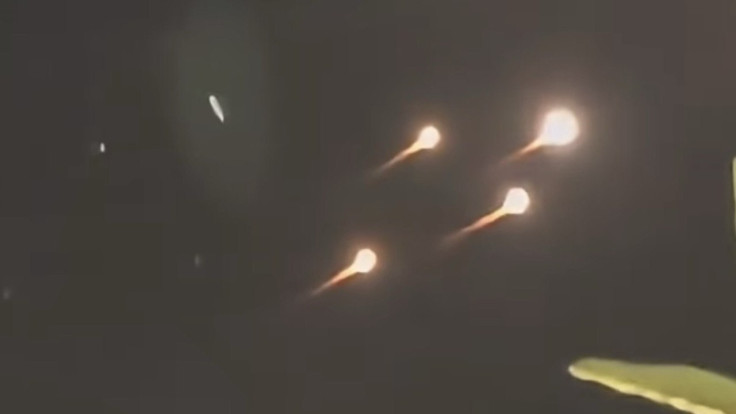
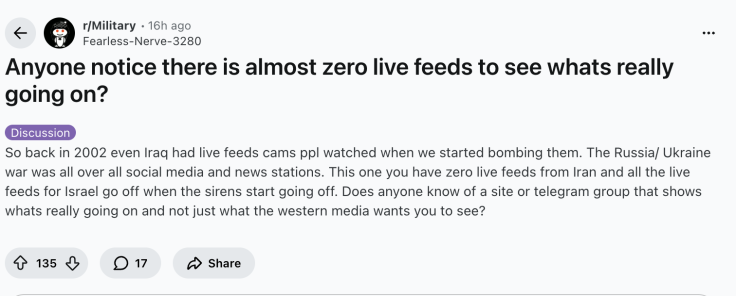
A post on Reddit's military forum this week drew hundreds of responses from US service members and veterans: has anyone else noticed there are almost zero live feeds coming out of Iran?
During the 2003 Iraq invasion, CNN broadcast Baghdad's skyline erupting under cruise missile fire. Reporters rode with armoured columns across the desert. Camera crews filmed from hotel rooftops as Tomahawk missiles struck government buildings below.
Five days into Operation Epic Fury, the American public has seen almost none of that.
No Ground Troops in Iran Means No Cameras on the Front Line

Defence Secretary Pete Hegseth confirmed at a 2 March Pentagon briefing that there are no American ground forces inside Iran. Asked directly about boots on the ground, he said 'No' but declined to discuss future plans, PBS News reported. 'No nation building quagmire, no democracy building exercise,' Hegseth told reporters.
Without ground troops, there is no equivalent of the embedded media programme that produced round-the-clock live coverage from Iraq.
The Pentagon embedded roughly 600 reporters and photographers with military units during the 2003 invasion, according to the Pew Research Center. Reporters signed contracts, completed hostile environment training and advanced into Iraqi territory alongside soldiers and Marines. The footage they sent back ran around the clock on American television for weeks.
No embedded media programme has been announced for Iran.
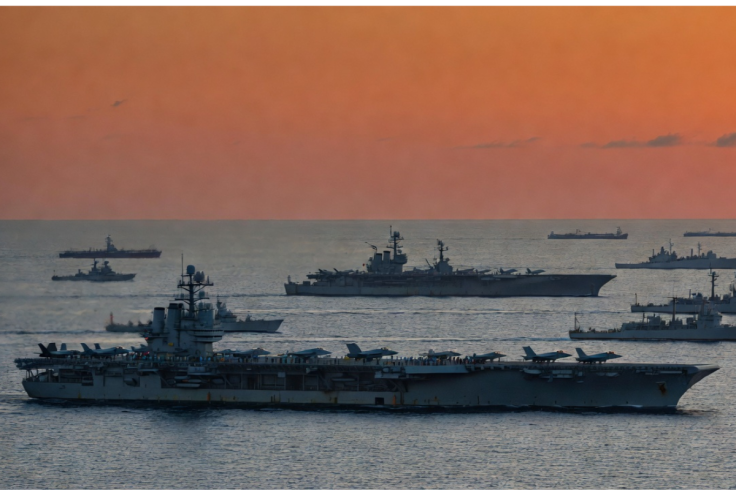
More than 50,000 US troops, 200 fighter aircraft, and two aircraft carrier strike groups are taking part in the operation, according to US Central Command figures carried by NBC News. All are operating from ships and regional bases outside Iran.
Iran's Internet Blackout Left 90 Million People Cut Off
The Iranian government has also shut down internet access across the country. Within hours of the first US and Israeli strikes on 28 February, national internet connectivity collapsed to roughly 1 per cent of normal levels. Internet monitoring group NetBlocks attributed the shutdown to Iranian authorities rather than infrastructure damage from bombing, CNBC reported.
More than 90 million Iranians have now spent days with virtually no internet access. Iranian authorities imposed a near-identical blackout in January during anti-government protests. Tehran shut down internet services during unrest in 2019 and again during the Mahsa Amini demonstrations in 2022.
Some footage has got through. Citizens have used SpaceX Starlink terminals, VPNs and decentralised messaging apps to share clips of strikes on IRGC facilities and intelligence buildings. NPR's Geoff Brumfiel, who has been reviewing footage circulating on social media, cautioned that these clips represent only fragments. Any given video may tell a partial or misleading story depending on who filmed it and why, he told NPR.
Western Journalists Locked Out as Conflict Enters Fifth Day
Iran requires Western journalists to obtain government-issued credentials to work inside the country. As of 2 March, no Western reporter was known to be operating within its borders, Status reported.
CNN positioned correspondents across Tel Aviv, Riyadh, Abu Dhabi and Erbil in northern Iraq. Fox News placed teams in Tel Aviv, Cyprus and Istanbul. None were inside Iran.
The news industry has also contracted since 2003. Foreign bureaus across the sector have shrunk through years of budget reductions. The Washington Post laid off its entire Middle East desk on 4 February. Several other major US outlets have reduced their foreign correspondent teams over the past two years.
Iran's state media continues to report civilian casualty figures that have not been independently verified. The US military says it is striking military infrastructure exclusively. Six American service members have been killed since the operation began on 28 February, CENTCOM confirmed on 2 March.
No independent media organisation has been granted access to Iran since strikes began on 28 February.
© Copyright IBTimes 2026. All rights reserved.