Is the Nancy Guthrie Investigation Going Cold? Expert Warns Of 'Leadership Vacuum' In Kidnapping Case
As the search for 84-year-old Nancy Guthrie stretches into a fourth month with no major updates, a PR expert warns that Sheriff Chris Nanos' silence is eroding public trust

Authorities in Arizona are facing fresh criticism over the investigation into the disappearance of 84-year-old Nancy Guthrie in Tucson, where a public relations expert has warned that Pima County Sheriff Chris Nanos' silence risks letting the case 'grow cold' in the public eye and creating a 'leadership vacuum' around the search.
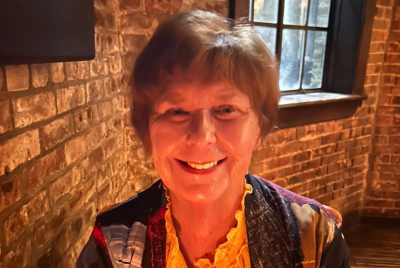
Nancy, the mother of Today show anchor Guthrie, vanished from her Tucson home at the end of January. She was last seen on the evening of 31 January 2026 and reported missing the following day.
More than three months on, there have been no major public updates, no announced breakthroughs and, crucially, no clear sense of who is speaking for the investigation or what, if anything, is happening behind the scenes.
That communications gap has become a story in itself. Public relations specialist Grayce McCormick, of Lightfinder Public Relations, has been unusually blunt in her assessment of how the sheriff's office has handled the messaging around Nancy's disappearance.
'Silence is never neutral in a high-profile case,' she told The Express US, arguing that when official updates dry up, rumour and conspiracy theories quickly move in. 'When updates slow down, the public fills the void through speculation, and that's when trust erodes fastest.'
Human bones found near Nancy Guthrie's home - but police make a quick ruling https://t.co/F4dgLauPFl pic.twitter.com/ZiZkA0KLFQ
— New York Post (@nypost) May 7, 2026
Nancy Guthrie Case Dogged By Confusion Over Who Leads Inquiry
The criticism intensified after a former FBI agent publicly suggested Nancy's family should be 'irked' by what they saw as the mishandling of DNA evidence by local authorities. That intervention, followed by weeks with no significant new information, has sharpened questions over whether the investigation is drifting.
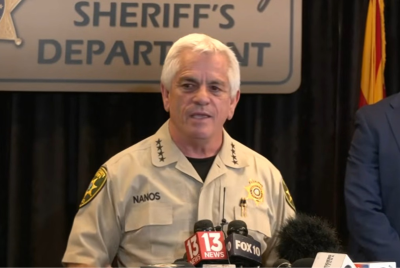
Sheriff Nanos has said he is not personally running the inquiry, telling Tucson radio station KVOI AM that he relies on 'a very qualified team of individuals'. 'I hope the community and the public understand that I'm not the investigator at all on this case,' he said, stressing his role was to protect his investigators and be briefed by them rather than to work the evidence himself.
Pressed by the host on how he should have described his role, Nanos replied: 'I might be in charge of the department that's handling this case. I get briefed by my investigators. My role really is to protect them and keep them...' before being interrupted again and asked to confirm that he was not personally investigating. 'No, no, no,' he said. 'Those years are long past me, trust me. But the reality is, I have a team... a very qualified team.'
He went on to praise that team's record, saying that 'every homicide in our jurisdiction was solved' and that they maintain a 'very high clearance rate.'
Technically, there is nothing unusual in a sheriff delegating to detectives. What has troubled observers like McCormick, however, is the way Nanos has publicly described himself as more of a 'figurehead.' In an earlier interview with The Express US, she warned that his own language risked 'eroding public trust.'
'When the sheriff publicly calls himself a 'figurehead' and distances himself from investigative decisions, it confuses the public and leaves a leadership vacuum,' she said. 'This confusion breeds speculation and undermines confidence.'
McCormick's criticism is not about whether Nanos personally knocks on doors. It hinges on clarity. Who is actually in charge of finding Nancy? Who speaks for them? How often will they speak? In the absence of those answers, uncertainty has poured into the space where clear leadership might have been.

Pressure Mounts As Nancy Guthrie's Investigation Stalls In Public
According to McCormick, social media users are already speculating freely about what might have happened to Nancy, including chatter about possible 'retaliation linked to Guthrie's advocacy' and even whether her daughter's profile might have made her a target. None of these theories is confirmed. No suspect, motive or solid lead has been made public.
Still, the very existence of these theories underlines McCormick's core point that consistent communication is now part of the work of any high-profile investigation. 'Clarity of command is essential in high-profile investigations,' she said. 'This is not about whether the sheriff runs the case personally, few do, but about how clearly the department communicates who is in charge.'
Her advice to Nanos is strikingly specific. She has urged a 'clear communications reset' that would spell out the chain of command, name the lead investigator and offer regular updates that separate confirmed facts from areas of uncertainty. Without that, she warned, 'speculation will dominate the narrative and undermine the investigation.'
In her view, the sheriff's current stance, acknowledging he is not leading the day-to-day probe while remaining largely quiet, may make sense operationally but fails the court of public opinion. 'He is the face on the podium. His badge is in every press photo. Ownership comes with that,' she said, arguing that deflecting responsibility for communication 'reads as indifference to the public and to Nancy's family.'
McCormick believes the sheriff's communications advisers are likely counselling caution: do not speculate, do not risk compromising the case, keep within legal boundaries. She accepts that such instincts are 'textbook,' but warns that they can create the conditions in which negative perceptions grow unchecked. 'There's a wide open space between saying nothing and jeopardising the case, and a skilled communicator lives in that space,' she said.
Sheriff at center of Nancy Guthrie disappearance could lose job in a matter of days as case goes cold https://t.co/B8Qidtj3Jz pic.twitter.com/9IvEIhWhG2
— New York Post (@nypost) May 7, 2026
Earlier in the investigation, she told The Mirror US that the Pima County Sheriff's Department was 'falling short' in its crisis response. 'Something about this investigation doesn't pass the smell test from a crisis communications standpoint,' she remarked, questioning whether the public was 'receiving the full picture.'
Her latest warning is less about headlines and more about something harder to restore once lost. 'The bigger risk of going quiet isn't just bad press, it's that the family and community start to feel forgotten. Once that perception sets in, no amount of future communication can repair it.'
© Copyright IBTimes 2026. All rights reserved.
- Recommended For You