

Jason Collins, 47, Dies of Brain Cancer: About the Deadly Glioblastoma That Took NBA's First Openly Gay Player
Jason Collins is remembered for making sports 'more inclusive and welcoming for future generations'
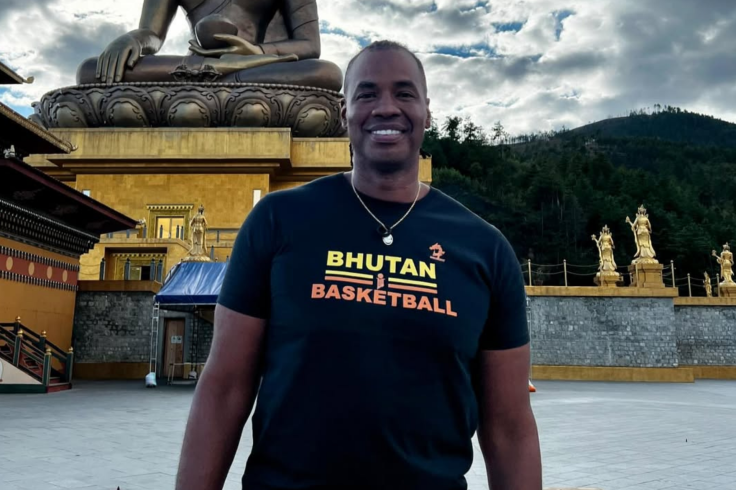
The professional basketball world is in mourning following the death of Jason Collins, the first active male athlete in the four major American professional sports to come out as gay.
The veteran NBA player passed away peacefully at his home on Tuesday, 12 May 2026, at the age of 47, following an eight-month battle with stage 4 glioblastoma, an aggressive and terminal form of brain cancer.
NBA's First Openly Gay Player Dies of Brain Cancer
His family confirmed the news in a statement released through the NBA, describing the former centre as a 'valiant' fighter who 'changed lives in unexpected ways.'
The family said in a statement, 'We are heartbroken to share that Jason Collins, our beloved husband, son, brother and uncle, has died after a valiant fight with glioblastoma.' The former NBA star 'was an inspiration to all who knew him and to those who admired him from afar.'
They added, 'We are grateful for the outpouring of love and prayers over the past eight months and for the exceptional medical care Jason received from his doctors and nurses. Our family will miss him dearly.' Collins is survived by his husband, film producer Brunson Green, whom he married in May 2025.
Jason Collins' Diagnosis and Treatment
Collins first revealed his struggle with the disease in late 2025, detailing his diagnosis in a moving essay for ESPN. Collins had been experiencing issues with concentration and focus before doctors discovered an inoperable tumour.
He famously described the cancer as a 'monster with tentacles' spreading across his brain. Despite the grim prognosis, Collins remained a pioneer for medical advancement, travelling to Singapore earlier this year to undergo experimental treatment not yet authorised in the US.
He said, the treatment 'offers targeted chemotherapy — using EDVs — a delivery mechanism that acts as a Trojan horse, seeking out proteins only found in glioblastomas to deliver its toxic payload past the blood-brain barrier and straight into my tumors.'
Just last week, his twin brother, former NBA player Jarron Collins, accepted the inaugural Bill Walton Global Champion Award on Collins ' behalf because he is was 'too ill' to attend. Jarron remarked at the ceremony that his brother was the 'bravest, strongest man' he had ever known.
Jason's final months were marked by the same authenticity that defined his career. He often noted that facing cancer was similar to his coming out journey, stating that life is better when you 'show up as your true self.'
About the Deadly Glioblastoma That Took Him
Glioblastoma, or GBM, is the most aggressive form of primary brain cancer. A stage 4 tumour with no known cure, it grows rapidly and spreads into healthy brain tissue through microscopic, root-like structures, making it extremely difficult to treat.
According to The Brain Tumour Charity, glioblastoma carries a poor prognosis. The average survival rate for patients undergoing standard treatment is typically between 12 and 18 months, with a five-year survival rate of just 5 to 10 percent, even with interventions.
While Collins' battle lasted approximately eight months, the deadly nature of GBM stems from its ability to recur even after surgery and radiation, as the tumour cells are highly resistant to traditional therapies.
Collins previously described the specific nature of his diagnosis, noting that the tumour was 'multiforme' with a 30 per cent growth factor and a 'wild type' mutation, making it significantly harder to manage.
A Legacy Beyond the Court
Collins' impact on the sporting landscape was seismic. After a steady 13-year career playing for franchises including the New Jersey Nets, Boston Celtics, and Washington Wizards, he made history in 2013 with a Sports Illustrated cover story that began: 'I'm a 34-year-old NBA centre. I'm black. And I'm gay.'
NBA Commissioner Adam Silver praised his legacy, 'noting that Collins 'exemplified outstanding leadership' and helped make the sports community 'more inclusive and welcoming for future generations'.
© Copyright IBTimes 2026. All rights reserved.
- Recommended For You


