Mamdani to Urge the King to Return the Kohinoor Diamond to India—How Did Britain Acquire It?
The Kohinoor, famous for its size and ownership disputes, has been part of the British Crown Jewels since 1849 despite ongoing calls for its return by India and others


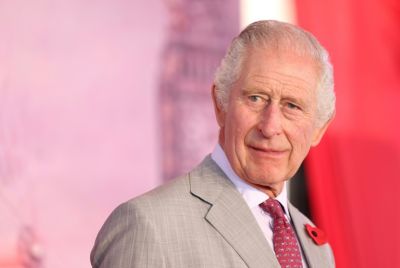
Speaking on Wednesday, 29 April, New York City Mayor Zohran Mamdani revealed his intention to lobby King Charles III to send the legendary Kohinoor Diamond back to India while the monarch is travelling through the United States.
At a press briefing before a 9/11 memorial service, Mamdani said that even if it isn't an official part of the visit, he plans to raise the matter if he finds himself in a private conversation with the King.
A Bold Request
Just hours before his scheduled meeting with the British monarch in New York, Mamdani—who is of Indian descent—noted, 'If I were to speak to the king separately from that, I would probably encourage him to return the Kohinoor Diamond.'
His comments tap into years of frustration in India over the diamond's return, following its seizure during the colonial era to be placed among the British Crown Jewels. Although King Charles and Mamdani crossed paths briefly at the 9/11 memorial later that afternoon, there is no word yet on whether the jewel actually came up.
Silence From the Palace
Buckingham Palace has chosen not to address Mamdani's comments, and the mayor's office similarly offered no extra details regarding what was actually said between the two men.
Mamdani all smiles as he meets King Charles in New York City
— Shashank Mattoo (@MattooShashank) April 29, 2026
It’s unclear if he raised returning the Kohinoor Diamond with the King pic.twitter.com/eejYNLYDHO
This quiet standoff brings the diamond's controversial origins back into the spotlight, raising the question: how exactly did Britain get its hands on the stone in the first place?
A Jewel Cut by History
The Kohinoor is arguably the most famous diamond in existence, legendary as much for its 105.6-carat size as for the fierce debate over who actually owns it. Although it has been a staple of the British Crown Jewels since 1849, several nations—most notably India—have repeatedly called for its return. While the stone originally weighed a massive 191 carats, it was later reshaped in 1852 by the royal jeweller, Garrard of London, to improve its sparkle and brilliance.
While some controversial accounts trace the stone back to Sanskrit or Mesopotamian records from 3200 BCE, most experts point to a more documented origin in 1304. At that time, Sultan ʿAlāʾ-ud-Dīn Khaljī reportedly seized the jewel from the Raja of Malwa, whose ancestors had held it for centuries.
Alternative accounts suggest the gem was handed to the son of Mughal founder Bābur by the Raja of Gwalior following the 1526 Battle of Panipat. Conversely, some maintain it was pulled from the Kollur mine along the Krishna River before being gifted to Emperor Shah Jahān in 1656.
Some believe the gem was carved from the Great Mogul diamond, famously documented by French merchant Jean-Baptiste Tavernier in 1665. However, historians generally doubt this link, noting that the Koh-i-noor's original shape and duller appearance don't match Tavernier's descriptions.
Spoils of War
Regardless of its early path, the gem was almost certainly part of the spoils seized by Nāder Shah of Iran during his 1739 raid of Delhi. Following his assassination, it passed to his general, Aḥmad Shah—the Afghan Durrānī dynasty founder—whose descendant, Shah Shojā, was later coerced into handing it over to the Sikh ruler Ranjit Singh while seeking refuge in India.
The diamond's journey through various regional dynasties ended in 1849 when the British East India Company leveraged the Treaty of Lahore to compel the 10-year-old Maharaja Duleep Singh into surrendering it, according to a report by Historic Roy Palaces. Now a centrepiece of the late Queen Mother's crown, the jewel remains under armed guard as part of the Tower of London's public display.
The Colonial Tug-of-War
India has long argued the gem was surrendered under duress, framing its continued presence in London as a lingering emblem of colonial-era plunder. While New Delhi officially regards the diamond as 'valued piece of art with strong roots in our nation's history,' the UK has shown no sign of budging, maintaining that its legal claim remains airtight under the terms of the 19th-century treaty.
© Copyright IBTimes 2026. All rights reserved.
- Recommended For You