GLP-1 Drugmakers Face Lawsuits as Patients Claim Ozempic and Wegovy Led To Rare Permanent Vision Loss
Lawsuits allege GLP-1 drugs caused NAION, but companies deny liability and research into a possible link remains mixed
Hundreds of lawsuits have been filed against the makers of widely used weight-loss and diabetes drugs, alleging the medicines caused a rare eye condition that can lead to sudden and potentially permanent vision loss.
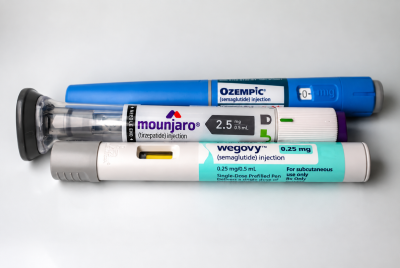
The cases target Novo Nordisk and Eli Lilly over several GLP-1 drugs, including Ozempic, Wegovy, Mounjaro and Zepbound, and centre on non-arteritic anterior ischaemic optic neuropathy, known as NAION.
Plaintiffs allege the companies knew or should have known about the risk and failed to warn patients. Both companies are contesting the claims, and the scientific evidence on whether the drugs cause the condition remains mixed.
What NAION Is
The condition affects the front portion of the optic nerve, which carries signals from the eye to the brain. It involves reduced blood flow to that part of the nerve and typically causes sudden, painless vision loss in one eye, according to guidance from Britain's medicines regulator.
It rarely causes total blindness. NAION usually produces blurring, dimming or loss of part of the field of vision rather than complete darkness, though it can affect both eyes.
There is no proven treatment that reliably reverses the damage to the optic nerve, and the resulting vision loss can be permanent.
Patients describe the onset as abrupt. Michelle Fennell, 53, one of those suing Novo Nordisk, says she felt a heaviness in her right eye while sitting at her desk before her vision suddenly blurred, leaving her able to see straight ahead but not to the right or below. She says a doctor diagnosed NAION two weeks later.
The Litigation
The federal cases have been consolidated. On 15 December 2025, the US Judicial Panel on Multidistrict Litigation transferred the vision-loss lawsuits into a single proceeding, MDL No. 3163, in the Eastern District of Pennsylvania.
That order covered 21 actions and named Ozempic, Wegovy and Saxenda from Novo Nordisk and Trulicity from Eli Lilly, with other drugs raised in later filings. The panel's report of 1 September 2026 listed 216 pending actions.
State courts are hearing claims too. The personal injury firm Weitz & Luxenberg says it has filed more than 90 lawsuits in New Jersey state court on behalf of patients who developed NAION while taking Ozempic or Wegovy. Its request for those cases to be coordinated was granted on 22 April 2026, and they were transferred to Bergen County.
The federal judge has set out how the case will proceed. Judge Karen Spencer Marston has ordered the litigation to address cross-cutting issues early, including whether GLP-1 drugs are capable of causing NAION and whether federal law pre-empts some of the plaintiffs' failure-to-warn claims.
Those questions could substantially affect how the cases proceed, although whether a drug caused a particular patient's condition is a separate question that would still have to be decided case by case.
The drugmakers deny that the evidence establishes a link. Novo Nordisk and Eli Lilly are both contesting the lawsuits, arguing there is not enough evidence to show their drugs are responsible. None of the claims has been decided.
What the Science Says So Far
Concern grew after a study published in July 2024. Dr Joseph F. Rizzo III, an ophthalmologist at Mass General Brigham, was the corresponding author of a JAMA Ophthalmology paper that reported a markedly higher risk of NAION among patients prescribed semaglutide, the active ingredient in Ozempic and Wegovy, in a relatively small retrospective group. Rizzo has cautioned that he would not use his findings to recommend that patients stop taking their medication.
Later research has produced mixed results. A multicentre study of 37.1 million adults with type 2 diabetes across 14 databases found a modest association in one analysis but no statistically significant difference against several comparator drugs, and its authors said further work was needed to determine causality. A separate study of US veterans found a higher risk of NAION among people starting semaglutide than among those starting a different class of diabetes drug.
Regulators outside the US have acted. In June 2025, the European Medicines Agency's safety committee concluded that NAION is a very rare side effect of semaglutide, affecting up to one in 10,000 people, and recommended updating product information to include the condition as a side effect. The EMA's committee said there was sufficient evidence to establish a causal relationship between semaglutide and NAION.
Britain's regulator updated its guidance in February 2026, stating that NAION had been very rarely reported in association with semaglutide and advising that treatment should be discontinued if NAION is confirmed.
The US Food and Drug Administration has not added an equivalent warning while it reviews the potential link, according to recent reporting.
The practical advice from clinicians is consistent. Anyone who notices sudden changes in their vision while taking these drugs should seek an eye examination promptly and discuss their treatment with a doctor rather than stopping it on their own. The MHRA advises patients experiencing sudden vision loss or rapidly worsening eyesight while taking semaglutide to seek urgent ophthalmological assessment.
The litigation is now moving towards expert evidence on whether GLP-1 drugs can cause NAION, and those rulings could significantly shape the cases that follow.
© Copyright IBTimes 2026. All rights reserved.
- Recommended For You