

Blueberry Recall Upgraded To Highest Risk Over E. Coli as Fresh Food Safety Alert Sparks Alarm
FDA says 12 illnesses and four hospitalisations are under investigation
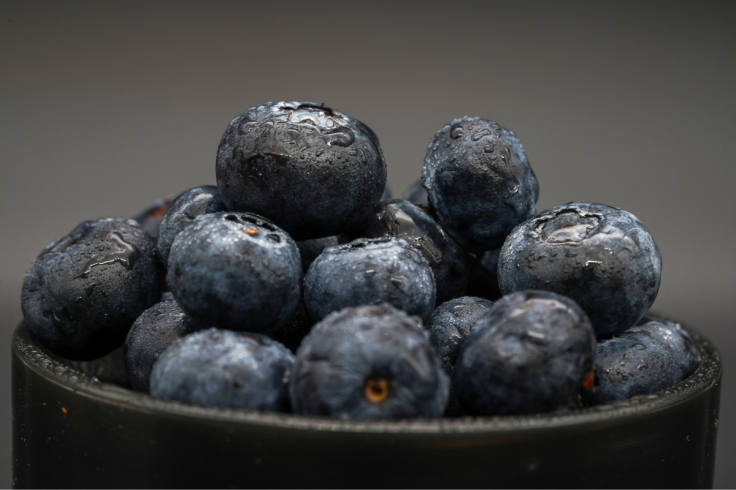
A recall involving GreenWise Organic frozen blueberries and mixed berries has been upgraded to the US Food and Drug Administration's highest-risk category after the products were linked to a multistate E. coli outbreak.
The Class I recall affects 182,094 units across four GreenWise products, according to FDA enforcement records. The products were distributed through Publix stores in eight US states, and 12 illnesses and four hospitalisations have been reported, with no deaths.
FDA Raises Risk Level Over E. Coli Outbreak
The FDA's Class I designation is its most serious recall classification. It is used when there is a reasonable probability that exposure to the affected product could cause serious adverse health consequences or death.
The outbreak investigation identified 12 illnesses in Florida and Georgia, with illness onset dates ranging from 11 May to 5 June 2026. Eleven cases were reported in Florida and one in Georgia, according to current outbreak information.
The FDA identified frozen blueberries as a leading food of interest. Of nine people interviewed, seven reported eating frozen blueberries, while five specifically reported eating GreenWise organic frozen blueberries purchased at Publix.
The investigation remains ongoing, and the FDA has not identified a final source of the contamination.
Which GreenWise Berries Are Recalled?
The recalled products include GreenWise Organic Whole Blueberries and GreenWise Organic Whole Mixed Berries, both sold in 10-ounce and 48-ounce packages.
The affected products and UPCs are 10-ounce (283-gram) Organic Whole Blueberries, UPC 41415-06453; 48-ounce (1.36-kilogram) Organic Whole Blueberries, UPC 41415-12053; 10-ounce (283-gram) Organic Whole Mixed Berries, UPC 41415-06753; and 48-ounce (1.36-kilogram) Organic Whole Mixed Berries, UPC 41415-12153.
The expanded recall covers all lots of the four products. The original 3 July recall involved a 10-ounce (283 grams) package of GreenWise Organic IQF frozen blueberries with lot code 60401 and a best-by date of 9 February 2028.
The recalled berries were shipped to Publix stores in Alabama, Florida, Georgia, Kentucky, North Carolina, South Carolina, Tennessee and Virginia.
Consumers should check their freezers against the product names, sizes and UPCs because recalled products could still be in homes.
How the Blueberry Recall Escalated
The recall developed in stages before reaching the FDA's highest-risk classification.
Publix conducted an internal stop-sale in late June before Chile-based supplier Frutas y Hortalizas del Sur S.A. announced a 3 July recall of one blueberry lot over possible E. coli O145:H28 contamination.
On 29 July, Publix expanded the recall to all lots of the four GreenWise Organic Whole Blueberries and Whole Mixed Berries products.
The FDA classified the recall as Class I on 18 August as officials continued investigating the outbreak and potential contamination source.
The agency also assessed the Chilean supplier and collected records relating to its procedures and hazard controls. Frozen blueberries from the supplier were placed on an FDA import alert while officials continued evaluating the source of the contamination.
What Consumers Should Do Now
The FDA advises consumers not to eat, sell or serve any recalled GreenWise berries. Anyone with affected products should throw them away or return them to the place of purchase for a refund.
Consumers should clean and sanitise surfaces and containers that came into contact with the berries to reduce the risk of cross-contamination. If the berries have been removed from their original packaging and their recall status cannot be confirmed, the FDA advises throwing them away.
Freezing does not make contaminated food safe, so consumers should not rely on frozen storage to eliminate the risk.
E. coli O145:H28 is a Shiga toxin-producing strain that can cause severe stomach cramps, diarrhoea, vomiting and, in some cases, bloody diarrhoea. Some infections can develop into haemolytic uraemic syndrome, a potentially life-threatening form of kidney failure.
Anyone who ate the recalled products and develops symptoms associated with an E. coli infection should contact a healthcare provider. The FDA and state and local partners continue to investigate the outbreak.
© Copyright IBTimes 2026. All rights reserved.