What Is Retatrutide? The Experimental Weight Loss Drug Millions Cannot Access That Sparked A White House Meltdown
Allegations of insider influence arise as a 79-year-old receives access to an unapproved weight loss drug, sparking political and public debate.

Retatrutide, a powerful but still unapproved 'triple‑agonist' weight loss drug in Phase 3 trials and not available to the general public, has ignited a political row in Washington after it emerged that a 79‑year‑old man was granted rare compassionate access through a specialised Food and Drug Administration programme.
The controversy erupted on Tuesday, June 23, after health news outlet STAT reported that the patient had received Retatrutide via the FDA's Expanded Access scheme. The programme is intended as a potential pathway for patients with serious or immediately life‑threatening conditions to obtain investigational medical products when no satisfactory alternatives exist. According to the report, an NIH clinician requested the drug in April for a patient with refractory obesity, obstructive sleep apnoea and pulmonary hypertension.
Claims Of Political Insider Influence Swirl Around Secret Patient
The core of the unrest lies in the unusual nature of this specific approval. According to three sources, the application for this 79‑year‑old patient drew the personal interest of top health officials, fuelling allegations that the recipient possessed significant insider influence. Given that the patient was 79 at the time of the request, and that President Trump turned 80 on June 14, the timeline invited immediate, widespread questioning.
When STAT reporter Lizzy Lawrence contacted the White House to ask if the patient was indeed the President, she did not receive a direct confirmation or denial before the story went to press. The reaction from the administration was swift and heated. The White House rapid‑response team took to X to post: 'No, it wasn't President Trump — and you people are truly sick and deranged.'
No, it wasn't President Trump — and you people are truly sick and deranged (though the Bluesky link in your bio already gave that much away) https://t.co/0xOvZN2h15
— Rapid Response 47 (@RapidResponse47) June 23, 2026
White House Spokesman Slams Reporter As 'Gossip Columnist'
White House spokesman Kush Desai went further, claiming the matter had to be 'spelled out' for the reporter, whom he described as an 'unserious gossip columnist.' He insisted the application was definitively not for the President. It is a sharp, personal rebuttal that underlines how quickly any discussion of Trump's health can escalate into a political dispute.
This development is particularly sensitive because President Trump, who recently invested in Eli Lilly, has frequently discussed weight loss medications in public. While his most recent medical evaluation, conducted in May, described him as being in 'excellent health,' his body mass index still categorises him as overweight. Given that he is both a major stakeholder in the company and a potential patient, his public comments on these drugs inevitably attract close scrutiny.
Because this has to be spelled out for @LizzyLaw_, who has proven herself to be an unserious gossip columnist, this application was not for the President. https://t.co/TjUOSWISmx
— Kush Desai (@KushDesai47) June 23, 2026
How Retatrutide Differs From Existing Weight‑Loss Drugs
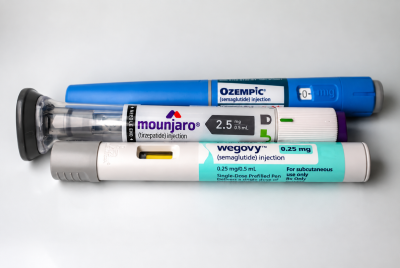
For millions following the rapid evolution of obesity treatments, Retatrutide is a markedly different prospect. While market leaders like Ozempic and Wegovy target a single hormone pathway, this new Eli Lilly candidate is a 'triple‑agonist.' It acts on three metabolic targets at once, working on the GIP, GLP‑1 and glucagon receptors simultaneously.
This strategy influences appetite, metabolism and energy expenditure more aggressively than existing treatments. Early data from the TRIUMPH‑1 trial has been striking, suggesting results that approach the physical impact of bariatric surgery.
Retatrutide May Outperform Current Weight‑Loss Medications
It is possible this new approach could overtake current medications. In one significant study, obese participants taking the highest dose lost an average of 17.5 per cent of their body weight after six months. By week 48, that figure rose beyond 24 per cent, equating to an average loss of about 58 pounds. This large reduction appears to exceed the results typically reported for Wegovy or Ozempic.
In addition, nearly all 338 participants on lower doses experienced weight reductions of between 5 and 15 per cent. Losing just 5 to 10 per cent of body weight is known to bring major improvements in blood pressure, cholesterol and overall metabolic health.
Potential Health Gains And Known Risks
Scientists are actively studying Retatrutide as a primary treatment for interconnected metabolic conditions, including type 2 diabetes and fatty liver disease. Trial participants have already shown marked improvements in haemoglobin A1c, blood pressure and LDL cholesterol.
However, these metabolic gains come with physical side effects. Gastrointestinal problems, including nausea, bloating, gas, vomiting and heartburn, are the most commonly reported issues. Emerging research on similar hormone‑targeting drugs has also identified rare risks such as pancreatitis and gallbladder disease. Because Retatrutide is still unapproved, researchers are closely monitoring its long‑term safety profile.
Who Gets Access To Experimental Drugs Like Retatrutide?
The secrecy surrounding this specific compassionate use case has left some observers uneasy. Eli Lilly maintains a strict 'no comment' position on individual cases, citing patient privacy laws.
Whether the true identity of this 79‑year‑old patient is ever disclosed remains unclear, leaving the public to consider how far political influence can shape access to the next generation of high‑impact weight loss drugs.
© Copyright IBTimes 2026. All rights reserved.
- Recommended For You