

'Am I Stupid?': Photographer Says Class Reunion Booking Cost Her $4,000 Instead of Earning Her $800
The alleged client asked her to pass money to a DJ, while consumer protection groups warn freelancers about fraudulent cheque schemes
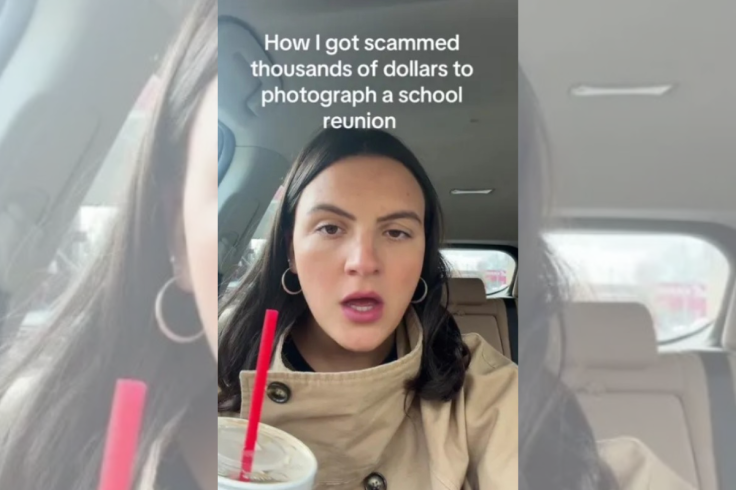
A photographer says she lost $4,000 (£3,050) after accepting a class reunion booking worth $800 (£610). The assignment, she says, became a suspected overpayment scam.
In a TikTok video reportedly posted around 22 November 2026, content creator AimeeLynne described how the booking led to the loss. Her account was subsequently reported by The Mary Sue on 25 November 2026.
The Payment Request That Turned a Booking Into a Loss
According to the account, the photographer initially received a business enquiry from someone claiming to be a professor. More than a month of correspondence followed, during which they discussed the proposed photography assignment.
The prospective customer reportedly preferred to pay by cheque, saying she was uncomfortable using digital payment services. The arrangement changed when the customer asked Aimee to handle payment for a DJ who supposedly could not accept cheques. That request added a financial responsibility beyond the original photography job.
In her TikTok video, posted under the username @amelialynnejohnson, Aimee reflected on the decisions that led to her reported loss.
'Am I stupid?' she asked, according to secondary reporting.
Aimee said her attempts to transfer the money through Apple Cash and Zelle initially appeared unsuccessful. She recalled receiving persistent telephone calls before the prospective customer suggested other payment methods, including prepaid cards.
Her husband suspected something was wrong, but money had already been transferred. According to Aimee, the cheque was subsequently identified as fraudulent, while the accounts that received her payments had reportedly been closed.
IBTimes UK cannot independently verify her financial losses or the circumstances surrounding the alleged fraud.
Better Business Bureau Warns Freelancers About Overpayment Scams
The payment arrangement resembles a type of fraud that consumer protection organisations have warned can target creative professionals. In July 2026, the Better Business Bureau (BBB) serving Abilene and the Big Country issued a warning to photographers, videographers and other freelancers.
Fraudulent customers may present convincing contracts and detailed assignments before introducing unusual payment arrangements. The request to pass money on to a third party is a key detail in Aimee's account.
'These scams are becoming increasingly convincing,' said Britni Casady, the organisation's president and chief executive, in remarks reported by KTXS on 15 July 2026.
The US Federal Trade Commission (FTC) warns that funds appearing in a bank account do not necessarily mean a cheque is genuine. A bank may make funds available before it has established that a cheque is valid.
Fraudulent cheques can take weeks to identify, leaving recipients responsible for money they have already transferred. Recovering payments sent to third parties can then be difficult.
How Freelancers Can Protect Themselves From Fake Cheque Scams
The BBB advises creative professionals to verify a prospective customer's identity independently before accepting unfamiliar assignments. Freelancers should also refuse requests to distribute payments to other contractors on a customer's behalf.
A professional-looking enquiry does not, by itself, confirm that a payment is legitimate. The FTC's warning about cheque funds is particularly relevant when a customer asks a freelancer to send money on before the cheque has been verified.
For those who suspect fraudulent activity, cybersecurity resource MalwareTips recommends suspending further transfers immediately and contacting their bank's fraud department. Keeping correspondence, payment records and transaction details could also assist subsequent investigations.
Casady said small business owners' interest in new work can make them a target for this kind of approach.
'Scammers know small business owners are eager for new opportunities,' Casady warned.
© Copyright IBTimes 2026. All rights reserved.