Donald Trump 'Transparently Deteriorating' After Damning Dementia Assessment
Dr. John Gartner suggests Trump's behaviour indicates mental deterioration, sparking debate.

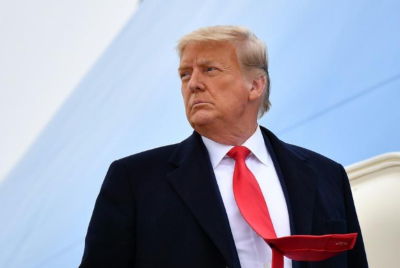
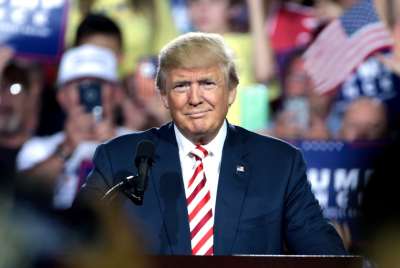
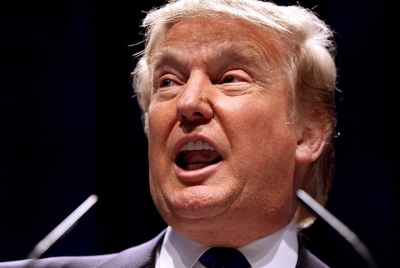
Donald Trump is facing fresh scrutiny after psychologist Dr. John Gartner said on a podcast that the US president is 'transparently mentally ill and cognitively deteriorating.' Speaking on The Daily Beast Podcast, the former Johns Hopkins University professor made the claim in a discussion about Trump's recent behaviour and the White House's repeated insistence that he remains in excellent health.
Trump and the Latest Attack Line
The news came after Gartner, who has previously described Trump as a 'malignant narcissist,' told host Hugh Dougherty that the president's condition was obvious to anyone willing to look. He argued that Trump was 'transparently mentally ill and cognitively deteriorating,' and dismissed the idea that a diagnosis needed to be made from a distance as some kind of barrier to criticism.
"Trump is ‘transparently deteriorating’ after damning dementia assessment" on SmartNews: https://t.co/ZvozaRsZio #SmartNews
— carollemieux (@carollemieux) May 23, 2026
Gartner went further still, saying that 'anybody who wasn't on MAGA drugs' could see what he described as decline. He also linked Trump's late-night social media posting to possible clinical symptoms, saying the pace of it could point to 'mania or sundowning,' or a combination of both. Those comments were not offered as a medical assessment backed by examination, but as his professional opinion on the public record.
The Dementia Claims
Gartner is not a lone voice, but he is among a small group of professionals who have publicly suggested that Trump is cognitively declining. In April, he said some of the president's online behaviour could even indicate 'psychosis,' and earlier this year he claimed Trump had been showing signs of frontotemporal dementia since 2019.
That is a serious allegation, and one that Trump's team has consistently rejected. White House spokesperson Davis Ingle told The Daily Beast that 'President Trump is the sharpest and most accessible president in American history who is working nonstop to solve problems and deliver on his promises, and he remains in excellent health.'
Gartner is presenting a deteriorating picture based on behaviour visible to the public. The White House, unsurprisingly, says the opposite. Nothing in the material provided confirms a formal medical diagnosis, and readers should treat the claims as allegations rather than established fact.
The Nuclear Fear
Gartner's sharpest comments came when he discussed an AI-generated image of Trump appearing to push a large red button. He said the image was part of what he described as Trump 'grooming' the public for ideas that would once have seemed unthinkable, including, in his words, nuclear war.
He also insisted that Trump does not joke or bluff in the ordinary sense, arguing that what the president does instead is prepare the public for darker outcomes. In Gartner's telling, that behaviour is tied to what he sees as grandiosity and sadism, traits he associates with malignant narcissism. It is a loaded argument, and the language is unmistakably his own.
Donald Trump scored a 96% approval rating at a dementia care facility. After an audit, almost all the residents explained that they thought they were voting for FDR. pic.twitter.com/JvDdteOTFr
— Hoodlum 🇺🇸 (@NotHoodlum) May 22, 2026
The interview sat squarely in the culture of Trump commentary that has followed him for years, where every gesture, post and provocation is examined for proof of some deeper collapse. Gartner's view will delight critics and infuriate supporters in equal measure, but that does not make it a diagnosis. It makes it a claim, and an aggressive one at that.
The White House Pushback
The White House response was swift and familiar. Ingle's statement rejected the idea that Trump's health is in decline and insisted that he is working constantly. That is the official position, and it stands in direct contrast to Gartner's public remarks.
What makes this latest round of speculation notable is not just the substance, but the confidence with which it is being aired. Gartner spoke as though the evidence were already plain, saying that anyone with 'eyes, ears, and a brain' could see the alleged deterioration. It was a broadside, not a cautious medical note, and he offered it in the full knowledge that Trump remains one of the most intensely scrutinised figures in American politics.
That is where the story now sits. A former Johns Hopkins professor has accused Donald Trump of mental decline and possible dementia, the White House has rejected it, and the debate over the president's health has once again returned to centre stage.
© Copyright IBTimes 2026. All rights reserved.
- Recommended For You