

Gold and Silver Prices Update: Why Global Dealer Rosland Capital Filed for Bankruptcy
The paradox of rising gold and silver prices contributing to Rosland Capital's financial downfall.
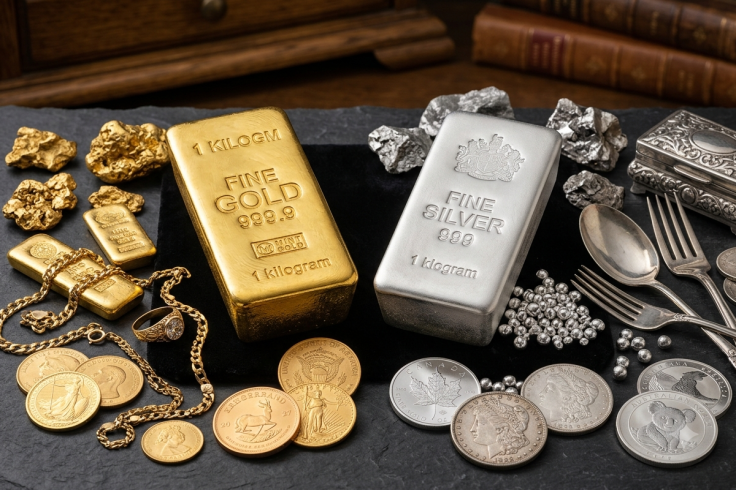
Gold and silver markets have delivered record highs over the past year, but the surge has now claimed a high-profile casualty after global dealer Rosland Capital filed for Chapter 11 bankruptcy in the United States on 2 July, court records show, with the Los Angeles-based firm moving to liquidate its business while owing tens of millions to creditors.
Rosland Capital built its reputation selling gold and silver bullion and advising clients on precious metals investments, including IRA-linked purchases, with operations expanding beyond the US to London, Munich and Paris over the past decade. Its collapse lands at a moment when gold and silver prices have soared sharply, creating a paradox that has enriched investors while quietly destabilising parts of the dealer market.
Gold and Silver Boom Behind Rosland Capital Bankruptcy
The numbers tell the story. Gold prices climbed from roughly 1,500 dollars per ounce in 2023 to 4,300 dollars by the end of 2025, before peaking at 5,620 dollars in January 2026, according to data cited in the filing. Silver followed a similar trajectory, reaching about 121 dollars per ounce at its peak. On paper, that kind of rally should have been a windfall for dealers. In practice, it exposed a fragile business model.
Rosland Capital relied on fulfilling customer orders after payment, purchasing metals from third-party suppliers at prevailing market rates. When prices accelerated, the cost of replacing inventory frequently exceeded what customers had already paid.
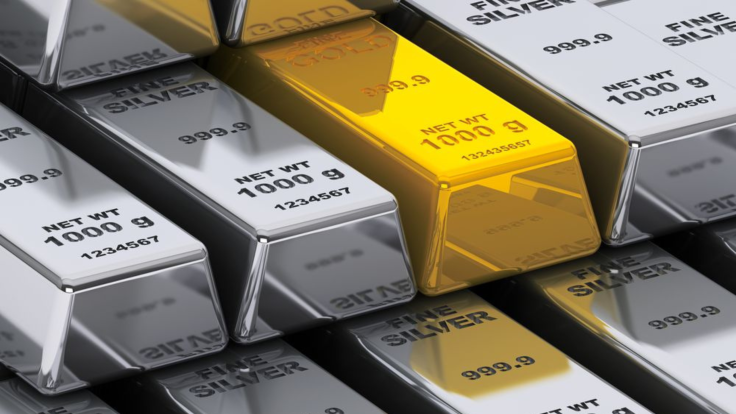
Internal disclosures in the bankruptcy filing point to a growing backlog, with customers waiting months for delivery. Meanwhile, commissions ranging from 15 per cent to 35 per cent of gross profit were still being paid to sales representatives, even when orders were cancelled or left unfulfilled. It is the kind of mismatch that looks manageable in stable markets, then turns punishing when prices spike this fast.
By the time of its filing, the company reported a deferred revenue balance of about 49 million dollars and a further 11.8 million dollars tied up in buyback obligations. Revenue, meanwhile, had fallen from around 151 million dollars in 2021 to 97.8 million dollars in 2025. That is not just a dip, it is a structural squeeze.
Rosland Capital Bankruptcy Filing Reveals Mounting Debt
Court documents filed in the US Bankruptcy Court for the Central District of California outline the scale of the damage. Rosland Capital listed assets between 1 million and 10 million dollars against liabilities estimated between 50 million and 100 million dollars.
Among the named creditors, Fox News Network LLC is owed more than 1.9 million dollars. The identities of 19 other unsecured creditors, collectively owed over 21.6 million dollars, were redacted in the filing, an omission that leaves a chunk of the story frustratingly opaque. Who exactly is left holding the bag here remains, at least for now, unclear.
The company has already taken drastic steps. It reported that it no longer holds any inventory of precious metals and has terminated substantially all employees as of 19 June. What remains is limited cash and a plan to sell off assets through a court-supervised process. A liquidating trust is expected to be established to handle creditor repayments.
Michael Hogan of Armanino Advisory LLC, acting as chief restructuring officer, said in the filing that a Chapter 11 liquidation offered the best route to maximise value for creditors. It is a clinical assessment, though it does little to soften the reality for customers still waiting on orders or repayments.
There is also a wider question hanging over the sector. If a major international dealer can be undone by rising prices, what does that say about others using similar fulfilment models? The gold rush, it turns out, can cut both ways. UBS metals strategist Joni Teves said in a May briefing that the bank expects gold to continue climbing this year, with the potential to reach new highs. Gold was trading at about 4,175 dollars per ounce on 3 July 2026, while silver stood near 62 dollars, according to market data cited in the report.
That optimism sits awkwardly alongside Rosland's collapse. Strong prices are typically read as a sign of market health, yet here they have contributed directly to a dealer's downfall. Investors may be celebrating gains, but behind the scenes, the mechanics of supply, fulfilment and risk are under strain.
Online, reaction has been muted but uneasy. Posts on X and investor forums show customers questioning delays and seeking clarity on outstanding orders, with some expressing concern about whether they will recover funds tied up in pending transactions. Without full creditor disclosure, those concerns are unlikely to ease quickly.
Nothing in the filings suggests wrongdoing, but the episode underscores a basic, uncomfortable truth about the gold and silver trade. When volatility accelerates beyond operational capacity, even firms built on the promise of stability can unravel, fast.
© Copyright IBTimes 2026. All rights reserved.