

Secret Pentagon UFO Hunt Drew Blueprints for Hidden Nevada Bunker To Store 'Exotic Material or Tissue'
Declassified records reveal ambitious plans for an underground vault, but offer no confirmation that extraterrestrial materials were recovered
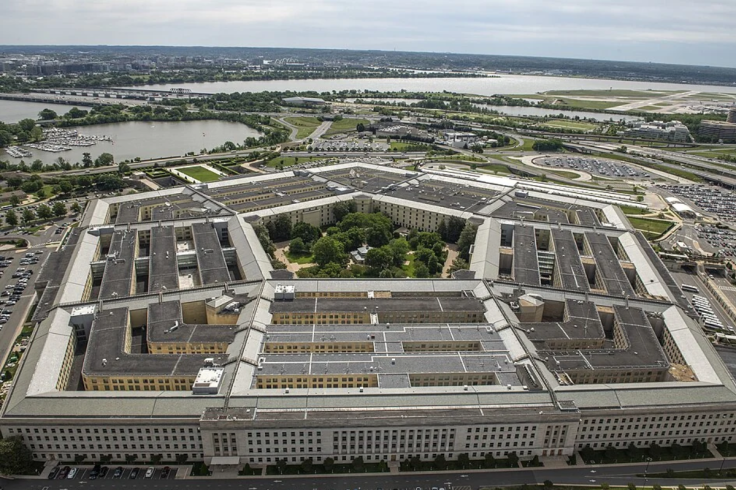
Newly released Pentagon UFO files reveal that a US defence contractor built an underground bunker in Nevada in 2009 to store potentially recovered hardware and biological samples.
The plans are outlined in a 538-page contractor report released on 20 November 2026 during President Donald Trump's administration. The document details work carried out under a $22 million (€20.1 million and £16.8 million) defence research programme examining advanced aerospace technologies.
However, the report does not establish whether the proposed bunker was built or whether the contractor obtained materials of extraterrestrial origin.
Inside the Nevada Bunker Plans Revealed in the Pentagon UFO Files
The proposal emerged from the Advanced Aerospace Weapon System Applications Program (AAWSAP), a Defense Intelligence Agency (DIA) initiative examining potential long-term aerospace threats.
The agency invited proposals on 18 August 2008 and received only one bid from Bigelow Aerospace Advanced Space Studies (BAASS). According to a January 2009 DIA briefing document, the company secured the contract on 22 September 2008.
By July 2009, BAASS reported hiring approximately 47 full-time employees, including scientists, engineers and investigators with military and law-enforcement backgrounds.
The contractor was also pursuing additional premises across the Las Vegas Valley to accommodate its expanding workforce, laboratory operations, and secure evidence storage.
According to its July 2009 report, BAASS designed a 5,000-square-foot underground vault for Bigelow Aerospace's North Las Vegas facility.
The proposed design featured three-foot-thick reinforced walls, a steel vault door, and extensive underground protection. The contractor anticipated the facility could be occupied by late 2009 or early 2010, subject to building permits.
BAASS identified the acquisition of 'recovered hardware and biological samples' from companies, private individuals, and groups as a priority. Potential sources of material included Brazil.
The report described the proposed vault as a facility for storing 'exotic material or tissue'. It did not establish whether BAASS had subsequently acquired such materials.
Pentagon UFO Files Reveal Disagreement Over Greater Secrecy
On 24 June 2009, then-Senate Majority Leader Harry Reid wrote to Deputy Secretary of Defense William Lynn III, requesting additional security measures for the research.
In his letter, Reid cited 'several highly sensitive, unconventional aerospace-related findings'. He argued that existing security arrangements were inadequate to safeguard sensitive information and private-sector participation. Intelligence officials reached a different conclusion.
In a memorandum dated 13 November 2009, then-DIA Deputy Director Letitia A. Long stated that the agency had found insufficient justification for the proposed restrictions.
Lynn ultimately declined Reid's request after a recommendation from then-Under Secretary of Defense for Intelligence James R. Clapper Jr.
A December 2010 DIA memorandum noted that BAASS had produced 26 technical reports in the initial phase.
Congress initially allocated $10 million (€9.1 million and £7.6 million), followed by an additional $12 million (€10.9 million and £9.1 million) for the 2010 fiscal year.
According to a 2024 historical assessment by the Pentagon's All-domain Anomaly Resolution Office (AARO), the programme ended in 2012 amid concerns about its value.
The assessment also noted that UFO investigations were not expressly included in the original contractual scope. Furthermore, the scientific papers produced under the programme had not undergone rigorous peer review.
Supporters later proposed a successor initiative, KONA BLUE, under the Department of Homeland Security. AARO said the proposal never received final approval, and no materials were transferred to the department.
The newly released Pentagon UFO files document preparations for the possible acquisition and examination of unidentified materials. They also reveal disagreements between advocates of greater secrecy and intelligence officials who are assessing the research.
Despite the detailed bunker proposal, the records offer no confirmation that the facility was completed or that extraterrestrial evidence was recovered.
© Copyright IBTimes 2026. All rights reserved.