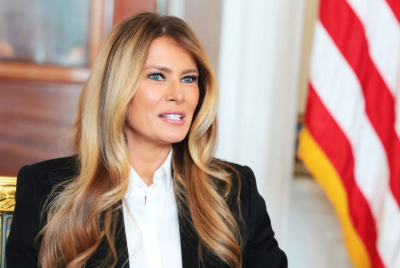
'Sweet Pea' Secrets: How a 2002 Email Just Wrecked Melania Trump's Epstein Denial

A resurfaced email has become the centre of a growing credibility battle for First Lady Melania Trump, sharpening scrutiny of her recent public denial of meaningful ties to Jeffrey Epstein and Ghislaine Maxwell. While she has dismissed suggestions of a relationship as false and politically driven, critics argue that documentary evidence points to a more complicated reality than her account allows.
Melania Issues Statement Denying Epstein Connection
In a rare White House appearance last week, Melania Trump firmly rejected allegations linking her to Epstein, the convicted sex offender, or his longtime associate Maxwell. She described suggestions of a relationship as false and politically motivated, insisting she had no close connection to either figure and no knowledge of Epstein's crimes.
But almost immediately, attention shifted to emails reportedly sent in the early 2000s from an account identifying the sender as 'Melania.' One message, dated October 2002, referenced a 'nice story about JE in NY mag' and discussed travel plans to Palm Beach. Another, from January 2003, reportedly included direct correspondence with Maxwell, who referred to Melania as 'sweet pea.' Those details quickly fueled accusations that her statement had omitted relevant context.
I've Had It podcast host Jennifer Welch explained how Melania's statement comes at an unusual time.
'My immediate thing is: What's about to drop? What are they getting in front of?' Welch said. 'Why is the wife of the man who's mentioned over a million times in the Epstein files—why is she bringing this up?'
Melania's Badly Timed Statement Immediately Met with Backlash
For critics, the issue was not whether the emails prove criminal wrongdoing, but whether they contradict the image of total distance that Melania attempted to present. Political analysts noted that in controversies involving public figures, credibility often hinges less on legal exposure and more on consistency. Even casual contact can become politically damaging if a public denial appears broader than the evidence supports.
The backlash was swift across social media, where users questioned why the First Lady had chosen to make such an emphatic statement if records existed showing at least some communication. Commentators argued that by speaking so forcefully, she raised the stakes of any contradiction that followed. What may have once been viewed as minor social contact was suddenly recast as a test of honesty and transparency.
The controversy also reignited scrutiny of the Trumps' broader orbit during the New York and Palm Beach social scene of the early 2000s, when Epstein moved among wealthy and influential circles. While Melania has denied any significant relationship, critics say the newly discussed emails make it harder to portray the connection as nonexistent.
Defenders Push Back As The Story Spreads
Supporters, however, argue the reaction is overblown. They contend that exchanging pleasantries or attending the same events does not amount to friendship or complicity. From that perspective, the emails merely show superficial social interactions common among public figures at the time. Some defenders also accused opponents of weaponising old correspondence for political purposes.
The fallout has extended beyond politics into popular culture. Late-night comedians and satirical programs seized on the story, mocking both the denial and the resurfaced messages, further embedding the controversy in the public conversation.
© Copyright IBTimes 2026. All rights reserved.
- Recommended For You