

Trump Dementia Claims: Psychologist John Gartner's Allegations vs What Medical Records Reveal
John Gartner and Frank George cited public outbursts, speech and movement patterns, while Trump's physician reported normal neurological findings in May 2026
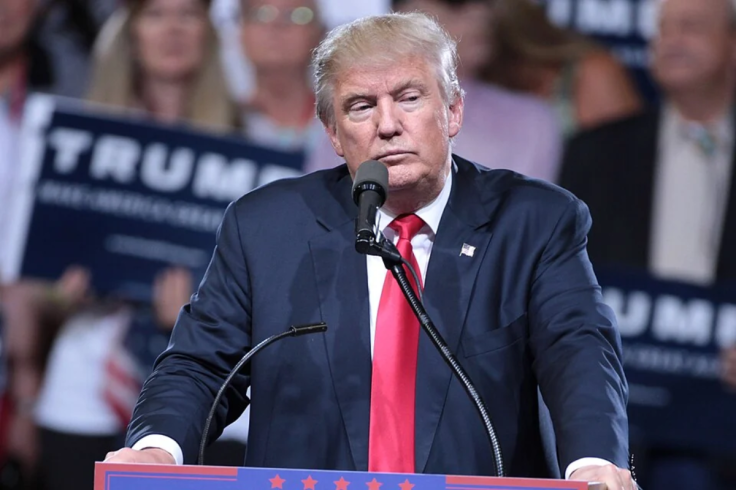
Clinical psychologist John Gartner has suggested Donald Trump's increasingly aggressive public outbursts and apparent lack of restraint could be consistent with frontotemporal dementia, although no publicly confirmed diagnosis supports the claim.
Speaking to lawyer George Conway on The Bulwark's Psycho Politics podcast, Gartner cited Trump's confrontations with journalists, including a 20 November exchange with NBC News White House correspondent Monica Alba.
His allegations, reported by The Daily Beast on 24 November 2026, have renewed discussion about the president's cognitive health.
What John Gartner Has Alleged
According to The Daily Beast, Gartner associated Trump's increasingly aggressive reactions with worsening disinhibition, a behavioural change that can occur in frontotemporal dementia (FTD), a neurological condition affecting personality, behaviour and language.
'The number one diagnostic criterion for frontotemporal dementia is disinhibition of aggression, because the frontal lobe — which is our brake and our filter — is deteriorating,' Gartner said.
However, established diagnostic criteria for behavioural-variant frontotemporal dementia identify disinhibition as one of six possible behavioural or cognitive features. A diagnosis requires additional clinical evidence, including progressive deterioration, rather than aggression alone.
Gartner added: 'So even though he has always been irritable and aggressive, he's getting dramatically worse and worse and worse.'
Gartner also used the phrase 'Quiet, Piggy!' to describe Trump's confrontational exchanges with female journalists, citing the incident involving Alba as a recent example.
He warned that what he considers reduced impulse control could have serious implications given Trump's authority over national security decisions.
Another Psychologist Raises Questions
In an 18 November 2026 report, AOL journalist Robin Cottle covered comments by psychologist and cognitive neuroscientist Dr Frank George, who appeared on The David Pakman Show.
George discussed footage that appeared to show Trump walking in an S-shaped pattern. He suggested the movement could be consistent with FTD, while acknowledging it was not a primary symptom.
'There are a few different motor disturbances you can attribute that to, it's also consistent with frontotemporal dementia,' George said, as quoted by AOL.
He also raised concerns about Trump's speech and public behaviour.
What Trump's Medical Records Show
In a memorandum dated 29 May 2026, presidential physician Captain Sean P. Barbabella reported the results of Trump's annual physical, conducted on 26 May at Walter Reed National Military Medical Center.
Barbabella recorded normal neurological findings, including mental status, cranial nerve function, motor strength, sensation, reflexes, gait and balance.
Trump also scored 30 out of 30 on the Montreal Cognitive Assessment (MoCA), a screening test for cognitive impairment. Barbabella described his cognitive function as within normal limits.
The Associated Press, in a report published by The Washington Post on 29 May, said Barbabella described Trump as being in 'excellent health' and 'fully fit' to serve as commander-in-chief.
The original physician's memorandum is available through the American Presidency Project at the University of California, Santa Barbara.
Does a Perfect Score Rule Out Dementia?
A perfect MoCA score indicates normal performance on the screening test, which assesses memory, attention, language and other cognitive abilities. The Centre for Addiction and Mental Health (CAMH) identifies scores of 26–30 as generally within the normal range. However, the test alone cannot rule out every neurological condition.
According to the US National Institute on Aging, behavioural-variant frontotemporal dementia can initially affect personality, behaviour and judgement, while memory may remain relatively unaffected.
The UK National Health Service explains that diagnosing FTD involves assessing symptoms and mental abilities, reviewing medical history and, where necessary, conducting blood tests and brain scans. There is no single test that can establish the diagnosis.
What Is Established?
Gartner's claims, reported by The Daily Beast, and George's observations, reported by AOL, are interpretations of Trump's public behaviour, not confirmed medical diagnoses.
Although Trump's May 2026 medical examination recorded normal neurological findings and a perfect MoCA score, this does not rule out every form of dementia. Frontotemporal dementia can initially affect behaviour and judgement rather than memory.
As of 25 November 2026, the sources cited provide no publicly confirmed diagnosis of FTD for Trump. The psychologists' claims remain unverified and should be distinguished from the findings of his medical examination.
© Copyright IBTimes 2026. All rights reserved.