

Gun Sales Go Digital: GrabAGun Aims to Lead Online Firearms Market with Trump Jr's Help
Trump Jr's involvement with GrabAGun raises ethical concerns as regulatory changes could reshape online gun sales.
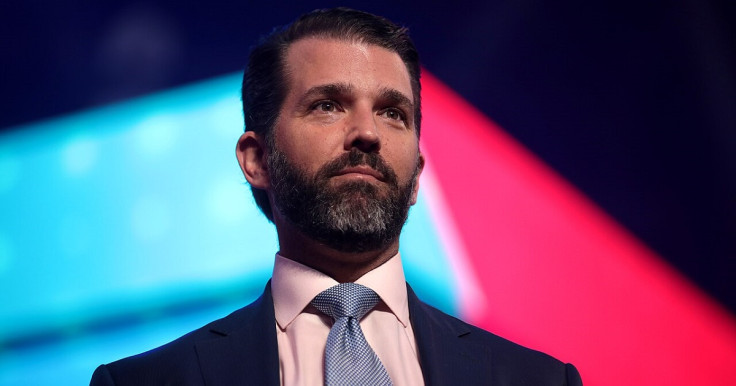
Donald Trump Jr is facing renewed scrutiny from ethics watchdogs over his commercial ties to GrabAGun, a Texas-based retailer aiming to transform online gun sales. The President's eldest son, who serves on the company's board and holds a 1.1 per cent stake, finds his business interests under the spotlight as the administration evaluates significant federal firearm reforms.
While the White House maintains that policy decisions are entirely separate from family investments, critics argue that the overlap creates a potential conflict of interest. The company is positioning itself to become a dominant force in the industry, and any regulatory easing of direct firearm shipping to consumers could significantly increase its market share. With the administration currently reviewing policies governing the online firearms market, the intersection of political power and private gain has sparked a fresh wave of public debate.
GrabAGun Sees Opportunity in Regulatory Shake-Up
GrabAGun has built its business around modernising firearm sales through online ordering. At present, customers can purchase guns through the company's website or mobile app, but federal law requires firearms to be shipped to licensed dealers, where buyers must complete background checks and collect their purchases in person.
Speaking during a May earnings call, GrabAGun chief executive Marc Nemati described the administration's proposals as a potential turning point for the firearms industry.
'This could be the most significant change to firearms retail distribution in decades,' Nemati said. 'GrabAGun is uniquely positioned for this opportunity.'
The company has long promoted its goal of becoming the 'Amazon of guns', targeting younger firearm owners who are accustomed to buying almost everything online. Executives believe easing restrictions on digital sales could accelerate that strategy while opening a far larger customer base.
Before GrabAGun's July 2025 public listing, Trump Jr celebrated the company's stock market debut on Fox Business, calling it 'a triumphant return' after what he described as years of hostility towards gun-related businesses.
Trump Jr's Role Raises Ethics Questions
Trump Jr joined GrabAGun in December 2024, shortly after his father's election victory, agreeing to serve as a consultant in exchange for 300,000 shares, according to company filings. His responsibilities include marketing strategy, developing partnerships and acting as a public spokesperson for the business.
With an ownership stake and a board position, Trump Jr. could benefit financially if regulatory reforms increase online firearm sales.
Jordan Libowitz, spokesperson for Citizens for Responsibility and Ethics in Washington, said those connections inevitably invite closer examination.
'There is no question about the company's ties to the son of the president,' Libowitz said. 'It is always going to raise red flags and question how decisions are made within the administration.'
GrabAGun rejects any suggestion of improper influence. A company spokesperson said the proposed rules would simply create 'a more streamlined purchase process for firearms' while noting that the regulatory process remains ongoing.
Trump Jr's spokesperson also dismissed concerns, saying he has 'zero involvement in this particular decision' and does not interact with the federal government as part of his advisory role.
The White House similarly said the proposed changes reflect President Trump's commitment to protecting Second Amendment rights rather than advancing private business interests.
Proposed Rules Could Transform Online Gun Sales
The administration's proposals extend beyond online background checks.
One measure would allow licensed firearms dealers to verify buyers digitally rather than require face-to-face identity checks. Another proposal would relax long-standing restrictions preventing licensed dealers from mailing handguns directly to residents within their own states through the US Postal Service.
Together, those changes would represent one of the biggest shifts in firearm retailing since Congress tightened federal gun laws following President John F. Kennedy's assassination.
Supporters argue that existing rules no longer reflect how commerce operates in the digital era.
Erich Pratt, senior vice-president of Gun Owners of America, said online firearm purchases remain protected by constitutional rights.
'The right of Americans to buy guns, even online, is something that is deeply rooted in our nation's text, history and tradition,' Pratt said. 'It is as American as apple pie.'
Gun-control advocates strongly disagree. They argue that in-person interactions remain an important safeguard because licensed dealers can identify warning signs that background checks alone may miss.
Marianna Mitchem, senior industry adviser for Everytown for Gun Safety and a former senior ATF official, warned that reducing face-to-face oversight could make firearms easier to obtain for people who should not legally possess them.
'This is going to make it so much easier for dangerous people to get firearms,' Mitchem said. 'You are eliminating [gun shops'] ability to be the first line of defence.'
GrabAGun has formally backed the proposals. In comments submitted to the ATF, the company's general counsel, Jonathan B. Wolens, argued that digital verification would improve efficiency while strengthening compliance.
The business also appears to have been preparing well before the proposals were made public. Months earlier, it created a logistics subsidiary, Pew Logistics, to develop software that allows manufacturers to sell firearms directly to consumers through online fulfilment systems.
The company's financial ties extend beyond firearm sales. GrabAGun offers financing through Credova Financial, a subsidiary of Public Square Holdings, where Trump Jr is also a board member and investor. That relationship further expands his commercial interests in the growing online firearms market.
As the legislative session progresses, ethics committees and lobby groups will likely continue to monitor any shifts in firearm policy. The situation highlights the ongoing challenge of maintaining transparency in an era where the boundary between political office and family business interests is increasingly blurred. For now, the administration shows no sign of altering its course regarding the proposed industry reforms.
© Copyright IBTimes 2026. All rights reserved.