

'All I Did, I Asked For a Review': Trump Insists World Cup Red Card Row Was Fair as FIFA President Faces Pressure
The reversal of Folarin Balogun's red card suspension ahead of the World Cup knockout clash with Belgium has sparked international scrutiny regarding the limits of political influence in sport.
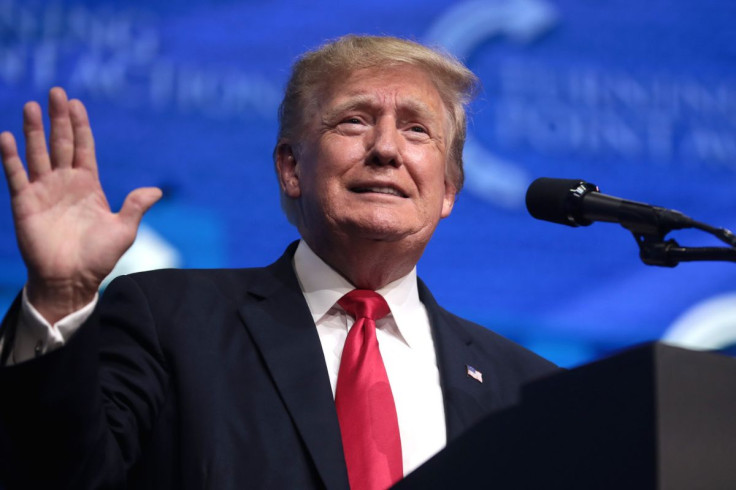
President Donald Trump has mounted a robust defence of his decision to lobby FIFA President Gianni Infantino over a controversial disciplinary ruling, confirming that he personally requested a review of the contentious World Cup red card issued to United States forward Folarin Balogun, as he believed the penalty was horrible and unfair. The intervention, which resulted in the immediate reversal of the player's suspension, allowed the striker to participate in Monday's high-stakes World Cup 2026 knockout match against Belgium.
Speaking on 6 July, the president confirmed that he had personally contacted Infantino to request a review of the punishment imposed on Folarin Balogun. The American goalscorer was sent off, earning a one-game ban that would have kept him out of a critical knockout clash with Belgium in Seattle. Following a telephone appeal from the president to Infantino, the governing body reversed the suspension. Balogun is now cleared to play on Monday, leaving the sporting world to unpack exactly how this wild situation unfolded.
Donald Trump World Cup Red Card Appeal
Addressing the intense international scrutiny surrounding the call, the president remained defiant about his involvement. 'All I did, I asked for a review because I didn't think it was a foul,' he explained to the press. Drawing upon his own background, he said he loved sports and had been a good athlete. He noted he saw the play and stated directly that the challenge was not a foul or an infraction.
For 24 days, the 2026 competition seemed entirely detached from domestic political battles. The dramatic reprieve for Balogun has since rocked global football circles and triggered fresh speculation regarding the close relationship between the American leader and Infantino. Taking to Truth Social on Sunday, the president celebrated the successful appeal. He posted, 'Thank you to FIFA for doing what was right, and reversing a great injustice! President DONALD J. TRUMP.'
FIFA Reverses Folarin Balogun World Cup Suspension
The unprecedented drama raises serious concerns about political interference and the overall integrity of the tournament. It does not necessarily matter to neutral observers whether the executive muscling into the issue was the decisive factor.
Just the distinct impression of political interference risks souring the global perception of an event that previously generated remarkably positive headlines. It is unusual for a head of state to influence who is allowed to play in a tournament, and this specific case has drawn intense attention.
Controversy is virtually guaranteed at these finals. Who could possibly forget Diego Maradona securing a crucial goal for Argentina with his hand in 1986, or the infamous Zinedine Zidane headbutt during the 2006 final? Yet there is no known precedent for a political leader successfully pressuring the governing body about who plays in a game, let alone one so vitally important to a host nation advancing. The optics are, frankly, quite mad.
Political Interference Concerns Surround Trump FIFA Call
The unprecedented situation elevates a routine refereeing debate into a complex international incident, casting a heavy ethical shadow over the showcase.
For the American public, the focus remains primarily on the upcoming match against Belgium. Within the hyperpartisan nature of soccer fandom, the nuances of the lobbying effort may be secondary to the immediate goal of advancing in the competition. Yet, for global stakeholders, the intervention raises broader issues about the commercial and political pressures facing FIFA.
The prompt reversal of the ban for Folarin Balogun serves as a reminder of how quickly sporting events can become vessels for broader political messaging. As the competition progresses, the focus will likely shift back to the matches themselves, but the shadow cast by this intervention suggests that the governing body will face increased scrutiny regarding its independence. Whether the result of Monday's game will quell the criticism remains to be seen, but the event has undeniably altered the narrative of the 2026 finals, ensuring that discussions of governance will sit alongside the results on the pitch.
© Copyright IBTimes 2026. All rights reserved.