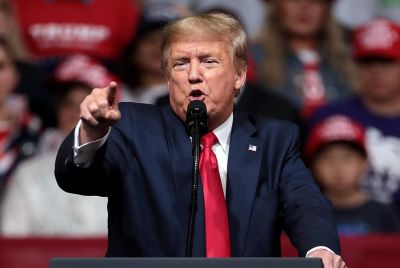
'Disgraceful. Arrogant. Pathetic.': Critics Eviscerate Trump for Shattered Diplomatic Protocols in Unprecedented Leak
Trump's post on Truth Social sparked outrage after he appeared to announce Keir Starmer's resignation before the British prime minister had done so himself.
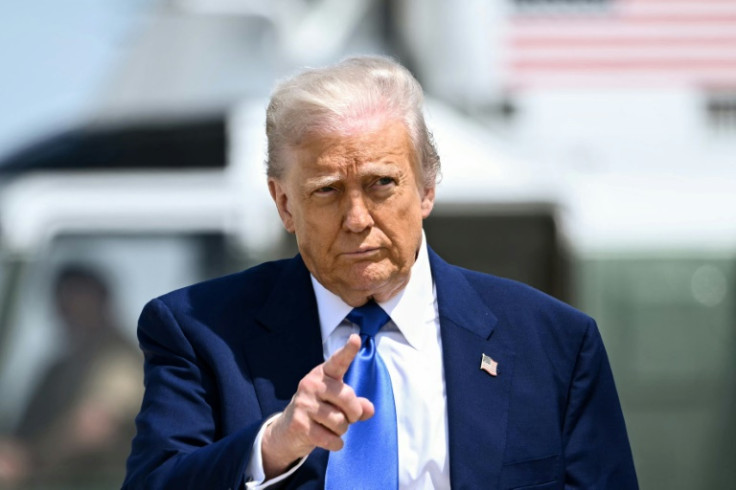
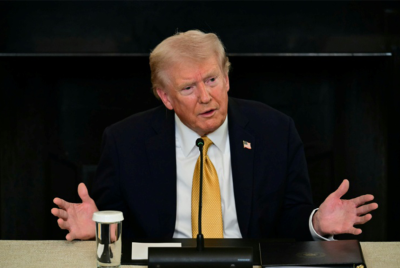
Donald Trump triggered a fierce backlash this week when, on Truth Social during the G7 summit, he declared that UK Prime Minister Keir Starmer 'will resign,' a claim Starmer had not made himself and one that quickly prompted accusations of diplomatic arrogance, political interference and a tin ear for how allies usually conduct themselves.
The post did not appear in a vacuum. Trump had already called Starmer 'uncooperative' amid disagreements over the Iran war, and his latest intervention landed at a moment when relations were plainly strained.
What made this one hit so hard was not only the content, but the presumption of it, a US president appearing to announce the fate of a British prime minister before Britain had said any such thing itself.
Why Critics Eviscerate Trump Over the Starmer Claim
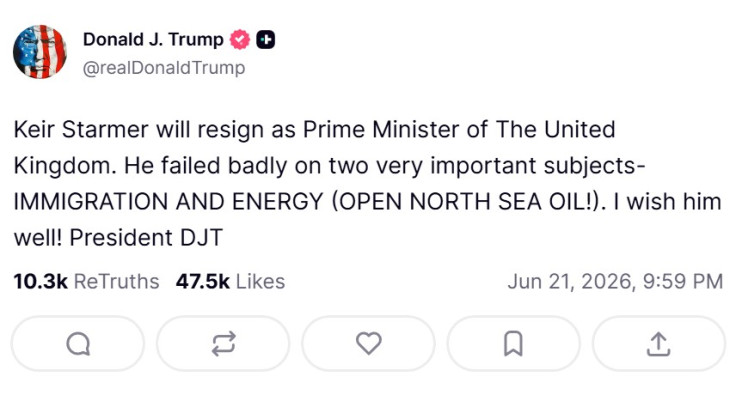
'Keir Starmer will resign as Prime Minister of The United Kingdom. He failed badly on two very important subjects- IMMIGRATION AND ENERGY (OPEN NORTH SEA OIL!). I wish him well! President DJT,' he wrote on Truth Social.
That was enough to set off an immediate online pile-on. One critic called it 'a ridiculous and insulting way for a President to treat the leader of one of America's very closest allies.'
Another said that even in an age when people have become inured to Trump's contempt for political norms, publicly pre-announcing the resignation of the prime minister of the United Kingdom was still 'pretty extreme.' It was the sort of reaction that arrives with a thud, not a bang.
It branded Trump's behaviour 'Disgraceful. Arrogant. Pathetic.' and called him 'a national embarrassment to America and a threat to allied democracies.' That language is obviously partisan, but it also captures why this story travelled so fast. The outrage was not abstract. People understood the breach instantly.
I know we’re mostly inured to Donald Trump’s disregard for institutional norms and proprieties, but pre-announcing the resignation of the prime minister of America’s supposedly most important ally is pretty extreme, even by his standards. UK ministers are genuinely and… https://t.co/667O9x1Tu0
— Robert Peston (@Peston) June 21, 2026
There is a practical issue underneath the fury too. If a leader is stepping down, that announcement ordinarily comes from the leader, their office, or at the very least from reporting grounded in named sources.
Here, the claim came first from Trump, on his own platform, in his own voice. Wild stuff, really.
As of 21 June, Keir Starmer was still serving as UK prime minister, while reports cited by the BBC suggested he could set out his resignation plans in the coming days. Trump's claim that a resignation was imminent had not been independently verified at the time, so it should be treated as speculation rather than confirmed fact.
How the 'Unprecedented Leak' Framing Took Hold
There is no evidence here of a confidential memo, a private diplomatic cable or an unauthorised briefing being published. What is clear is that critics saw Trump's post as a spectacular breach of diplomatic protocol, or at least of the discretion usually expected between allied governments.
It reaches beyond the usual Trump theatrics and into the old, awkward question of what allies owe one another in public. Respect, certainly. Restraint, usually. And perhaps the basic courtesy of not declaring another country's political turning points before that country does it itself.

Trump did not merely criticise Starmer, that part is almost routine by now. He appeared to speak for him. That is the bit readers will clock immediately, and it is the bit that makes the episode politically messy.
Until that happens, the core fact remains stubbornly simple. Trump said Starmer would resign. Starmer had not announced that himself. And as of 21 June, the resignation existed in public only in Trump's post, and in the anger that followed it.
© Copyright IBTimes 2026. All rights reserved.
- Recommended For You