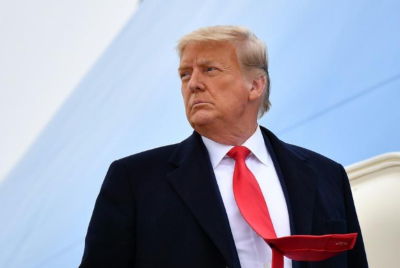
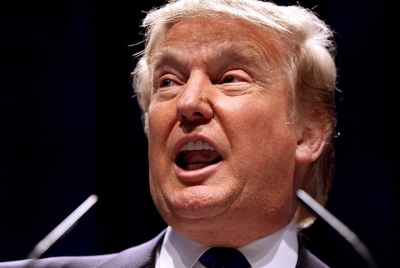
Has Donald Trump Had a Stroke? Here's What a Medical Expert Is Claiming
Medical expert suggests possible stroke as White House denies claims.

Questions over Donald Trump's health have intensified after a medical professor said the president may have suffered a stroke during his second term. Dr. Bruce Davidson, a professor at Washington State University's Elson S. Floyd College of Medicine, said several visible signs in Trump's public appearances pointed to a possible past stroke, although the White House has strongly rejected the suggestion.
BREAKING: Dr. Bruce Davidson lays out conspiracy theory that alleges President Trump has likely suffered a stroke. pic.twitter.com/XasVfpDcSg
— Leading Report (@LeadingReport) January 27, 2026
Trump, who turns 80 next month, recently attended Walter Reed National Military Medical Center for what the White House described as another routine examination. He later said everything had 'checked out PERFECTLY,' but gave no details about the findings, adding to the speculation that has followed him throughout his second term.
Footage Raises Questions
Speaking on The Daily Beast podcast, Davidson said he had spent years treating stroke patients and believed Trump's public behaviour had shown warning signs. He pointed to footage of the president 'shuffling' earlier this year, as well as moments when Trump appeared to cradle his right hand with his left, a posture Davidson said can be seen in people recovering from weakness on one side of the body.
He also said Trump's speech has at times become harder to follow, with more garbling than is typical for him. While Trump has long been known for meandering speeches and digressions, Davidson argued that some of the episodes seen earlier this year appeared different from the president's usual speaking style.
The professor went further, saying he believed Trump may already have suffered a stroke and could be dealing with post-stroke complications. Davidson said one possible clue was the president's reported daily use of 325mg aspirin, which he suggested can sometimes be associated with treatment plans aimed at reducing the risk of further cardiovascular events.
Why Davidson Suspects a Stroke
Davidson said he also noticed what he described as sagging on one side of Trump's mouth in photographs taken during the 9/11 commemorations last year. In his view, that kind of facial asymmetry can be a potential sign of stroke, particularly when considered alongside reported changes in movement and speech.
The doctor also said Trump's apparent sleep difficulties contributed to his concerns. He noted that sleep disturbance is common among some stroke patients and argued that poor sleep can affect recovery because the brain performs important restorative functions during sleep.
Davidson further pointed to Trump's late-night activity on Truth Social and reports of apparent daytime drowsiness. However, he stopped short of suggesting that sleep issues alone prove a stroke, instead presenting them as part of a broader pattern that he believes warrants attention.
Importantly, Davidson's comments remain his professional interpretation of publicly visible behaviour. He has not examined Trump personally, and no official medical diagnosis supporting his theory has been made public.
White House Pushback
The White House has dismissed the claims as baseless. Press secretary Karoline Leavitt called the stroke suggestion 'false and slanderous allegations from a left-wing nut job' and insisted Trump remains in excellent health.
Leavitt had previously defended bruising visible on Trump's hand by saying it was caused by him shaking hands throughout the day. Later, after Trump himself attributed the mark to increased aspirin use, the White House adjusted its explanation, a shift that helped keep attention focused on questions surrounding the president's medical transparency.
That change has given critics fresh reason to question how much medical information the administration is willing to disclose. Trump's latest Walter Reed visit was his fourth publicly disclosed medical evaluation since returning to office in January 2025, underlining how closely his health is being scrutinised as he approaches 80.
Public Doubts Build
Davidson's comments arrive as public polling suggests health concerns are already shaping perceptions of the president. A Washington Post, ABC News and Ipsos survey published earlier this month found that about 59% of Americans doubt Trump is mentally sharp enough to serve effectively, while 55% said they were not confident in his physical health.
A separate Reuters-Ipsos poll found that 61% of Americans believed Trump had become 'erratic with age,' including 30% of Republicans. The same survey showed that 49% disagreed that he was mentally sharp and capable of handling challenges, compared with 45% who agreed.
Those figures matter because they transform a medical theory into a broader political issue. In a second Trump term, any perceived sign of physical or cognitive decline quickly becomes part of a larger debate about leadership, transparency and the demands of the presidency.
For now, Davidson's remarks remain a theory rather than a diagnosis, and the White House continues to reject any suggestion that Trump has suffered a stroke. But with the president's age, visible fatigue, reported aspirin use and limited details surrounding recent medical examinations, questions about his health are likely to remain a sensitive and closely watched issue in the months ahead.
© Copyright IBTimes 2026. All rights reserved.
- Recommended For You