Donald Trump's Top Secret UFO Files Order: Satellite Photos of Non-Human Craft to Be Disclosed
Intelligence agencies and Congress are now wrestling with how much to reveal without exposing national security secrets

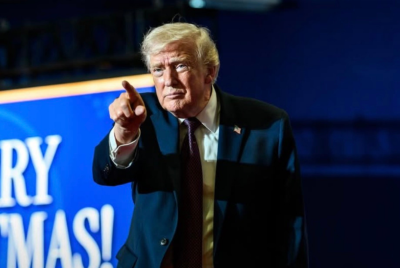
Donald Trump has ordered the US government to begin releasing long-classified UFO files, a move that could see satellite photographs and gun-camera videos of unidentified craft made public in the coming weeks. The directive, issued two weeks ago in Washington and placed under the control of Secretary of War Pete Hegseth, has set off a scramble inside key departments, with agencies still unable to confirm precisely what will be published or when.
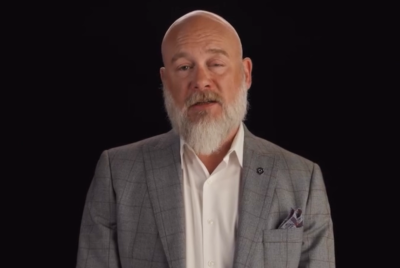
At the centre of the latest claims is Christopher Mellon, a former deputy assistant secretary of defence for intelligence under the Clinton and George W Bush administrations, who says the government is sitting on a 'massive' trove of UFO records, including 'stunning photos and videos' that have never been made public. Among them, he claims, are satellite images apparently capturing unconventional craft in space above Earth that are 'obviously not manmade', though he has not provided the images themselves, nor specified dates, locations or which satellites recorded them, and none of those details have been independently verified.
From Fringe Topic to Security Question
Trump's order follows years of gradual, often reluctant, disclosures about what officials now prefer to call Unidentified Aerial Phenomena (UAPs). Since the Pentagon officially released three Navy gun-camera clips in 2020, the subject has shifted from fringe speculation to a mainstream security and science question. Lawmakers have pressed for answers, defence officials have conceded they cannot explain some encounters, and a previously obscure network of intelligence veterans and military pilots has become central to the debate over what the US government really knows.
What the Files Could Contain
Mellon has been briefed on the material expected to be affected by Trump's order. He says there are also 'a significant number' of F-18 gun-camera and Forward Looking Infrared (FLIR) videos judged unclassified in 2018 that have nonetheless been withheld from the public. 'I know there are because I've seen some of them,' he said, arguing there is 'no rational reason' for continued secrecy over that specific material.
Mellon is not a newcomer to this terrain. In 2017, he played a pivotal role in the disclosure of three US Navy videos, widely known by their file names 'FLIR1', 'GOFAST' and 'Gimbal', showing unidentified objects tracked by F/A-18 fighter jets. Those clips were officially acknowledged by the Pentagon in April 2020 and remain some of the most widely scrutinised pieces of UAP footage. He also pointed to comments by CIA director John Ratcliffe, who has previously alluded to imagery of objects performing 'actions that are difficult to explain,' though the precise overlap between Ratcliffe's remarks and Mellon's claims remains unclear.
Despite the attention surrounding the directive, Mellon cautioned against expecting a definitive reveal. He said he does not anticipate hard proof in the pending files of contact with an extraterrestrial civilisation, even if some of the imagery may suggest technologies beyond current human capability.
Political Pressure and Bureaucratic Resistance
The political dimension is hard to ignore. Senator Mike Rounds, a Republican and senior member of the Senate Armed Services Committee, co-sponsored the UAP Disclosure Act in 2023 alongside Democratic Senate Majority Leader Chuck Schumer, an unusual bipartisan pairing that illustrated how far the subject has moved from its tabloid roots. Rounds welcomed the prospect of greater transparency, but warned that any release must be managed without compromising 'our own national security capabilities.'
Mellon was less diplomatic about what to expect. Describing the publication of classified material as an 'unnatural act' for intelligence agencies, he predicted that bureaucracy would 'react slowly' and that officials were unlikely to 'put the best stuff out quickly, if they do at all.' His prescription was direct: only 'congressional vigilance' could ensure the process was 'thorough and effective.'
Multiple agencies, including the Pentagon, the Office of the Director of National Intelligence, the National Security Agency, the Defense Intelligence Agency, and the Department of Energy, hold records that may fall under the White House directive. So far, none have specified what they plan to release or confirmed whether the satellite images Mellon describes are among the records under review.
For now, that leaves the public in familiar territory, somewhere between provocative suggestion and hard evidence. Until the files are actually opened, the most striking images remain not on screens but in the imagination.
© Copyright IBTimes 2026. All rights reserved.
- MOST POPULAR IN Trending