Trump Faces Backlash After Suggesting Iran War Reporters Could Face Death Penalty For 'Treason'
Trump's comments on media coverage of the Iran war ignite debate over press freedom and national security.
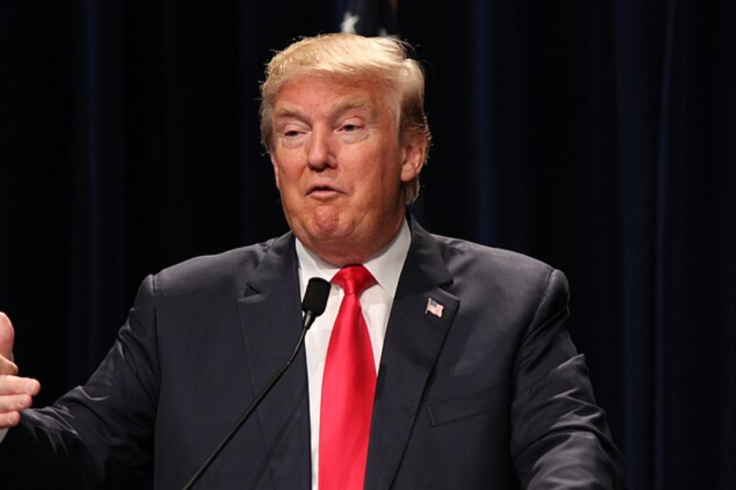
Donald Trump has ignited a fresh political storm by suggesting that journalists covering the Iran war could face treason charges, an offence that can carry the death penalty under US law.
The remarks came amid escalating tensions over coverage of the conflict between the United States, Israel and Iran, which began in late February 2026 and has since dominated global headlines.
Trump accused several media organisations of amplifying what he described as Iranian propaganda and artificial-intelligence-generated disinformation about the war. His comments quickly drew fierce condemnation from press-freedom advocates, legal scholars and political opponents, who warned that such rhetoric could threaten fundamental constitutional protections.
Trump's Accusations Against The Media
The controversy erupted after a series of posts and remarks in which Trump alleged that Western media outlets were helping Iran spread fabricated wartime narratives.
He claimed Iran had circulated artificial-intelligence-generated videos and images purporting to show successful attacks on US military assets and large pro-government rallies in Tehran.
Trump argued that some news organisations repeated or amplified those claims without sufficient scrutiny. He wrote that outlets spreading such information should face 'charges for treason', accusing them of acting against American national interests.
The president also praised Federal Communications Commission chairman Brendan Carr for examining whether broadcast licences could be reviewed in response to what he described as 'unpatriotic' reporting.
Trump did not present evidence showing that journalists had knowingly disseminated Iranian state propaganda. Independent reporting agencies have verified that some manipulated media circulated online during the conflict, though they also confirmed real footage of attacks on shipping and military targets in the region.
Why Treason Charges Carry Severe Legal Consequences
Under US law, treason is one of the most narrowly defined crimes in the federal legal system.
Article III of the United States Constitution specifies that treason consists only of 'levying war' against the United States or 'adhering to their enemies, giving them aid and comfort'. Convictions require either a confession in open court or testimony from two witnesses to the same overt act.
The federal statute governing treason, codified in 18 U.S. Code §2381, states that anyone convicted 'shall suffer death, or shall be imprisoned not less than five years', alongside fines and disqualification from public office.
Legal scholars have repeatedly emphasised that the threshold for prosecuting treason is extremely high. Historically, such prosecutions have been rare and typically limited to wartime collaboration with enemy governments.
One notable example occurred after the Second World War when American broadcaster Robert Henry Best was convicted of treason for delivering Nazi propaganda broadcasts from Germany during the conflict.
Experts say routine journalistic reporting, even if controversial or inaccurate, does not meet the constitutional definition of treason unless it intentionally provides material assistance to an enemy power.
Press Freedom Concerns And Political Backlash
Trump's comments prompted swift criticism from press-freedom organisations and political figures, who warned that the rhetoric could chill independent reporting.
Advocates for the First Amendment stressed that journalists are legally protected when reporting on matters of public interest, including war coverage and government policy.
They also argued that accusations of treason against reporters risk undermining the principle that a free press serves as a watchdog over political power.
Critics noted that Trump has frequently used harsh language when addressing media organisations he views as hostile.
During his presidency, he repeatedly labelled journalists 'the enemy of the people' and accused news outlets of spreading false information about his administration.
His latest remarks revived concerns among media watchdog groups that political attacks on journalists could escalate during periods of national-security tension.
Broadcasters that are running hoaxes and news distortions - also known as the fake news - have a chance now to correct course before their license renewals come up.
— Brendan Carr (@BrendanCarrFCC) March 14, 2026
The law is clear. Broadcasters must operate in the public interest, and they will lose their licenses if they… https://t.co/7bBgnsbalw
The Wider Context Of The Iran War Information Battle
The dispute over media coverage has unfolded alongside a broader information war surrounding the ongoing conflict.
Both Western and Iranian officials have accused each other of spreading misinformation and propaganda online as the fighting continues.
Trump has claimed that Iranian authorities are deploying artificial-intelligence tools to fabricate videos showing exaggerated battlefield successes, including alleged attacks on US naval assets and large public rallies supporting the country's leadership.
Fact-checkers and independent journalists have confirmed that manipulated images and videos have circulated widely during the conflict. However, analysts say misinformation has emerged from multiple sources, including unofficial social media accounts and politically motivated actors.
The information battle reflects the growing role of digital propaganda in modern warfare, where competing narratives can shape public perception as much as events on the battlefield.
Free speech protects every other freedom.
— FIRE (@TheFIREorg) March 15, 2026
It’s a principle our Founders fought for 250 years ago, and one we still defend today 🇺🇸 pic.twitter.com/s41T2ztk7T
A Debate Over Democracy And National Security
Trump's remarks have therefore intensified an already volatile debate about the role of journalism during wartime. Supporters argue that misleading reporting about military operations could endanger national security and embolden adversaries.
Critics counter that threatening journalists with treason charges risks eroding constitutional safeguards that protect democratic societies during times of crisis.
As the Iran war continues to dominate international politics, the clash between political power and press freedom looks likely to remain a central and deeply contentious issue in the unfolding conflict.
© Copyright IBTimes 2026. All rights reserved.
- MOST POPULAR IN Politics