

Trump Threatens to Ban Major US News Outlets Over Coverage of 'Fake' Iran Strikes on US Planes
FCC Chairman Warns Broadcasters Amidst Trump's Criticism of Media Coverage
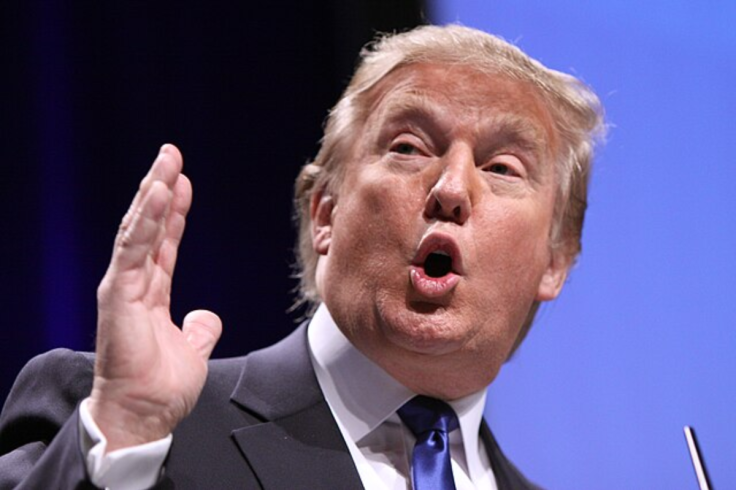
The Trump administration is threatening to strip US broadcasters of their licences over war reporting it has labelled 'fake news'; a direct escalation in the White House's sustained campaign against independent journalism.
On 14 March 2026, Federal Communications Commission (FCC) Chairman Brendan Carr posted a warning on social media declaring that broadcasters running 'hoaxes and news distortions' would lose their licences if they did not 'correct course.'
The statement came hours after President Donald Trump attacked the Wall Street Journal, the New York Times, and other outlets on Truth Social over their reporting that five US Air Force refuelling planes had been struck in an Iranian missile attack on a Saudi base.
The Disputed Report That Set Off a Media Confrontation
The immediate trigger was a Wall Street Journal report published on 13 March 2026, citing two US officials, which stated that five KC-135 Stratotanker refuelling aircraft had been struck and damaged on the ground at Prince Sultan Air Base in Saudi Arabia during an Iranian missile strike. The aircraft were reportedly damaged but not destroyed, and were undergoing repairs. No personnel were reported killed in the strikes.
Reuters confirmed the Journal's account the same day, citing the same two US officials. The strike brought the total number of American refuelling aircraft damaged or lost in the war to at least seven, according to Reuters, including a KC-135 that crashed in western Iraq on 13 March, killing all six crew members on board.
Trump, writing on Truth Social the following morning, did not deny the strike had occurred. He disputed only the framing, saying four of the five planes had 'virtually no damage' and were already back in service. He called the headlines from the Journal, the Times, and what he described as other 'Lowlife Papers and Media' intentionally misleading, and alleged those outlets 'actually want us to lose the War.'
Carr's social media warning followed within hours, posted as a direct reply to Trump's Truth Social message. 'Broadcasters that are running hoaxes and news distortions — also known as the fake news — have a chance now to correct course before their licence renewals come up,' Carr wrote. 'The law is clear. Broadcasters must operate in the public interest, and they will lose their licences if they do not.'
Broadcasters that are running hoaxes and news distortions - also known as the fake news - have a chance now to correct course before their license renewals come up.
— Brendan Carr (@BrendanCarrFCC) March 14, 2026
The law is clear. Broadcasters must operate in the public interest, and they will lose their licenses if they… https://t.co/7bBgnsbalw
Hegseth Singles Out CNN; Questions Over FCC's Actual Authority
Defence Secretary Pete Hegseth had signalled the administration's media posture a day earlier, on 13 March, during a Pentagon press briefing. A former Fox News host, Hegseth criticised on-air graphics, specifically a CNN banner reading 'Mideast war intensifies,' and called on reporters to be 'patriotic.' He suggested an alternative chyron: 'Iran increasingly desperate.'

Hegseth then turned directly to CNN's ownership situation. He said he hoped a pending corporate deal would place the network under the control of David Ellison, son of tech executive and Trump ally Larry Ellison, whose Skydance Media is in negotiations to acquire CNN's parent company, Warner Bros. Discovery.
'The sooner David Ellison takes over that network, the better,' Hegseth said. The remark drew immediate attention given that the proposed acquisition is pending regulatory review, including by the FCC itself, the very body Carr heads.
On Sunday, 15 March, Trump publicly endorsed Carr's position on Truth Social, calling certain news organisations 'Corrupt and Highly Unpatriotic' and saying he was 'thrilled' that Carr was 'looking at the licenses,' as the Washington Post reported.
However, the FCC's actual legal authority to act on those threats is disputed, and, according to media law specialists, very limited. The FCC licenses the local affiliated stations of broadcast networks such as ABC, NBC, CBS and Fox, not the networks themselves. Cable channels including CNN fall entirely outside its jurisdiction.
Broadcast licence renewals for television stations are not due until late 2028. Public interest communications lawyer Andrew Jay Schwartzman told CNN: 'Chairman Carr's threats are hollow.' Schwartzman noted that any attempt to call in a licence early would trigger a formal hearing process that could take years and would almost certainly provoke a First Amendment challenge.
Senate Democrats and Free-Speech Groups Push Back Hard
The response from Democratic lawmakers was swift. Senator Elizabeth Warren of Massachusetts wrote on social media: 'Constitutional law 101: it is illegal for the government to censor free speech it just does not like about Trump's Iran war. This threat is straight out of the authoritarian playbook.'
Constitutional law 101: it’s illegal for the government to censor free speech it just doesn’t like about Trump’s Iran war.
— Elizabeth Warren (@SenWarren) March 14, 2026
This threat is straight out of the authoritarian playbook. https://t.co/7B3inYEV2t
Senator Brian Schatz of Hawaii called it 'a clear directive to provide positive war coverage or else licences may not be renewed,' adding that 'the stakes here are much higher' than previous FCC threats over entertainment programming.
This is a clear directive to provide positive war coverage or else licenses may not be renewed. This is worse than the comedian stuff, and by a lot. The stakes here are much higher. He’s not talking about late night shows, he’s talking about how a war is covered. https://t.co/maKAZhcUjN
— Brian Schatz (@brianschatz) March 14, 2026
Senator Chris Murphy of Connecticut wrote: 'We are not on the verge of a totalitarian takeover. We are in the middle of it.'
The is the federal government telling news stations to provide favorable coverage of the war or their licenses will be pulled.
— Chris Murphy 🟧 (@ChrisMurphyCT) March 14, 2026
A truly extraordinary moment.
We aren't on the verge of a totalitarian takeover. WE ARE IN THE MIDDLE OF IT.
Act like it. https://t.co/3w4kpzray7
The Radio Television Digital News Association (RTDNA), which represents local TV news executives across the country, described Carr's approach as a 'bully with a briefcase' tactic. Its chief executive, Tara Puckey, said in a statement: 'Using federal regulatory power to threaten broadcast licences over coverage decisions is unconstitutional — full stop.'
Our statement on FCC Chair Brendan Carr's latest threat to violate the First Amendment. pic.twitter.com/Xx5HF5vAJb
— RTDNA (@RTDNA) March 14, 2026
The sole Democrat on the FCC, Commissioner Anna Gomez, was direct. 'The FCC can issue threats all day long, but it is powerless to carry them out,' she wrote on social media. 'Such threats violate the First Amendment and will go nowhere. Broadcasters should continue covering the news, fiercely and independently, without fear of government pressure.'
The FCC can issue threats all day long, but it is powerless to carry them out. Such threats violate the First Amendment and will go nowhere.
— Anna M. Gomez (@AGomezFCC) March 15, 2026
Broadcasters should continue covering the news, fiercely and independently, without fear of government pressure.
In an interview with Axios, Gomez acknowledged that the threats themselves — regardless of their legal enforceability — are effective as tools of corporate intimidation, particularly while massive media mergers await federal regulatory approval.
When a government with pending regulatory authority over the companies it is threatening tells broadcasters to 'correct course' or lose their licences, the question of whether that threat is legally enforceable may matter far less than whether newsrooms decide it is worth the risk to find out.
© Copyright IBTimes 2026. All rights reserved.
- MOST POPULAR IN World


