Trump 'Won't Retire' After Presidency and May Focus on Being a Peacemaker, Says US Ambassador to Israel
The ambassador said Trump remains driven by diplomacy and legacy-building, suggesting he could continue engaging in international conflict resolution beyond formal office.

The image of Donald Trump riding out his post-White House years on a golf cart in Mar-a-Lago sunshine has never quite matched the man himself. Now, according to his top envoy in Israel, it is time to retire that fantasy altogether.
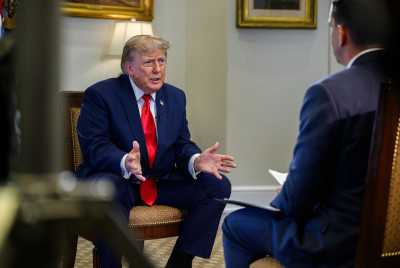
In a striking interview given in Jerusalem, Mike Huckabee, the 70-year-old US Ambassador to Israel and former Arkansas governor, said Trump has 'no plans to slow down' after his second term ends in January 2028. Far from fading into the lucrative lecture circuit, Huckabee says, Trump is already plotting his next act — as a self-styled global peacemaker.
'He's not going to sit in a rocking chair on a front porch and just play golf once a week,' Huckabee insisted. 'He's incapable of settling down.'
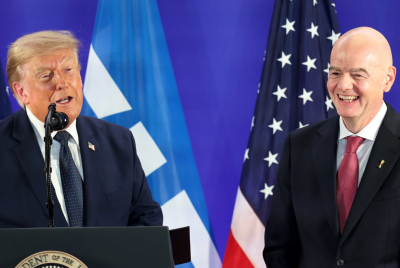
At the centre of this promised reinvention is the Board of Peace (BoP), a new international body Trump launched at the World Economic Forum in Davos earlier this year. Huckabee describes it as Trump's 'next project in life', and says the former reality-TV star and property tycoon could continue to chair the board long after he leaves the Oval Office.
Whether that sounds reassuring or ominous will depend very much on how one views Trump's record so far.
Board of Peace as Trump's Post-Presidency Power Base
The Board of Peace is still in its infancy, but it is not a mere think-tank vanity project. The UN Security Council has authorised the board to oversee certain aspects of the fragile Gaza ceasefire — a detail that has alarmed some diplomats who fear a parallel structure encroaching on UN authority.
Huckabee's comments, published on Friday 6 February 2026, come just ahead of the BoP's first formal meeting, scheduled for 19 February at the United States Institute of Peace headquarters in Washington, DC. The symbolism is obvious: borrowing the language and setting of institutional peacebuilding, but imprinting it with Trump's trademark preference for disruption and deal-making.
The ambassador portrays the Board of Peace as a deliberate rebuke to what Trump's circle sees as the stale rituals of multilateral diplomacy.
'These are people who want to actually do some heavy lifting,' Huckabee said, drawing a sharp contrast with what he derided as conventional bureaucrats. The emphasis, he argues, will be on 'concrete outcomes' in places where traditional diplomacy has failed or simply run out of ideas.
That language will grate in European capitals, where scepticism about the entire project is already thick. Western European allies have largely balked at the structure taking shape in Davos, wary that a Trump-branded peace board with quasi-official UN blessings could erode the UN's role and diminish painstakingly built post-war institutions.
But others are not so squeamish. Russia, Saudi Arabia and Qatar have either expressed interest in the BoP or taken part in exploratory talks, attracted in part by the promise of a more transactional, less sermonising model of international engagement. That list of early suitors alone tells you plenty about the world Trump imagines himself mediating.
A Pricey Seat at the Board of Peace Table
If the ideal of peace is universal, the Board of Peace is setting a distinctly elite threshold for permanent influence. The Davos blueprint sketched out an arrangement in which permanent membership could be tied to voluntary contributions of up to $1 billion, earmarked for reconstruction in war-ravaged regions. Other members would rotate on fixed terms.
Money, in other words, buys you a louder voice.
For defenders of the project, this is simply realism. In Huckabee's telling, the BoP reflects Trump's preference for free-market principles applied even to conflict zones, echoing the logic behind the National Committee for the Administration of Gaza (NCAG), which has pushed a more business-driven model of post-conflict governance.
That approach is not subtle: those prepared to commit vast sums, swiftly, are invited into the inner circle. Those clinging to older multilateral habits are gently — or not so gently — sidelined.
Critics see something far less benign: a pay-to-play peace structure that embeds the interests of wealthy states and private capital at the heart of security decisions that ought to be guided by law, legitimacy and human need. What appears to Trump's allies as 'results-driven' looks, to his opponents, like the commodification of peace.
Huckabee brushes that away, insisting the world is tired of sluggish UN resolutions and photo-op summits that deliver little for people on the ground. The Board of Peace, as he frames it, is designed for those willing to write very large cheques and then be judged on whether anything changes.
Chasing a Legacy as Peacemaker
Strip away the branding and this is ultimately about Trump's own place in history. Huckabee is explicit: the president, he says, wants to be remembered as a 'peacemaker' and sees the Board of Peace as the platform that allows him to outlive the ballot box.
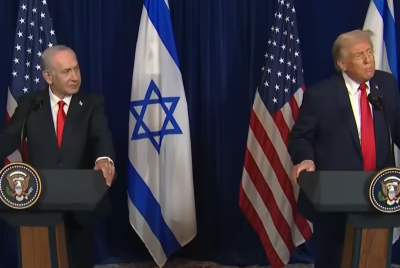
It is not an entirely fanciful aspiration. Trump's supporters like to point to his administration's role in brokering diplomatic normalisation between Israel and several Arab states, deals that were loudly touted in Washington as proof of his unconventional but effective style. Huckabee cites those Middle East initiatives as evidence of a pragmatic streak that confounded both traditional Republicans and liberal critics.
The ambassador also hints that Trump's future with the Board of Peace could be open-ended, describing the possibility of an 'indefinite' chairmanship as the 2026 midterms loom into view. For those already weary of his omnipresence in global politics, the idea of Trump as a permanent fixture in Middle Eastern diplomacy will hardly be a comfort.
Yet it reveals something important: even as his second term winds down, Trump is carefully constructing a post-presidential role that keeps him at the centre of the world's most combustible disputes, draped in the language of humanitarian ambition and backed by billion-dollar pledges.
Whether the Board of Peace can deliver the 'unimaginable' outcomes Huckabee promises is, of course, unknowable. Trump's allies insist he 'makes a promise, and he keeps it'. His critics could list several counter-examples.
But one thing seems increasingly certain. When Donald Trump finally leaves the White House, he does not intend to leave the stage.
© Copyright IBTimes 2025. All rights reserved.
- Recommended For You