Trump Abruptly Removes JD Vance From Iran Peace Talks Over 'Security Concerns', Replacing Him With Jared Kushner
Security concerns prompt Trump to replace VP Vance with Kushner and Witkoff in critical Iran peace negotiations
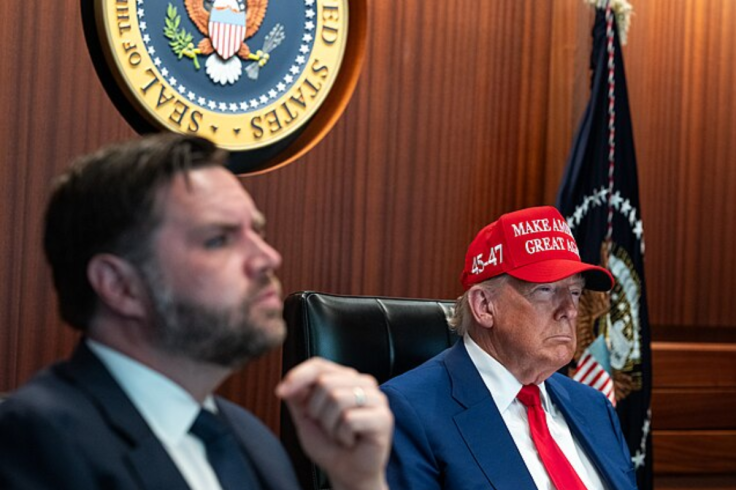
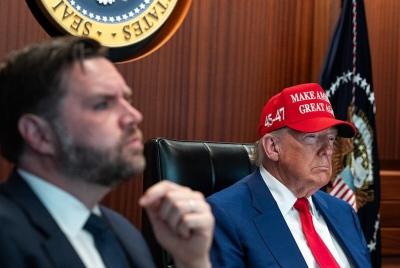
President Donald Trump has abruptly pulled Vice President JD Vance from high-stakes Iran peace talks, citing 'security concerns' as fragile ceasefire negotiations hang in the balance.
The move comes as the United States prepares for a critical new phase of diplomacy following a 39-day conflict involving Iran and Israel. The White House had initially positioned Vance as a central figure in the negotiations, underscoring the significance of his sudden removal.
Security Concerns Prompt Sudden Change In Delegation
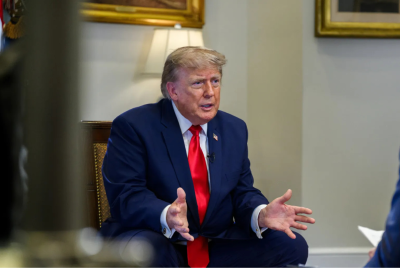
Trump signalled the shift in a direct interview, expressing uncertainty about Vance's participation due to safety risks associated with the negotiations.
'We'll have Steve Witkoff, Jared Kushner, JD, maybe JD, I don't know. There's a question of safety, security,' Trump said, according to remarks published by the New York Post.
The statement marked a notable departure from earlier White House messaging, which had framed Vance as leading the diplomatic effort. Hours before, White House press secretary Karoline Leavitt confirmed that Vance would head the delegation to Pakistan for the next phase of talks.
Leavitt described Vance as 'the president's right-hand man' and emphasised his deep involvement in negotiations 'since the very beginning'. That contrast has raised questions about the immediacy and seriousness of the security concerns Trump cited.
The talks are expected to begin on Saturday morning local time in Islamabad, with Pakistan acting as a mediator amid escalating regional tensions.
.@PressSec: "@VP has played very significant and a key role in this since the very beginning. Of course, he’s @POTUS' right hand man...he’s been involved in all of these discussions and, as I just announced, he’ll be leading this new phase of negotiations in Islamabad." pic.twitter.com/vRd76kXv6E
— Rapid Response 47 (@RapidResponse47) April 8, 2026
Fragile Ceasefire Shapes Diplomatic Urgency
The diplomatic push follows a tenuous ceasefire that ended more than five weeks of hostilities between Iran and Israel, a conflict in which the United States played a direct role alongside Israeli forces.
Despite the ceasefire, instability persists across the region. Iranian officials have reportedly linked their participation in talks to broader conditions, including a halt to Israeli military operations in Lebanon and guarantees surrounding the Strait of Hormuz.
Pakistan's Prime Minister Shehbaz Sharif has publicly urged restraint, warning that reported violations 'undermine the spirit of [the] peace process'. In a statement posted on X, Sharif called on all parties to honour a two-week cessation of hostilities to allow diplomacy to proceed.
Vice President Vance himself acknowledged the volatility of the situation. 'Ceasefires are always messy,' he said, referencing missile exchanges that occurred shortly after the agreement was announced. 'No ceasefire ever goes without a little bit of choppiness.'
These conditions underscore the high-risk environment surrounding the talks and help explain the administration's heightened focus on security considerations.
Violations of ceasefire have been reported at few places across the conflict zone which undermine the spirit of peace process. I earnestly and sincerely urge all parties to exercise restraint and respect the ceasefire for two weeks, as agreed upon, so that diplomacy can take a…
— Shehbaz Sharif (@CMShehbaz) April 8, 2026
Kushner's Return Signals Strategic Continuity
The decision to deploy Jared Kushner reflects a reliance on experienced figures from Trump's previous diplomatic initiatives in the Middle East.
Kushner played a central role in brokering the Abraham Accords during Trump's earlier administration, positioning him as a trusted envoy in complex regional negotiations. His re-emergence suggests the White House is prioritising continuity and familiarity amid uncertainty.
Steve Witkoff, another key figure in Trump's diplomatic circle, will also participate, reinforcing a strategy built around loyal and experienced negotiators.
Jared Kushner and special envoy Steve Witkoff are now expected to take leading roles in talks scheduled to begin in Islamabad. At stake is not only the success of the immediate talks but also broader objectives outlined by the White House, including curbing Iran's nuclear ambitions, reopening the Strait of Hormuz, and stabilising global energy flows.
Donald Trump has reportedly pulled J.D. Vance out of peace talks with Iran for "security reasons", sending Jared Kushner and Steve Whitkoff instead. pic.twitter.com/ClRPunGdMt
— Pubity (@pubity) April 19, 2026
High Stakes As Negotiations Begin
The upcoming talks represent a critical juncture in efforts to secure a longer-term resolution to the conflict.
Iran has reportedly submitted a counter-proposal to US negotiators, which Trump described as a 'workable basis' for further discussions.
Central to the negotiations is Iran's stockpile of enriched uranium, estimated at around 1,000 pounds of 60 per cent purity, as well as its broader nuclear programme. Trump has reiterated that preventing Iran from developing nuclear weapons remains his primary objective.
The ceasefire agreement also includes provisions to reopen the Strait of Hormuz, a vital artery for global oil shipments, after its closure during the conflict disrupted markets and heightened international concern.
The Islamabad talks are scheduled to begin on Saturday, 19 April 2026. Iran and the United States have not publicly confirmed the full composition of their respective delegations. The two-week ceasefire is due to expire on 21 April 2026.
© Copyright IBTimes 2026. All rights reserved.
- Recommended For You