Immigration Arrests Are Fuelling a Mental Health Crisis for Hundreds of Thousands of US Citizen Children
The psychological toll of immigration arrests on American children is becoming increasingly evident.

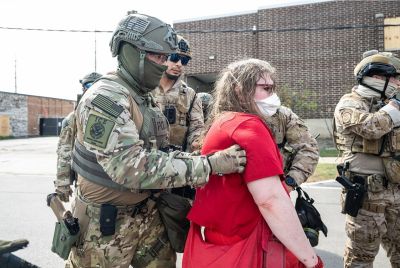
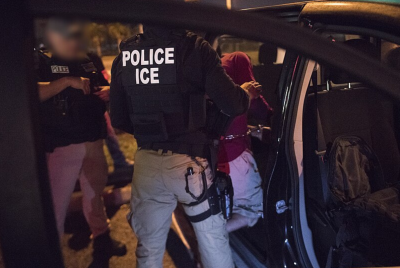
A wave of immigration arrests under the Trump administration has torn an estimated 145,000 US citizen children away from a parent, and the paediatricians, therapists and teachers who treat them say the psychological damage is already plain to see.
Researchers at the Brookings Institution estimate that around 205,000 children, most of them American citizens, have lost a parent to detention since January 2025. The children left behind are regressing developmentally, refusing to eat, skipping school and showing the bodily symptoms of chronic stress, according to a joint investigation by KFF Health News and CBS News.
Federal officials reject the claim that they are separating families, which has set off a sharp dispute over who bears responsibility for the harm.
A Generation Growing Up Scared
Damian Zermeño was 15 when his world narrowed to a phone screen. His father, Saúl, a single dad who had raised him alone since infancy, walked him to the bus stop on the morning of 3 October 2025 and promised to take him to dinner that night.
Saúl instead went to a routine check-in at an Immigration and Customs Enforcement office, a requirement he had met for years under a grant of deferred action, and officers deported him to Mexico, a country he had left at the age of nine.
Damian, who was born in the United States and lives with attention-deficit hyperactivity disorder and autism, stopped eating, stopped speaking to friends and began crying in class. 'I thought it wasn't true,' he told KFF Health News. 'I just went to my room. I didn't want to leave. I didn't even want to eat.'
Clergy who visit affected households describe the same hollowing out across Los Angeles. 'You can just see it in their faces; it's almost like the light has been dimmed in their eyes,' said the Rev. Tanya Lopez, a pastor at Downey Memorial Christian Church who works with immigrant families through a coalition of local religious leaders.
The Numbers Behind the Family Separations
Because no government agency counts how many children lose a parent to detention, Brookings built an estimate from the data that does exist. The researchers took the demographic profile of roughly 400,000 people booked into ICE detention through interior arrests, matched it against likely unauthorised immigrants in the American Community Survey, and calculated that about 27 per cent were parents.
Their model points to around 205,000 affected children, of whom an estimated 145,000 are US citizens, and about 22,000 citizen children who have had every resident parent detained.
A separate ProPublica investigation, built on detention records prised loose through a University of Washington public-records lawsuit, took a more conservative route and still found that at least 11,000 American children had a parent detained in the administration's first seven months. ProPublica also reported that the government was deporting roughly four times as many mothers of American children each day as the Biden administration had, and cautioned that its figures were almost certainly an undercount.
The administration's own accounting is far smaller. Speaking to PBS NewsHour, Brookings senior fellow Tara Watson, a co-author of the analysis, noted that the Department of Homeland Security calculates about 60,000 affected US-born children, a fraction of the modelled total. Brookings stresses that its estimate could run higher or lower, given the absence of official tracking.
What Severing a Parent Bond Does to a Child
The clinical picture is well established. Losing a primary caregiver triggers what doctors call toxic stress, a flood of stress hormones that disrupts a developing brain and raises a child's risk of depression, anxiety, post-traumatic stress disorder, weakened immunity and developmental delay, KFF Health News reported. The same stress response is linked to heart disease, diabetes and cancer decades later in adulthood.

Therapists who treat these families describe a grief with no clear end, because the missing parent is alive yet unreachable. Sofia Mendoza, a therapist at a community clinic in Los Angeles County, said separated children frequently turn anxious, angry and fearful, complain of stomachaches and slide back into earlier behaviours such as bed-wetting. One mother, Noemi, recounted how her youngest daughter reverted to crawling for three months after her father was taken and cried out 'Pa! Pa!' in her sleep.
Older research maps the pattern. A 2010 study of immigration-related parental arrests found that most children showed at least four adverse behavioural changes within six months, becoming more fearful, withdrawn, clingy or aggressive, according to the American Immigration Council. A 2020 study of Latino adolescents in Atlanta tied the detention or deportation of a family member to significantly higher rates of suicidal thoughts, alcohol use and aggression.
A Policy Dispute Over Who Bears the Harm
The government frames the situation very differently. In a statement to KFF Health News, the Department of Homeland Security said ICE does not separate families and that detained parents are asked whether they wish to be removed alongside their children or to designate a trusted person to care for them in the United States.
Field research contradicts that account. A report by the Women's Refugee Commission and Physicians for Human Rights, based on interviews at deportee reception centres in San Pedro Sula, Honduras, found that ICE routinely failed to follow its own Detained Parents Directive, that most parents interviewed were never asked about their children, and that some were separated from infants. Saúl Zermeño said officers never asked about Damian or checked on the boy's welfare before deporting him.
Most people swept up in these arrests have no criminal conviction, since living in the country without authorisation is generally a civil matter rather than a crime. The dispute over numbers does little for the children at its centre, who measure the policy not in statistics but in an empty chair at the dinner table.
Whatever the official tally, a generation of American children is learning to gauge a parent's love by the distance to a detention centre.
© Copyright IBTimes 2026. All rights reserved.
- Recommended For You