Retired Generals Warn Hegseth's Officer Purges Leave the US Military Exposed
Retired officers warn of risks to military ethics and operational readiness following unprecedented dismissals

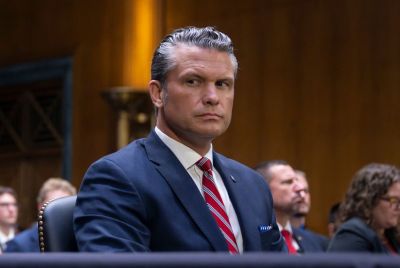
Retired senior military officers are raising serious concerns about the operational readiness of the United States armed forces following an unprecedented wave of firings ordered under War Secretary Pete Hegseth, with one veteran comparing the dismissals to the Soviet purges carried out by Joseph Stalin before the Second World War.
Since President Donald Trump returned to office in January last year, Hegseth has fired or forcibly retired 24 generals and senior commanders, according to a Guardian investigation published Sunday. No performance-related justification has been given for any of the removals. Approximately 60 per cent of those pushed out have been Black or female officers, a pattern critics say reflects the administration's broader campaign against diversity, equity and inclusion initiatives within the armed forces.
Officers With 'Impeccable Reputations' Forced Out
Among those removed was General Randy George, the Army Chief of Staff, reportedly ousted last month after he refused to strike four officers — two Black men and two women — from a list of prospective promotions. The purge began in February last year with the termination of General CQ Brown as chairman of the Joint Chiefs of Staff. Brown, who is Black and a decorated former Air Force commander, was replaced by Dan Caine, a three-star general who had retired and needed a rapid promotion to meet Senate confirmation requirements.
Admiral Lisa Franchetti, the first woman to serve as chief of naval operations and the first to sit on the Joint Chiefs of Staff, was also among those forced out. At a Senate Armed Services Committee hearing last week, Hegseth was asked by Democratic Senator Jack Reed of Rhode Island whether Trump had instructed him to single out Black and female officers. 'Of course not,' Hegseth replied, before adding: 'Members on this committee and the previous leadership of this department were focused on height, social engineering, race and gender in ways that we think were unhealthy.'
The regime change happened successfully.
— Iran Embassy SA (@IraninSA) April 3, 2026
MAGA😀 pic.twitter.com/R75aFdmSTN
'A Really Unhealthy Environment'
Retired Army Major-General Paul Eaton, who commanded US forces following the 2003 invasion of Iraq, told the Guardian the purges mirror plans outlined in Project 2025, the Heritage Foundation's policy blueprint. 'They want to create ideologically pure armed forces that will be pliant to the president and his secretary of defense and whose oath will be more to a person than to the constitution,' Eaton said.
He likened the dismissals to Stalin's pre-war purge of Red Army generals — a move that, according to a quantitative analysis by the Centre for Economic Policy Research, directly degraded Soviet military performance in the opening years of the German invasion in 1941. 'I believe that the senior leadership of the US military has been substantially damaged,' Eaton said. 'You develop a fracture in the cohesion of the people at that level. That's a really unhealthy environment when you're afraid to speak your mind.'
Former Army Colonel Kevin Carroll, who has served in the offices of both the defence secretary and the Joint Chiefs of Staff, warned that the situation also poses risks to military ethics. 'All the retired officers I know are seriously concerned about the long-term effect on the force,' Carroll told the Guardian. 'I think it poses a real long-term risk threat to the ethics and ethos of the force.'
Nuclear Concerns Deepen
The alarm extends beyond operational readiness. Veterans and national security analysts have raised concerns about who, if anyone, could now push back against potentially unlawful presidential orders — including, in the most extreme scenario, a nuclear strike.
Joe Cirincione, a veteran national security analyst and nuclear non-proliferation expert, told the Guardian: 'For years, we've been told that we don't have to worry about a crazy president launching a nuclear war, because the military would not carry out any illegal order. But that's not real.' He noted that the president holds 'sole unfettered authority to launch nuclear weapons whenever he wants, for any reason he wants,' and warned that relying on the military to refuse such an order is 'not an adequate barrier.'
⭕️⚡️ The Guardian: Chaos hits the US Department of War.
— Middle East Observer (@ME_Observer_) May 3, 2026
The Guardian reported that many military officials consider the performance of the US Secretary of War a threat.
The Guardian, in a critical report on the state of the US Department of War, wrote that the Pentagon, after a… pic.twitter.com/XFvRUSiYsP
The Guardian reported, citing a source with knowledge of the meeting, that Trump raised the possibility of using nuclear weapons against Iran during a recent White House meeting, describing him as 'talking out loud about nukes' and not 'demanding a strike,' though the disclosure alone has unnerved veterans familiar with previous administrations.
Carroll summed up the mood among those who have served across administrations: 'There was tension between the office of the secretary of defense and the joint chiefs of staff when I served on the joint staff in 2002 and 2003... But it was all very professional and civil. This is just disarray. It's crazy.'
The removal of senior military leadership at a time of escalating tensions with Iran has drawn scrutiny well beyond Washington's political circles. Analysts warn that a command structure populated by officers seen as loyal rather than qualified reduces the institutional safeguards that have historically kept presidential impulse in check.
© Copyright IBTimes 2026. All rights reserved.
- Recommended For You