'We Can't Ignore His Legacy:' Usher Reveals Why He Still Respects Diddy Despite Prison Sentence
Usher calls Diddy's legacy significant despite criminal conviction and prison
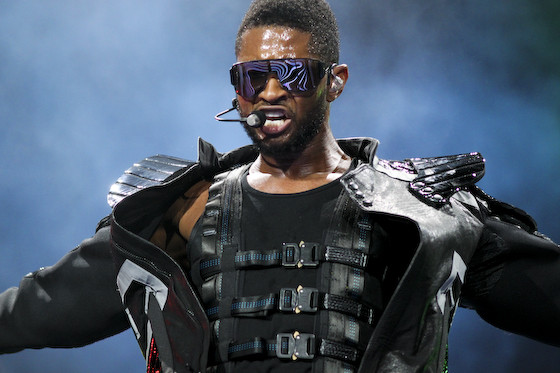
Usher paused only briefly before choosing his word for Sean 'Diddy' Combs: 'Legacy',a response that lands awkwardly against the reality of a man now serving time in a federal prison.
Speaking to Forbes' The Enterprise Zone, the 47-year-old singer did not attempt to sidestep the discomfort surrounding his long-time mentor. Instead, he leaned into it, though not in the way critics might expect.
Combs, 56, is currently serving a 50-month sentence after being convicted on two counts of transportation to engage in prostitution, with a release date on April 25, 2028. The case forms part of a much wider legal storm: he has also been indicted on charges including sex trafficking and racketeering, and faces numerous civil lawsuits alleging sexual misconduct, all of which he has denied.
Usher's refusal to condemn him feels less like an oversight and more like a deliberate stance.
'We can't ignore the reality of the history,' he told interviewer Jabari Young when he suggested he had managed to avoid 'a lot of the negativity' now attached to Combs' name.
Separating The Man From The Myth
There is a careful line running through Usher's remarks, one that attempts to separate personal experience from public narrative, even as the two collide.
'I don't have anything negative to say about Sean Combs because my experience was not what the world has seen and how he's been misrepresented,' he said. It is, undeniably, a controversial position. For some, it will read as loyalty. For others, it edges towards wilful blindness.
The relationship between the two stretches back decades, to when Usher was still a teenager navigating an industry that can be as unforgiving as it is lucrative.
Referring to Combs by his earlier moniker, Puff, he described him as 'a mentor', and not an easy one.
'A really, really hard teacher,' he said, recalling a dynamic built on discipline and observation rather than comfort.
The music industry has long celebrated such figures, demanding, exacting, occasionally bruising in their methods, while only later interrogating the cost of that approach. Usher's account sits squarely in that tradition.
What 'Legacy' Means In This Moment
Usher was unequivocal about Combs' influence, particularly within Black entrepreneurship.
'I can't, with any sense of humanity, not recognise the valuable contributions that this man made for us as Black entrepreneurs, for us as businessmen, for us as people who transition culture and ideas into something that's tangible and becomes business,' he said.
Combs, after all, helped shape a generation of artists and executives, building an empire that blurred the boundaries between music, fashion and commerce. That much is not in dispute.
What is harder to reconcile, and what Usher largely avoids confronting directly, is how that legacy should be weighed against the allegations and convictions now defining Combs' present.
'I put respect on his name because I realised that what I learned as a businessman before I even understood what business was came as a result of seeing the incredible things that he was able to do and the way that he positioned himself as a businessman,' he said.
Usher appears content to hold both ideas at once. He does not deny the gravity of Combs' situation, yet he resists allowing it to eclipse the past entirely.
© Copyright IBTimes 2026. All rights reserved.
- MOST POPULAR IN Entertainment