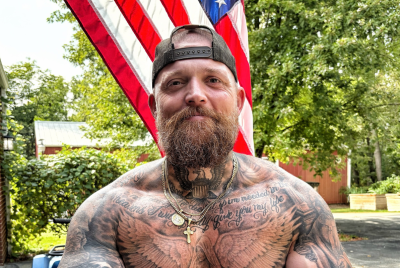
Afroman Mocks Cops' 'Fake Tears' After Comparing Raid to Diddy, Suggests Court Testimony Is Phony
Afroman compares Ohio raid to Diddy's high-profile searches and dismisses deputy's emotional testimony as 'fake'.

Rapper Afroman has accused Ohio deputies of putting on a 'bully' performance when they raided his home in 2022, likening the armed operation to the high-profile 2024 searches of Sean 'Diddy' Combs' properties and dismissing a crying officer's later court testimony as 'fake.'
The Because I Got High rapper, whose real name is Joseph Foreman, had his home in Adams County, Ohio, raided in August 2022 by deputies acting on a warrant alleging drug trafficking and kidnapping. No charges have been detailed in the latest round of coverage, but the raid itself has since become a running battle between Afroman and local law enforcement, fought through music, memes and, occasionally, the courts.
In a new interview with Andrew Callaghan, Afroman set out his version of what happened that day and why he decided to humiliate the officers involved. He said he had seen 'homicide detectives' arrest suspects in a far less aggressive manner, arguing that the style of the raid said more about theatre and intimidation than public safety.
'I've seen homicide detectives walk up to the guy they're about to arrest, gun in holster, clipboards down by their leg,' he told Callaghan. 'Hey man, you need to come with us downtown, man. We got to talk.' They don't run up to a dude like they did me.' His complaint is not just about the warrant, but the staging, heavily armed deputies on his lawn, doors broken in, the full tactical spectacle.
Afroman Links His Ohio Raid to Diddy Raids
The news came after federal agents carried out highly publicised raids on properties linked to Diddy in Los Angeles and Miami in 2024, operations that were widely shared online and dissected in the media. Afroman has seized on those images as a visual echo of his own experience, then contrasted them with the apparently calm interaction when the music mogul was actually taken into custody.
'Like they did all that stuff to Puff Daddy,' he said, according to Complex. 'They brought the tanks. They brought all that stuff, right? Did they have to do that to arrest him? No. They walked up to him in the hotel like, 'How you doing? Let's go.' He like, 'Okay, buddy.' So all that shit was for show. That was intimidation. That's bullying.'
Afroman calls out cops who cried in court over his rap lyrics after defamation case. Details: https://t.co/vRpqCUCaUE pic.twitter.com/QSbey0VZ2f
— Complex Music (@ComplexMusic) April 9, 2026
He folds his Ohio raid and the Diddy footage into the same complaint, law enforcement, in his view, choreographing a show of force that plays well on camera and sends a message, even when it is not strictly needed. None of the agencies involved have publicly accepted that characterisation, and their full operational rationale has not been laid out in the material cited.
Turning Surveillance Into Soundtrack
Instead of responding in court filings or quiet settlement talks, Afroman went where he is most comfortable. He turned his own surveillance tapes of the Ohio raid into content, sampling the images into songs and music videos designed to lampoon the deputies who barrelled through his property.
'They was trying to intimidate and bully me,' he said. 'So I was ready to play the bully game with them. And then they lost the bully game with all their AR-15s and Beetle Bailey helmets, and battle shields.'
Afroman is speaking out after securing a civil lawsuit victory, slamming the Ohio officers who sued him for defamation following a 2022 raid of his home.
— billboard hip-hop/r&b (@billboardhiphop) April 9, 2026
In a new interview with Andrew Callaghan, the “Because I Got High” rapper framed the case as a win for free speech,… pic.twitter.com/QRGnbIFxbD
The BBC reported that this mockery coalesced into his 2023 album Lemon Pound Cake, which includes tracks titled 'Lemon Pound Cake' and 'Will You Help Me Repair My Door?' The names are needling in themselves, lifting details from footage of officers inside his kitchen and his complaints about damage to his home.
The songs and corresponding videos have effectively become his counter-attack, casting the deputies as bumbling intruders and pushing his narrative out to millions of listeners beyond Adams County. For the officers, it has not just been a matter of bruised pride. Several of them have taken issue with being turned into viral characters, including one deputy whose emotional reaction in court has now become a fresh target for the rapper.
Afroman Dismisses Deputy's 'Fake Tears'
In his interview, Afroman addressed footage from courtroom proceedings where a female deputy became visibly upset while discussing his videos. He did not soften his response.
'I'm not trying to bully her,' he insisted, before immediately calling her reaction into question. 'Those tears are fake. She wasn't. She's playing a tough guy. Let's cut the crap.'
He then launched into a wider, somewhat abrasive riff on equality and gender expectations, arguing that if she wanted to be treated as an equal officer, she should not seek sympathy from jurors.
Afroman delivers a scathing post-trial assessment of the crying officers, escalating the debate on artistic liberty and police accountability. 🎤
— All Day Drip (@alldaydrip) April 9, 2026
Full story here: https://t.co/kvkn6yb5i2 pic.twitter.com/FyYKp2reVz
'We playing this equality game. We going to say men and women are equal, right? Okay. Lisa is equivalent to a man. Hey man, this ain't no time to be crying,' he said, referring to the deputy by first name. 'You wasn't crying when you was in my yard with that AR-15, man. Equal person. Now you want to play your female card with your face facing the jury. I ain't mad at her.'
It is a harsh framing, and one that will not sit easily with those who see officers as entitled to the same emotional response as any other witness. But in Afroman's telling, the tears were not a human reaction to an invasive spotlight; they were tactical, part of a legal performance responding to his music with pathos.
The Adams County Sheriff's Office has not, in the reporting referenced, offered a detailed public rebuttal to his latest comments about the raid, the comparison to Diddy or the deputy's emotional testimony. Without that, the story remains heavily filtered through Afroman's own lens, a local police action elevated, by timing and by one artist's stubborn sense of showmanship, into a running feud about power, image and who gets to control the narrative.
Nothing in his wider allegations about law enforcement motivations or the necessity of the tactics used has been independently confirmed in the available reports, so those claims should be treated with caution.
© Copyright IBTimes 2026. All rights reserved.
- Recommended For You