Tulsi Gabbard Quits, Citing Husband's Cancer, But Sources Claim Donald Trump Forced Her Out
Gabbard cites husband's cancer diagnosis for resignation amid claims of White House pressure.
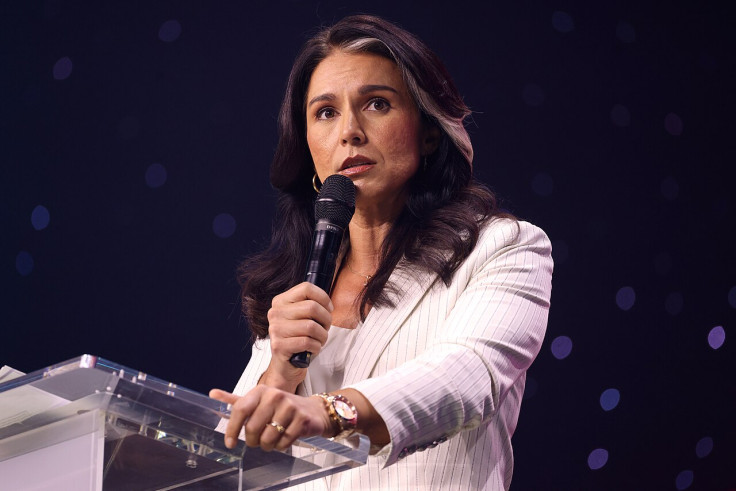
Tulsi Gabbard announced in Washington on Friday that she will step down as Donald Trump's director of national intelligence at the end of June, saying she is leaving the top US intelligence post to care for her husband following his diagnosis with a rare form of bone cancer, even as reports suggested that Trump and the White House had already decided to force her out.
Gabbard, a former Democratic member of Congress from Hawaii and Iraq war veteran, was an unconventional choice when Trump picked her to lead the Office of the Director of National Intelligence (ODNI). The role was created after the 11 September 2001 attacks to coordinate 18 separate US intelligence agencies, and it has traditionally been held by career intelligence figures or senior national security hands. Gabbard arrived with battlefield credentials and a fast‑evolving political profile, shifting from Democrat to Republican and endorsing Trump's 2024 bid, but with little direct background in the spy world.
Gabbard's Public Reason
Gabbard's resignation was first detailed by Fox News Digital, which reported she informed Trump of her intention to leave in an Oval Office meeting on Friday. According to that account, her resignation will take effect on 30 June.
Shortly afterwards, Gabbard posted her resignation letter on X. In it, she told Trump she was 'deeply grateful for the trust you placed in me and for the opportunity to lead the Office of the Director of National Intelligence for the last year and a half.' The letter then moved quickly to the personal reason she says lies behind her decision.
BREAKING: U.S. director of national intelligence Tulsi Gabbard has resigned.
— Sky News (@SkyNews) May 22, 2026
In her resignation letter, she said she was deeply grateful to Donald Trump, but must leave the role after her husband's bone cancer diagnosis. https://t.co/GNeYXUhFjY pic.twitter.com/8qn3YQrhdq
Gabbard wrote that her husband, film‑maker Abraham Williams, had recently been diagnosed with a rare form of bone cancer and that she could not continue in the post while he faced treatment. 'I cannot in good conscience ask him to face this fight alone while I continue in this demanding and time‑consuming post,' she said.
Trump responded on his Truth Social platform by praising Gabbard's performance and publicly accepting the explanation. He said Principal Deputy Director of National Intelligence Aaron Lukas, a former CIA officer and National Security Council analyst during his first term, would serve as acting director.
Trump described Gabbard as having done 'a great job,' adding that with her husband's diagnosis 'she, rightfully, wants to be with him, bringing him back to good health as they currently fight a tough battle together.'
Davis Ingle, a White House spokesperson, reinforced that line in a brief message on X, saying Gabbard was departing in light of her husband's illness. No medical details have been made public, so beyond the family's statement there is no independent confirmation of the specifics of the diagnosis, and any further assumptions about Williams' condition should be treated with caution.
Tulsi Gabbard QUITS Trump cabinet as husband battles 'extremely rare' cancer - after months of whispers president was furious with spy chief https://t.co/iGltpbK7CJ
— Daily Mail (@DailyMail) May 22, 2026
Behind the Scenes
Away from the official tributes, however, the story of Gabbard's exit looks far less tidy. A source familiar with the matter told Reuters that Gabbard 'was pushed out by the White House,' adding that 'the White House has been unhappy with her for quite some time.' The White House did not respond to Reuters' request for comment on that claim.
Those private misgivings did not appear overnight. In April, several sources told Reuters that Gabbard could lose her role in a broader cabinet shake‑up. A senior White House official said then that Trump had 'expressed displeasure' with her in recent months, while another source with direct knowledge said the president had been canvassing allies about potential replacements for his intelligence chief.
Tulsi Gabbard said she is resigning as Trump's director of national intelligence, citing her husband's cancer diagnosis. A source familiar with the matter said Gabbard had been forced out by the White House https://t.co/Ydb3h7RMc9 pic.twitter.com/elwOHshutR
— Reuters (@Reuters) May 23, 2026
One visible area of friction was Iran. Trump has previously hinted at differences with Gabbard over how aggressively to confront Tehran's nuclear programme, saying in March that she was 'softer' than he was on curbing Iran's ambitions. For a president who has long prized loyalty and a hawkish line on Iran, that perception clearly did not help.
There were also complaints closer to home. The same source who said she was pushed out pointed to the work of her internal taskforce, the Director's Initiatives Group, as a trigger for anger inside the West Wing. That group moved to declassify documents related to the assassination of John F. Kennedy, examined the security of US election machines and probed the origins of COVID‑19, areas that inevitably intersect with bitter political arguments.
Another flashpoint came last August, when Gabbard revoked the security clearances of 37 current and former US officials in a move that reportedly exposed the name of an undercover intelligence officer serving overseas. She had already stripped clearances from several former officials, including ex‑CIA director John Brennan, in what she argued was an effort to root out politicisation in the intelligence community. Critics saw something closer to a purge.
Controversial Tenure Leaves Trump Searching for New Spy Chief
Gabbard's tenure in the job was contentious from the start. She had no deep intelligence background when Trump tapped her to run the Office of the Director of National Intelligence, despite her service in Iraq with the Hawaii National Guard from 2004 to 2005 and her subsequent rise to the rank of lieutenant colonel in the US Army Reserve. Her post-Congress shift to the right, outspoken criticism of NATO over Russia's 2022 invasion of Ukraine and a widely criticised 2017 trip to Damascus to meet Syrian President Bashar al-Assad all followed her into the new role.
Once in office, Democrats accused her of using ODNI to advance Trump's political agenda. They pointed to moves seen as aiding his attempts to retaliate against perceived enemies and support his debunked claims that fraud cost him the 2020 election. At the same time, signs of estrangement from the inner Trump circle grew. She was sidelined from key deliberations between Trump and his closest national security advisers on issues including the US operation that deposed Venezuela's Nicolás Maduro, Iran policy and Cuba.
By Friday, some on Capitol Hill were almost relieved to see her go. Senator Mark Warner, the top Democrat on the Senate Intelligence Committee and one of Gabbard's most outspoken critics, told reporters in Manassas, Virginia, that the DNI job had become 'too politicized.' He argued that the next director 'now more than ever needs to be an independent, experienced intelligence professional,' adding that the person in the role should concentrate on foreign intelligence, 'not involving himself or herself in domestic election incident.'
Between Gabbard's declared desire to care for a seriously ill husband and the persistent claims that Trump and his team had already lost faith in her, the exit of this most atypical intelligence chief underlines how fragile the line between personal crisis and political convenience can be in Trump's Washington.
© Copyright IBTimes 2026. All rights reserved.
- Recommended For You