

'What A Crybaby': Netizens Slam Donald Trump's Threat To Shut Down ABC And NBC
The President's attempt to weaponise federal broadcast regulations following a prime-time speech snub has sparked a wave of public ridicule and re-opened the debate on presidential media control.
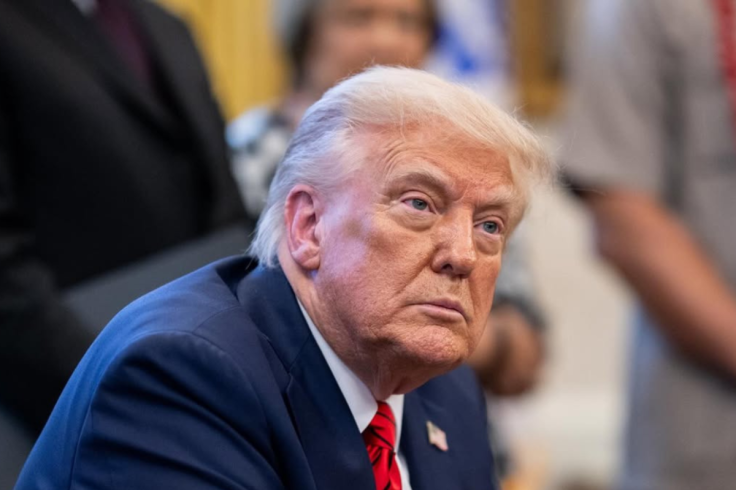
Donald Trump threatened on 16 July to push for ABC and NBC's broadcast licences in Washington to be revoked after the networks declined to air his election-security speech live, a move that immediately triggered online mockery and reignited debate over the limits of presidential power in the US media landscape.
This unprecedented escalation, a direct challenge to editorial independence, has sparked a volatile debate regarding the boundaries of presidential power and regulatory control.
While the President framed the decision as a coordinated 'plot' against him, the internet's swift and merciless response highlighted a growing public fatigue toward combative rhetoric, with netizens branding the move a 'crybaby' reaction to standard programming choices.
As Washington insiders and broadcast executives assess the legitimacy of these regulatory threats, the clash has morphed from a singular programming dispute into a proxy battle over who decides what counts as newsworthy in a fractured political era.
According to a report, ABC, NBC and CNN chose their own approach to Trump's address, which focused on alleged threats to election integrity. Rather than breaking into prime-time programming, ABC and NBC steered the speech onto their digital and subsidiary platforms, while CNN and others handled it through regular coverage. Trump, in turn, used the podium and branded the networks' decision 'fraud,' saying the move alone should cost them their licences.
Donald Trump, The Networks And A Licensing Threat
The dispute goes beyond one aggrieved night of coverage. Previously reported that Trump has repeatedly urged regulators to revisit ABC and NBC station licences over coverage he dislikes. That pressure now sits squarely with the Federal Communications Commission, where Republican commissioner Brendan Carr has publicly signalled that early reviews of broadcast licences are 'on the table.'
In practice, the leverage is less straightforward than Trump suggests. Reuters noted that the FCC has not actually revoked a television station licence in more than forty years. The agency has, however, already moved into unusually early review territory for Disney-owned ABC stations. Carr has framed that as something the commission can consider rather than a prelude to automatic punishment, but the timing leaves broadcasters in little doubt that political heat is swirling around what would once have been a fairly dull regulatory process.
In this latest clash, ABC and NBC stuck to their editorial guns. Reuters reported that ABC News Live and ABC News Radio carried Trump's speech with anchors providing coverage, but the speech did not automatically bump scheduled shows on the main broadcast network.
NBC opted to stream the address on its digital service, NBC News Now, rather than handing it the symbolic weight of a live, nationwide broadcast on its flagship channel. CBS opted for its own blend of coverage, underscoring that there is no single industry rule obliging networks to turn every presidential appearance into appointment viewing.
Trump plainly sees that differently. By labelling the refusal to air him live as 'fraud' and floating licence revocation as a remedy, he presented editorial discretion as a kind of regulatory offence. In legal terms that is a stretch. In political terms, it lands exactly where he wants it: casting himself as a president fighting an entrenched media establishment and turning routine programming decisions into evidence of bias.
Online Backlash Paints Donald Trump As 'Crybaby'
If Trump expected public sympathy, the internet largely declined to provide it. The backlash was immediate and, in many corners of social media, mercilessly derisive. Reuters quoted his accusation of 'fraud,' but users on X and other platforms dispensed with the legal dressing and went straight for character. One called him a 'crybaby,' another suggested that if Trump wanted wall-to-wall, flattering coverage, he should 'buy his own airtime' rather than threatening federal regulators.
President Trump calls for revocation of the broadcast licenses ABC and NBC for not broadcasting his speech pic.twitter.com/v0DFhr0PVJ
— Acyn (@Acyn) July 17, 2026
The tone of the response hinted at a broader fatigue. After years of combative press conferences, 'fake news' jabs and running feuds with individual reporters, Trump's threat to go after ABC and NBC's licences read to many as more of the same, only louder. Social media users argued that broadcasters are under no obligation to air every presidential speech live, and that viewers have ample access to the president's remarks through streaming feeds, cable channels and the White House's own outlets.
Some users worried aloud about the precedent of a sitting president leaning on independent regulators to punish news organisations over editorial choices. Others, more sceptical of the networks, still balked at the idea of using licence revocation as a political cudgel, noting that the FCC is supposed to judge stations on public interest obligations and technical compliance, not whether a president approves of their running order.
That tension gets to the heart of why this row has travelled so far beyond Washington. On one level, it is a highly specific argument about how ABC and NBC handled a particular speech from Trump. On another, it is a proxy battle over who gets to decide what counts as newsworthy and how far a president can push that line.
Nothing confirmed by regulators suggests ABC or NBC are on the verge of losing their broadcast footholds. Reuters has been careful to point out that while licence reviews for Disney-owned ABC stations have started earlier than usual, the FCC has not signalled a decision to strip any outlet of its rights, and Carr himself has framed early reviews as a possibility rather than a plan.
Until that changes, Trump's threat remains just that. But as the online reaction showed, the mere idea of weaponising broadcast licences is enough to keep both the networks and their audiences on edge, wondering where the boundary really lies between political pressure and regulatory power.
© Copyright IBTimes 2026. All rights reserved.